Tag: Brand

  • Your Brand Is A Path

    Your Brand Is A Path

    There is a LOT of chatter and conversation centered around the concept of Brand, so there’s not much original thought around it, mostly rehash from some of the advertising greats of the 50s and 60s. I’m not promising this is new, but it may be new to you, and it seems to work very well.


    Think of your brand as a path.There are seven characteristics of brand that can be likened to a path in the woods – learn them and live them and your brand will flourish!

  • Expert Positioning For Success

    Expert Positioning For Success

    It seems that “Experts” are everywhere theses days. In the old days, to become an expert, one had to devote years to building credentials, through education, publishing, speaking at conferences, trade events, peer-reviewed ideology, and to show some success using your chosen theory or practice concept, to be an expert.

    Today, with everyone allowed access to the public via the Internet, everyone’s a publisher, there isn’t much peer review or curation of any kind, and with far less than the “10,000 hours” required to master something, one can be considered an expert. So how do you position yourself as a credible expert?
    Our guest, Luke Harlan, of Aspire Strategic Marketing, will show you how to put all the modern tools to use, how to build the credentials, how to craft a platform to properly and permanently position yourself as a real expert. You’ll learn:
    • How to get started
    • What elements you need to put in place
    • How to build a platform to launch your idea
    • How to build a funnel to monetize your expertise
    • How to scale up by extending the ideas you already have

    Learn how to position yourself as a true expert in your field in less than 30 minutes!

  • Four Ways To Boost Your Brand Power With NeuroMarketing

    Four Ways To Boost Your Brand Power With NeuroMarketing

    You worked hard on your visual identity, your brand has been time tested and focus grouped to death, but do you know why it works (or doesn’t) in some formats or in some contexts? The answer is likely involved with Neuromarketing Science.

    How the brand appears, how it’s used in advertising in print on television, or online, affects buyer perception of the product the company and the brand. It’s one of the reasons brand standards and usage guides evolved, to help maintain consistency of presentation from usage to usage, to give to structure and control flexibility of the various uses and appearances of the brand. That usage manual, in a perfect world, was also backed up by Neuormarketing science, the science of perception with regard to persuasion.

    [pullquote align=”left or right”]That usage manual, in a perfect world, was also backed up by Neuormarketing science, the science of perception with regard to persuasion.[/pullquote]

    Perception can be shifted based on a number of characteristics of the product the packaging and the brand usage. How the brand appears, where it appears, it’s placement in-situ for packaging, advertising and other outlets, and other factors. Here’s four ways you can make your brand more powerful using this brilliant perception science.


    • Give It Weight – positioning of the brand on packaging and in advertising can affect the perception of the weight (both literal and figurative) of the product. Studies have shown that product logos positioned at the bottom of the page or the lowest part of the package are perceived as heavier than those where the logo or product squib is placed near the top of the package or the page. If you want to be taken seriously, let the weight do some work for you (if weight is a positive attribute for your product), and put your product logo toward the bottom.


    • Let Color Work For You – Weight and credibility can also be inferred, and therefore manipulated, through the use of color. This one is more specific to product advertising, but many brands can take advantage of this attribute. Studies have shown that a lighter color can indicate a perception of lighter weight. How many times have you seen a product logo appear in one color for the “standard” product, and a lighter version of that same color appears on their “light” version (low sugar, low fat, low calorie, low density, low carb, low gluten, take advantage of this perception). Studies showed however that this only works on versions of the same color – putting your product in a black box won’t be perceived as any heavier than in a white one, but light red or pink is perceived as lighter than dark red or scarlet.


    • Pay It Forward – The brand’s place on the perceived time continuum can be positioned for the purpose of creating a specific impression. English speakers and Romance language users perceive time as moving from left to right, while other languages and their users perceive time in the opposite direction (Hebrew, for example). If you want it to appear that your brand is older and more established, place the brand or product depiction on the left, and it will read as more traditional, nostalgic, or time-tested. Place the brand on the right side of the page, the closer to the right edge the better, and it will be perceived as fresh, modern, forward-thinking, high-tech. This effect can also be embodied in the brand itself. Logos that show motion or direct the eye to the right tend to be perceived as more progressive, skew younger and more active, more advanced. The NIKE swoosh moves to the right showing speed, advancement, direction, purpose, forward motion.


    • Avoid Dissonance and Negativity – Sensory inputs should work in harmony for the best results, both in use of the brand, and in where it appears – context matters. Color, sound, small, ambient lighting, all play a part in the perception of the product, and these elements need to work together to get maximum impact from the brand. A bright colored package, with an astringent or citric aroma, with fast blaring music, will all work to create the perception of youth, vigor, action, engagement, high-energy. A pastel colored package viewed under diminished lighting, with soothing music and the scent of lavender will evoke relaxation, solidity, kindness and positivity. Mixing the elements creates dissonance in the mind of the buyer, and generates insecurity and indecision.


    Additionally, negativity in imagery or brand context can drive down sales behavior. Studies have shown that uncomfortable situations or depiction of negativity or sadness, however brief, can cause an overall negative perception of the brand, enough to depress buying behavior. Keeping a fully positive outlook, use of positive and uplifting imagery has the opposite effect, engendering a sense of trust and wellbeing, and driving buying behavior upward.


    Is your brand being used in its most powerful context to build the right perception? Test these four elements, and see if you’re sending the right message . . .

  • If Your Brand Was A Person, Would You Date Them?

    If Your Brand Was A Person, Would You Date Them?

    Brand gets defined in many different ways depending on the source, the context and the scope and depth of the investigation and the purpose of the definition. We’ve found a great way to help simplify this definition process and allow marketers to cut to the heart of the brand and incorporate that insight into all of their marketing efforts more seamlessly and easily.

    Brands function as an identity for companies, just like a name does for people. Brands have a reputation, just like people. Brands have a personality, just like people (brandinality?). So why not examine your brand as if it were a person? Brand personalization is a great way to help your company’s employees and associates think of your firm in a consistent, easily-relatable fashion, one they can tell others about quickly and easily.

    It’s also a way to get to know your brand better, because people are hard wired to humanize inanimate objects in order to better understand and relate to them, a fact that is a founding principle of the Disney company, and the basis for their movies and animated features. Think talking tea kettles with a British accent, and you get the picture.

    [pullquote align=”left or right”]Brand personification is “a Projective Technique that asks people to think about brands as if they were people and to describe how the brands would think and feel,” according to mktresearch.org.[/pullquote]

    The process is fairly straightforward, and we use it to help define customer’s perceptions of brands for client companies. Start off by asking a few basic questions:


    • Is the brand male or female?
    • Is the brand smart like school, or smart like a poker player?
    • Is your brand a slob or a neat freak?
    • Is your brand a jock or a nerd? Cheerleader or Goth?
    • Is your brand trustworthy?

    Now that you have some basics, flesh them out by asking yourself or your subjects “Why do you think that?” Those “why” responses are critical to keying on central core attributes or characteristics about the brand, be they experiential, visual or verbal. From those why responses, you can tease out various aspects of the brand that reappear across responses as more central to the identity. Those are the pillars of the brand and should be adhered to in all brand-relevant activities.

    Now that you know it’s personality, it’s time to think about appearance. What does your brand look like – not the logo or visual identity, although that will come along a bit later. This relates to if this brand was a person, how would those key personality traits be revealed at a cocktail party or in their dating website profile photos. Visualize how they might represent themselves, as a person. Start with a name, (is it a Gary or a Lawrence, a Wendy or a Sahara) then flesh out the appearance of the person – are the clothes clean and do they fit well, are they age appropriate? Is this person kinetic and high-energy, or more laid back and laconic? Are they credible in speech, manner and appearance, or are they overblown or timid? Are they solidly in a category, like a surfer dude, or a Wall St. guy, or a coal miner, or a tire store manager? This can go on for quite a while, until a fully-realized person presents themselves to your vision. Now ask yourself “is this person a good representative to relate to our target audience?” If you’re selling amps and road cases, the laid-back rocker might be perfect. If you’re selling securities and annuities and other financial services and products, maybe not so much.

    Now the big question: Now that you have created the brand personality, fully formed in front of you, would you spend time with this person? Would your target audience find him attractive and credible? Would they take him/her home to meet Mom?

    Creating a brand personality does more than provide a short hand way for you as a marketer to think about your brand – it’s also a great way for you to explain your brand to colleagues and to get to know it more intimately, and allows you to improve the effectiveness of your brand marketing across all channels and media, company-wide.

    Would you date your brand? If not, it might be time to make some adjustments . . .

  • Legacy VS Longevity – Brand Makes The Difference

    Legacy VS Longevity – Brand Makes The Difference

    Some brands seem to become well known, some nearly ubiquitous, in a short period of time, relatively speaking. Some businesses that have names that are around for decades and decades, and for generations, and their brand reach is only a few miles from their location with virtually no recognition beyond that, aside from existing customers, which only number in the hundreds. What makes the difference between the long-time brand, and the real legacy brand, that gains national exposure and stays in the forefront for years and years?

    Clearly just sticking around for decades should count for something, right? Growing a business is not for the faint of heart, and it’s a lot of hard work over years to become established and known for what you do. Yet some seem to climb that mountain fairly quickly and become almost household names in just a short period, taking a large stake in market share for their category, while others simply continue day by day, seemingly doing a good job, gaining customers, but they never reach prominence either in their category or industry beyond the small local area.

    The difference can likely be attributed to three factors:

    • Paid or Earned Exposure – is there an advertising program on a large scale, is there some press and PR activity on the schedule, have you told the story to the media and let their network and their imagination do some work for you in spreading the word? If not, that may be a significant determiner of your reach and market share – someone once said that “a business that doesn’t advertise is like a nerd kissing a girl in the dark – you know it’s happening, but no one else knows you’re there.” Craft a credible, succinct brand story, and amplify it as far as wide as possible.
    • Industry Participation – Are you a member in good standing of the business and professional trade associations that cover your vertical and your business activities? Are you active and engaged in those groups? If not you’re missing a huge opportunity. Those organizations not only represent you and the other members to the general public, but they allow you to be known within your industry as an expert, a specialist, a provider of solid standing and credible ability – they all publish multiple vehicles, from websites, to magazines and newsletters and blogs that can be used to showcase your business to industry colleagues.
    • Differentiation – what is it that you do better, faster, cheaper, differently than your competitors? Do you use different or better procedures, superior materials, alternate parts or components, better product designs, respond to customers in a spectacular way, do you offer a full refund no questions asked no matter what? Free shipping on returns, multiple access points, 24/7 service, faster turnaround? Something gives you distance from your competitors. Use that to stand out from the pack, and spread the word nationally that you’re the one that can provide “X” when no other can.

    With those three pillars in place, if the product is of good quality, if you’re telling the right people, at the right time, often enough to “stick” in their minds when purchasing time comes, then your brand should be established, and spread as far as you can push it out.

    None of the three things listed above are terribly expensive, from a business standpoint. It is certainly possible to spend yourself into a sizeable hole on advertising that doesn’t work or that is misplaced, but there are scores of professionals out there to assist you in determining the appropriate spending levels and media selections so that this doesn’t happen. The industry participation is relatively inexpensive but can be time-consuming – almost always well worth the time to establish yourself as an industry player, which brings dividends for years. Differentiation is more an introspective exercise, and should be part of all your marketing planning, along with reiterating your brand characteristics and pillars of internal strength for the brand, to help keep the brand story consistent and on track over the years.

    Are you a local presence, or a national brand on the rise? The choice is really yours to make . . .

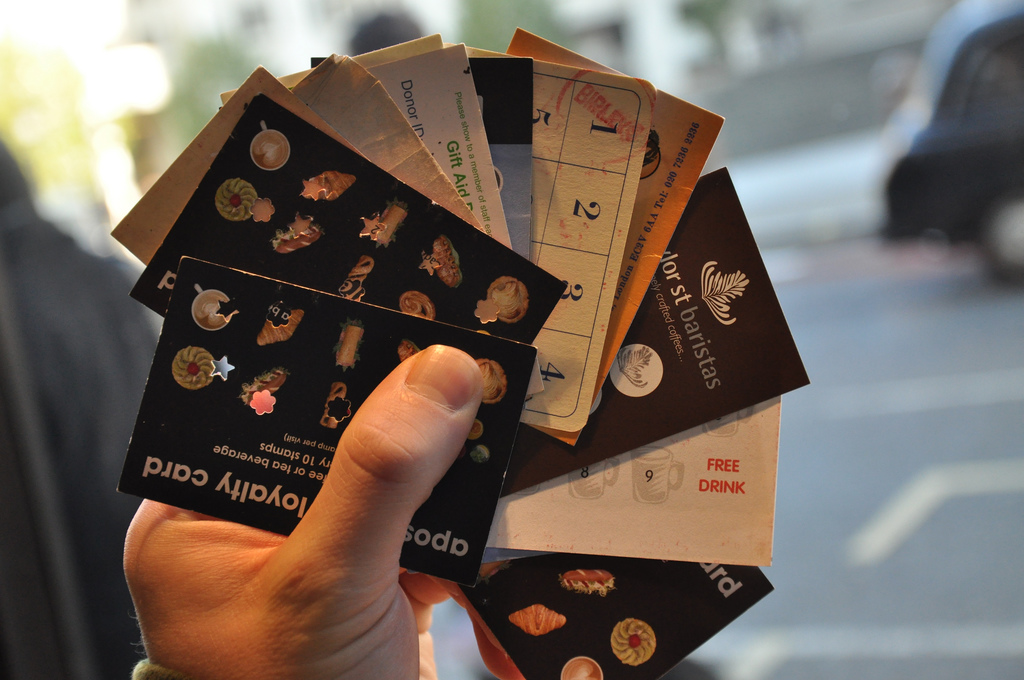
  • Affinity Programs CAN Drive Engagement And Loyalty . . . If Executed Properly

    Affinity Programs CAN Drive Engagement And Loyalty . . . If Executed Properly

    Business owners who sell to consumers are constantly striving to grow their customer base, and to retain the one they have already established. Organic growth, whether driven by effective marketing and promotion or by product quality, or customer service that leads to word-of-mouth referral, is the first priority for most consumer-centric businesses. But most sales pros will tell you that it’s much less expensive to keep your existing customers happy and have them buy more, than it is to acquire new ones. So why are most businesses taking the expensive route, rather than increase retention and engagement of the existing customer base? Most likely, it’s because loyalty programs, or affinity programs that encourage repeat business and customer loyalty, are difficult to execute effectively. There are lots of moving parts, lots of detail to keep track of and account for, and they attempt to codify human behavior and account for each variation to counter potential abuse. This creates other obstacles, which will be addressed shortly.

    Most businesses are good promoters of product, so crafting offers around product, centered on price or volume, is routine and straightforward. Put together a few “Buy one get one free” promotions, or “Early-Bird Specials” to add urgency, and they become your go-to strategy for driving foot traffic (or clicks). It takes little in the way of creativity or customer insight to knock off 10% or split 50-50 for volume purchase, and they do the job to a certain degree. But are you creating real brand loyalty, or just offering casual customers a reason to save a little money?

    Loyalty programs have been around for many years, but the availability of inexpensive computer technology, databases in particular, have spawned a new era of growth for these types of customer engagement set-ups. Sometimes these programs are created in conjunction with other partner businesses – witness the partnership between Giant Food and Shell Oil – grocery purchases are logged and items assigned a point total, and that total yields a discount on gasoline purchases at Shell stations. By linking two basic expenses, groceries and gas, the program allows customers to be rewarded for purchasing things they would normally buy anyway. Credit card “cash-back” programs fill this same need. But, they do engender loyalty.

    But a true loyalty program no only allows for more repeat business from your best customers, it give them a reason to tell others about what a great deal they get from you, thereby expanding your customer base organically without spending a dime. By rewarding the behavior you want -repeat purchase on a consistent and regular basis – you build transaction volume over time and increase profitability. But is this organic growth, or just incentivized interaction? The best loyalty programs no only facilitate repeat purchase, they also encourage referral, and some even provide disincentives for disloyal behavior.

    The very best programs not only engender loyalty, provide an incentive for not only loyalty but referral, and provide a mechanism for it. But they are also very customer centric, which means they are elegantly simple for the customer to enroll in and use regularly. Keytags with bar codes are convenient, but if it takes you half an hour and twenty pieces of personal information to enroll, the abandonment rate will be huge and usage will never meet expectation as a result. Simple for the consumer includes simplicity in enrollment, usage, and in accruing benefits. Credit card points programs are notoriously complex when it comes time to actually reap the benefits of your buying behavior, with many rules, complex formulas, and exceptions to the promised rewards that can make cashing in more difficult than it’s worth. To avoid fraud and abuse, those companies have put the onus on the consumer to do their back-end work for them, and find their own way through the maze of regulations and guidelines. Simpler is better.

    All the loyalty programs in the world won’t overcome product quality issues, poor customer service, bad product design, lack of distribution channels, low awareness or other inherent consumer business issues, but if you have the others conquered, a well thought out loyalty program can be a big help in tipping the scales toward brand loyalty, reducing churn, increasing engagement and retention. As usual in marketing, the secret to success is in the execution . . .

  • Brand Loyalty Is More Fragile Than You Think

    Brand Loyalty Is More Fragile Than You Think

    Marketing and sales pros know that people don’t really buy features and benefits, they buy feelings and stories. Your brand (hopefully) tells your buying audience a compelling story, one that gets retold each time they interact with your brand, which makes them feel a certain way, under a variety of circumstances. For retailers this means that each time customers shop your store, whether brick and mortar or online, they have certain expectations of that experience, and if you don’t live up to them, you may be doing damage to your brand. This makes customer service a key component to brand loyalty.

    I was speaking with a friend of ours the other day and we were comparing the stores where we buy wine. I buy at a small, boutique, one-off adult beverage emporium, one that specializes in having a large selection of micro-brews, and a strong selection of more esoteric Bourbons and Scotches, and a terrific selection of wines from around the world. She shops at a chain store, owned by a major grocery retailer, with a huge inventory of all the top brands, great pricing due to volume buys, and a no-frills approach to store design and displays.

    The reason she was asking me where I buy is because she had recently experienced three separate instances of poor customer service by store sales staff. She swore that after three strikes, she would never patronize that store again. Her brand loyalty to that brand, which had been off-the-charts strong before, based on it’s affiliation with the larger grocery chain, had been eroded to zero in just three perceived poor incidences of inattentive, rude, or unpleasant behavior. The selection, pricing, hours, decor and layout hadn’t changed one bit, but her perception of the store and its contents changed dramatically, for the worse.

    Now I’m pretty sure the large chain won’t really miss her business, and will likely never make positive changes to the sales staff’s training or behavior guidelines, probably because they will never know they have a problem, and she has no reason to tell them about it. But if you multiply her experience by a hundred, or several hundred, or several thousand chain-wide, you start to see some negative effects on the balance sheet. If you disappoint your target audience badly enough, or often enough, then your brand is no longer what it was.

    Ongoing feedback from customers, becoming more customer-centric in your operations as well as your marketing, can help stem this downward spiral and if caught early enough can give you a start on reversing it. Some companies are acutely aware of this, and take great pains to listen carefully to their customers. This customer brand monitoring takes several forms – feedback cards, social media monitoring, ongoing survey research, continual customer service call monitoring and review, and a host of technological solutions that track and measure customer attitude and preferences.

    One of the more diligent brands in this regard is Hilton. They religiously guard their premium brand, listening carefully to all customer feedback, and taking swift, effective steps to satisfy customer complaints. They do it so well that most complainers are turned into brand evangelists! They have an overwhelmingly positive customer rating in a variety of categories by organizations like J.D. Power, Zogby Analytics, and media outlet lists like MSN, List25, and Wall St. 24/7. They have realized that their customer interactions are a driving force in their brand loyalty, and take iron-clad, positive steps to protect it and bolster it with each customer experience they deliver.

    The real message is that while a single customer may not contribute much to your bottom line on their own, the symptoms and actions that lead to that customer losing their loyalty to the brand need to be addressed before they “go viral” among your customers and degrade the brand. As Barney Fife once said, “we can’t have that kind of behavior, we gotta nip it in the bud” when you fail to deliver the highest level customer experience each and every time.

  • Make It All Consistent – -Brand Consistency Builds Strength, Awareness

    Make It All Consistent – -Brand Consistency Builds Strength, Awareness

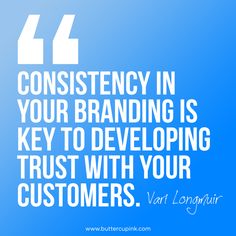
    There is a lot of talk and noise in the marketing interwebs regarding brand. At the base end of the spectrum, there are articles on what brand is, how to build a personal brand, and what brand is not. At the upper end, there are published studies on brand engagement and measurement thereof, brand strength and awareness linkages to sales, and other more esoteric subjects. What’s missing is one of the central themes on brand, that it is imperative that brand presentation and implementation must be consistent from instance to instance.

    Consistency is the key to delivering on that brand promise, no matter where it is encountered, and particular care must be taken when the brand is licensed to third-party outlets or producers to maintain the quality and consistency of the brand, to maintain its integrity. The level of importance of consistency cannot be underestimated, to the point where any brand-related engagement of our firm starts with an implementation consistency test, starting with date of first use, and carrying out to current executions. We collect all available examples in every media we can find, lay them all out and physically compare them, to point out lapses in consistency, poor quality control, bad executions on the part of licensees, or off-brand knock-offs.

    consistency quote

    For retailers and product purveyors, this type of exercise can be especially helpful in spotting counterfeit goods. Often, the goods are closer to the real thing in quality and accuracy than the brand usage, which is often either misplaced, mounted upside down, the wrong color, reversed when none is allowed, or even misspelled, sometimes on purpose in an attempt to escape prosecution. Vigilance is key to keeping knock-offs out of the market place and diluting the power of the brand, so performing this exercise semi-annually can help keep the counterfeiters at bay.

    Some brands are fanatics about consistent presentation, and some of that fanaticism is justified, especially for those firms operating globally, with a wide range of distant or disparate locations and decentralized operations. Coke-a-Cola is one who vigilantly protects its brand executions. They have a brand usage manual that runs over 200 pages, and covers every instance of usage you can imagine, from signage, to cups, to promotions on billboards, to television ads and internet posts on social media. This manual is translated into over 35 languages around the world, so there are no excuses by bottlers or licensees from Buford, AL to Bangladesh for misusing the Coke emblem. Coke has it’s own trademarked PMS color, described in the manual using three color selection systems used worldwide, and translated into other color systems like automobile paint and video reference color codes. Talk about thorough!

    That kind of control definitely has advantages, especially when trying to spot fakes in the market place. Even if your usage is not that extensive or far flung, you should still exercise strong controls when the work goes out of house for other purposes, like sponsorship programs, charity visibility, translation into other languages, or implementations in unusual media, like apparel or textiles, or low-res print representations. Coarse screen values, RGB conversion, poor registration or low quality paper all conspire to make a mess of logos and brands in less than professional settings, and some care must be taken to guard against these aberrations. One may not do much damage at all, but over time, they can collectively do damage to the credibility of the brand, and the mistakes tend to end up in some unusual places, and as such, come back to haunt you at inopportune times.

    You’ve worked hard to build a highly believable, credible, expressive and purposeful brand – don’t let poor execution consistency undo all your hard work!

  • When To Give The Customer A Quick In-And-Out

    When To Give The Customer A Quick In-And-Out

    For those of you with less than pure thoughts, got ya! I don’t write on customer service issues very often, once or twice a year, and it usually has to do with how to treat them with respect, how to enhance their experience, or how to engage them more thoroughly and for longer. But sometimes, you just want to get in, get yer stuff and get out, and that’s not always a bad thing.

    The thought of speed in a transaction is a foundation in certain sectors of brick and mortar retail – groceries, convenience, gasoline, and the like for instance. They aren’t large footprint locations, don’t have much room for folks to be roaming around, and studies have shown that they often are in a hurry or have a set list of things they need, and that total receipt won’t change much due to them lingering. They make up for this by providing a lot of opportunities for impulse buying while they have you the most captive – at the cash register. Some of these locations are so ardent about this, that they have arranged the items packed so closely together you can hardly see the cashier for the racks of stuff! But you can still get in, pick up your choices off of easily selectable shelves and quick-grab racks, get in a line (if there even is one) and pay inside of a couple of minutes, seemingly regardless of the number of items.

    In that instance, that’s good customer service – you gave the customer exactly what they wanted – speed. Their expectations were met and you’ve given them exactly what they needed, a no-frills transactional approach to commerce without a lot of fuss or conversation. Some of this is possible due to technology – they have the fastest register software available and the simplest, most common-denominator pricing and indexing for inventory of anyone in the business of retail. But some of it has to do with design, layout, and most importantly, human behavior.

    The reason people shop at convenience stores is exactly that – convenience. They don’t go bargain hunting, they don’t argue over the $3 mini bag of Cheeze Curlz, they don’t bring coupons (there aren’t any), and they often aren’t terribly loyal when it comes to brand. They’ll pay a premium for the speed and won’t argue about it with the cashier, who says as little as possible during the transaction. They’re not folksy, they’re not chatty, they don’t know you most of the time, and don’t plan on seeing you again, ever. No need to form a relationship, just bag the chips and the soft drink and move on.

    That’s not to say that you feel rushed, or hurried, or that the service is brusk or rude, because its not. It’s just devoid of emotion, good, bad, or indifferent. They serve a function, do it well, and please the customer – job done. For the cashier, this is a relatively simple, boring to the point of inanity, potentially dangerous job, often on an odd shift, done for the short-term based on a dearth of marketable skills and a need for capital – it’s not a career position. For the customer, it’s a quick pit stop with a specific purpose, no browsing or emotion required, and if they happen to find something whimsical or amusing at the register, or something there reminds them of another item they need, so much the better for everyone – what the heck, it’s only two bucks, right?

    Other types of retailers can benefit from this approach as well, specifically online. Everyone’s focus in the early days of web commerce was to extend “dwell time” – how long are they lingering on the site, what are they looking at, what page and what item draws their attention, were key metrics. Consumers were still getting used to shopping online, and there had yet to be developed standards of usability or code norms for websites, so the customer had to not only learn how to find the items they were looking for, but how to work the website in order to get them, from the shopping presentation matrix to the sizing and customizing of the item, to calculating the shipping time and cost, to the payments page(s), it was a learning experience, not so much a shopping experience.

    More recently, shoppers have gotten vary familiar with all the bells and whistles of online commerce, web designers have figured out how to present non-static digital items for greatest effect, and how to lay out pages intuitively so that your eye and cursor travels to what you want almost effortlessly. It’s a strong advantage, and only recently have online shoppers been allowed the freedom to use their own data to speed the process along. For commerce sites you frequent, there is significant data from your prior transactions that allows both you and the retailer to benefit.

    I frequent a couple of gift sites for things I send to clients for the holidays, and after a few years, I can visit them, select, buy, address and ship about 20 items in less than 30 minutes – blazing speed compared to a trip to a crowded mall, let alone the gift wrapping, boxing, shipping, and distribution time and cost. All the addresses are already there, my selections from last year and prior are logged, and it reminds me if, in my shopping haze, I duplicate a previous gift – nice feature for us oldsters. The shipping is often either included or free based on frequency and volume, and I know the quality and presentation are top notch with out having to investigate further – a quick in and out transaction that by no means diminishes the thoughtfulness of sending a gift to a loyal client.

    Sometimes providing a great customer experience really means delivering on your brand promise, as long as it’s been accurately telegraphed ahead of time. I know the convenience store doesn’t have premium brands, I know their selection is rather limited to a certain type of merchandise, and I know that I’m not going to get a bargain, or be met at the door and asked if I’d like a sample of Chai latte while I shop, or that the cashier is going to gushingly ask if there’s “anything else she can do for me.” But I also know they’ll have what I need to get by, right now, and get me back out and on the road without having to do anything special, or even say a word. Sometimes, that’s a great experience!

  • Deep Branding Is The Real Thing . . . How To Achieve It And Keep It Thriving

    Deep Branding Is The Real Thing . . . How To Achieve It And Keep It Thriving

    There are an awful lot of misconceptions about what branding is, how branding works, what purpose it serves, how much time, money, and energy should be devoted toward brand and branding activities. We see it in our practice, usually from business owners whose job it is not to ponder such things at any depth, but to have enough grasp to understand when someone more informed uses the term in a meeting.

    This isn’t new.

    Ad agencies and their clients have been hosting a debate about branding activity for decades, usually to persuade their clients to increase their spend on TV and radio branding ads for their products, if for no other reason than the products brand was a multi-faceted one, which required a lot more work to encapsulate in a :30 spot, and it was easier to do several ads with different focus or messaging and run them all in series to get the job done.

    Most purveyors of products or services have a sense of what brand is, from a rather shallow perspective – in their minds it involves logos, online buzz, color palette, some minor but repetitive messaging points, and that’s where their story ends. I contend, along with some other professionals, that the surface stuff that gets readily recognized as branding is just the tip of the iceberg.

    Branding in our experience involves a showcase of authenticity, consistency, values, reliability of delivery, and transparency of presentation that transcends all the hype, the spin, the gloss, and is a set of characteristics at the root of why the company and its products work and perform as they do. The more the members of a given company live, breathe, work and display the characteristics of the firm as a whole, the more effective those branding efforts become. That level of authenticity can be achieved, but it requires a company-wide commitment to those same values, and a mind-set that allows each and every employee to deliver on that promise, no matter what it is, each and every day for each and every interaction with customers, vendors and others. That’s a pretty tall order for most companies, but look how successful those who achieve it can become.

    Some great examples in a number of sectors include: L.L. Bean (who doesn’t know that their stuff is rugged and practical, but also can be returned over it’s life, no questions asked, no fuss, free), BMW (widely through of as at the peak of commercial automotive performance engineering for the masses) Harley-Davidson (tough, patriotic, ruggedly individual customers who have a passion for things mechanical and cool), Campbells (feel-good, inexpensive, but consistently healthy and sensible simple meals in a can), Clorox (when you want something white, clean, back to it’s basic elements, synonymous with bleach) and so on. It’s all about delivering something people desire consistently over years and holding that trust with the customer to deliver in a way that’s familiar.

    For those in the know, branding isn’t a fad or a new buzzword – it’s a way of being. It’s not just the packaging, it’s what and how that package is delivered, time after time, to those who know and love it. To those with a slighter understanding of the idea, the buzz talk may be overwhelming, even tiresome, because their definition is so limited and they don’t see what all the fuss is about.

    There are quite a few business tomes penned by quite informed and well-educated authors on the subject, but I won’t make any recommendations here as I would certainly run afoul of those I omitted. Suffice it to say that if you select a few of these to read in your spare time, you’ll come away with the clear idea that few have a clear idea of what it is, and how to maximize it’s value – the top practitioners of the art are the ones that really get it, and they’re too busy working to maintain and burnish their company’s brands to write books. Branding is still as much art as science, and those with an intuitive understanding of the art, with a gut sense of what their company’s brand represents will be the victor in the war for consumer mindshare.