Category: Sales

  • Doing The New Client Dance . . .

    Doing The New Client Dance . . .

    As consultants, we’re constantly receiving client requests for information, meeting new people at events and meetings, receiving RFPs, creating proposals for potential work, when we’re not creating new research projects, analyzing data or meeting with existing clients – in short, there’s a constant cycle of clients in an out, all of which need attention of various kinds. This is normally a good problem to have, but there’s a trap in there that can and should be avoided.

    Even with top-notch marketing, a full sales funnel, and great clients, there are many prospects who solicit our attention that should not ever become actual clients. Unfortunately, they look on the surface just like the one’s that should! How to tell the difference? Of course, tighter lead screening, higher vetting standards, and other preliminary processes will cut down on the tire-kickers and time wasters. But what about those who seem earnest, sincere and clearly need help, but that end up wasting a lot of time and asking lots of questions, but don’t ever really have the wherewithal or ability to engage at the stated fee level or project scope? You’ve gotten to know them, you’ve adjusted timelines to allow for lower budget milestones, they’ve stated their desire, but either can’t or don’t act, sign the contract and start gathering information to engage the service.

    Were there signs of this type of behavior earlier in the process, flags that were missed or ignored? My guess is yes, but without a high level of transaction volume, they can each be explained away as an anomaly or one-off problem, so that no trend or pattern develops. This kind of activity negatively affects productivity and profitability, so it’s worth a little time to track down the commonalities and causes for this type of behavior on the part of the prospect. Here’s a few additional flags we’ve uncovered:

    • Have they ever worked with a consultant or freelancer before? Unless their corporate culture and structure and budget type allow for the use of freelance labor, especially hourly or open ended contracts, beware. It’s not something to enter into lightly, and their ability to work with you largely depends on them being comfortable with the arrangement, both ideologically and financially. If it’s a new thing, you’re the guinea pig in the experiment, and the risk is extremely high for you as the consultant.
    • Have they set aside the management time and the access that comes with it, to give you the real story? Many first time consulting clients think that once we’re signed on, it’s all on us, and they just circle back around at the end for the report. Nothing could be further from the truth, especially for marketing – we need some time and interaction to download all the info we need to do the job, and it’s got to come from the top.
    • Have they set aside enough budget to not only cover the consulting fees and time, but to pay to enact and execute the activity the consultant recommends? If not, your work simply becomes another binder on a shelf, and the opportunity to actually move the needle and grow that company in a meaningful way is likely lost. Not to mention your ability to capitalize on that relationship with further billable hours or additional projects.

    Most of the above can be squared away with a very direct, frank conversation at the beginning of the relationship, to set expectations on both sides, assess suitability of both structure and finances, and to set some goals that everyone’s comfortable with. Setting expectations is key to a well-rounded relationship and should be an integral part of any formal or informal “onboarding” process you currently employ. Even with more seasoned clients, who rely primarily on the contract language and scope of work documents to outline what will be delivered and what will be needed to achieve it, a brief conversation with the more senior management contacts is required, just to set all concerned at ease going forward.

    While you can’t always spot a “good” client or a “bad” one at first blush, but with some careful questioning and a solid process, you can reduce the lost time and increase profitability in real world practice, allowing you to grow and expand as time allows – you can only be so many places at once, after all . . .
  • Affinity Programs CAN Drive Engagement And Loyalty . . . If Executed Properly

    Affinity Programs CAN Drive Engagement And Loyalty . . . If Executed Properly

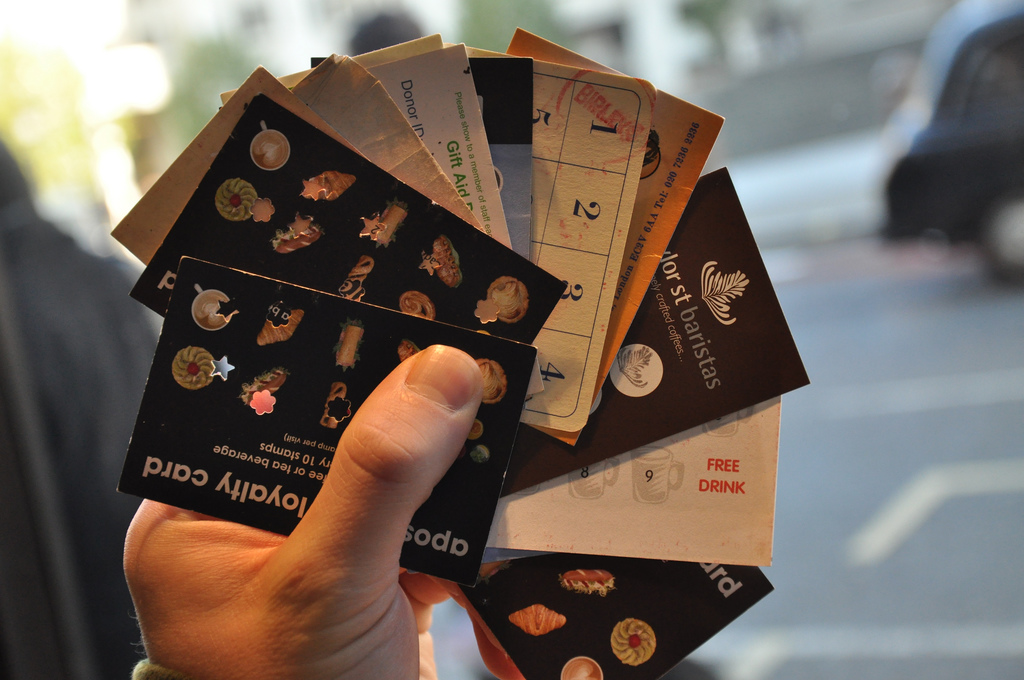
    Business owners who sell to consumers are constantly striving to grow their customer base, and to retain the one they have already established. Organic growth, whether driven by effective marketing and promotion or by product quality, or customer service that leads to word-of-mouth referral, is the first priority for most consumer-centric businesses. But most sales pros will tell you that it’s much less expensive to keep your existing customers happy and have them buy more, than it is to acquire new ones. So why are most businesses taking the expensive route, rather than increase retention and engagement of the existing customer base? Most likely, it’s because loyalty programs, or affinity programs that encourage repeat business and customer loyalty, are difficult to execute effectively. There are lots of moving parts, lots of detail to keep track of and account for, and they attempt to codify human behavior and account for each variation to counter potential abuse. This creates other obstacles, which will be addressed shortly.

    Most businesses are good promoters of product, so crafting offers around product, centered on price or volume, is routine and straightforward. Put together a few “Buy one get one free” promotions, or “Early-Bird Specials” to add urgency, and they become your go-to strategy for driving foot traffic (or clicks). It takes little in the way of creativity or customer insight to knock off 10% or split 50-50 for volume purchase, and they do the job to a certain degree. But are you creating real brand loyalty, or just offering casual customers a reason to save a little money?

    Loyalty programs have been around for many years, but the availability of inexpensive computer technology, databases in particular, have spawned a new era of growth for these types of customer engagement set-ups. Sometimes these programs are created in conjunction with other partner businesses – witness the partnership between Giant Food and Shell Oil – grocery purchases are logged and items assigned a point total, and that total yields a discount on gasoline purchases at Shell stations. By linking two basic expenses, groceries and gas, the program allows customers to be rewarded for purchasing things they would normally buy anyway. Credit card “cash-back” programs fill this same need. But, they do engender loyalty.

    But a true loyalty program no only allows for more repeat business from your best customers, it give them a reason to tell others about what a great deal they get from you, thereby expanding your customer base organically without spending a dime. By rewarding the behavior you want -repeat purchase on a consistent and regular basis – you build transaction volume over time and increase profitability. But is this organic growth, or just incentivized interaction? The best loyalty programs no only facilitate repeat purchase, they also encourage referral, and some even provide disincentives for disloyal behavior.

    The very best programs not only engender loyalty, provide an incentive for not only loyalty but referral, and provide a mechanism for it. But they are also very customer centric, which means they are elegantly simple for the customer to enroll in and use regularly. Keytags with bar codes are convenient, but if it takes you half an hour and twenty pieces of personal information to enroll, the abandonment rate will be huge and usage will never meet expectation as a result. Simple for the consumer includes simplicity in enrollment, usage, and in accruing benefits. Credit card points programs are notoriously complex when it comes time to actually reap the benefits of your buying behavior, with many rules, complex formulas, and exceptions to the promised rewards that can make cashing in more difficult than it’s worth. To avoid fraud and abuse, those companies have put the onus on the consumer to do their back-end work for them, and find their own way through the maze of regulations and guidelines. Simpler is better.

    All the loyalty programs in the world won’t overcome product quality issues, poor customer service, bad product design, lack of distribution channels, low awareness or other inherent consumer business issues, but if you have the others conquered, a well thought out loyalty program can be a big help in tipping the scales toward brand loyalty, reducing churn, increasing engagement and retention. As usual in marketing, the secret to success is in the execution . . .

  • Are You Selling To The Right People?

    Are You Selling To The Right People?

    We’re big advocates of using research, especially primary customer research, to drive marketing and sales efforts. It’s much more difficult to miss the target when the target is telling you how to hit it, how far away it is, and where your arrow is in relation to itself.

    Sales benefits as much from research as Marketing does, but in different ways, and by using different pieces of data. Primarily, Sales will be ale to use data to determine who is, and how well-qualified is, the audience of one (company) in front of them. With a list of several hundred prospects in their satchel, Sales people have to determine if this company is even realistically a prospect at this time, who inside that company they should approach, who the actual decision-maker is, and how best to reach out to them to get the warmest reception.

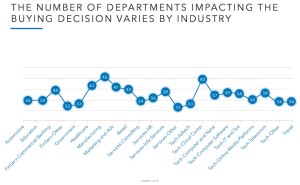
    New research has shown that trying to pinpoint a single individual decision-maker may be a futile and even damaging effort. Corporations are so integrated, so closely cooperative, in an effort to move forward more effectively, to make purchasing of goods and services more streamlined, and maximize cost-effective use of resources, that an average of 3.4 departments get “in on the purchasing decision”.


    departments-LG-linkedin-100516


    That number differs depending on the industry, with manufacturing scoring a surprising 4.6 departments needed to make a purchasing decision, and some smaller non-profits scoring a 2.1 or less. Reasons for this are less clear, but the prevailing theory is that the classic manufacturing firm has fewer distributed costs, centralized purchasing for raw materials, and the purchase affects more departments’ budgets and ability to function as a result. Fewer “silos” leads to more people involved in making decisions.

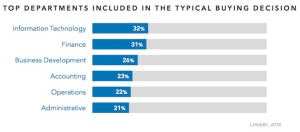
    Which departments are involved makes the picture for Sales even murkier, with variables including cost of the purchase made, length of the sales process, number of touchpoints that selling company has with the target firm, and the nature or structure of the product or service being bought. Things like consulting services, legal assistance, accounting services, tend to have more folks weigh in on the decision, based on the number of departments such an engagement will touch within the company. Things like maintenance and physical plant services typically fall so squarely within Operations, with a touch on accounting and finance, that usually there is only one true decision-maker. The decision to spend the money has more involvement, but the actual vendor is pretty straightforward and stays “local” most of the time.


    influence-linkedin-100516


    The bottom line is that sales people need to do a certain amount of probing and due diligence when qualifying prospects to make sure they are not only aware of all the various inputs in the buying decision, but that key stakeholder are not “left out” of the communication chain, to avoid making them feel ignored or worse, disenfranchised. That kind of innocent mistake can torpedo even the most potent sales effort, and it may be happening and you don’t even know it.

    The time spent doing this type of research is almost always time well invested, if for no other reason than to allow the sales person to speak with confidence about the target company. Additionally, it avoids the type of error described above, and allows you to streamline the process and avoid real time-wasters, like selling for months to the wrong person(s).

    This type of information should be prominently noted in your CRM entries as well for each prospect, not only as a reminder to you, but as a signal to others viewing the reports, who may be able to suggest a new approach, or use a contact in a department you have yet to approach. Share the wealth.

    Do your homework, include and approach the “right” people, and be aware that it will likely take a unanimous decision among up to four full departments to close the sale. Knowledge is power in this instance – go forth and be powerful!

  • Persistence More Important Than Ever To Close The Sale

    Persistence More Important Than Ever To Close The Sale

    In the modern world, the practice of sales, whether it be called “Account-based Marketing” or Business Development, or some other euphemism, is as tough as it’s ever been to be effective. With over a thousand marketing messages or more hitting the average citizen every single day, it’s harder than ever to cut through the clutter, to get people’s attention, to gain their engagement and their focus for even a few moments, let alone tell a compelling story and persuade them to take whatever action that moves the needle for your firm. One of the most effective tactics is one of the oldest, and it still works in today’s environment – persistence.

    We’ve all seen the memes online for success in sales, indicating that most B2B sales are made after the 12th or 14th contact with a prospect, less than 5% get made after the initial contact, etc. A key ingredient seems to be “keeping after the prospect until they cave in and buy.” I don’t frame it that way to sales-based clients, but that’s essentially what you’re trying to do. Entire systems and software platforms have been created and sold based on this endless tracking and following strategy, scheduling the next contact, ranking the viability and likelihood of a sale, gauging their ability to buy, and when. The systematization, the automation of the sales process has been driven to new levels in an attempt to counter this profusion of messages and the shortening attention span of the prospect audience.

    Technology has made this not only possible, but extremely easy, and as a result, sales management of all stripes have latched onto this approach as a way of integrating sales into their other business processes. You can now track and call a “Lead” anyone who clicks on a link in a search results report. And beyond that, you can have your messaging and tracking follow them on their entire journey through the ether that is the Internet, popping up whenever and wherever they travel.

    This is sales?

    True sales professionals know that these are simply tools, not replacements for a solid set of skills, like active listening, seeking out pain points, probing for possible objections, collaboratively crafting solutions, over-delivering and under-promising. The essence of all of these things is that you have to actually get in front of and speak directly with people who make the buying decision. Conducting sales activities “remotely” will only take you so far, at some point you have to interface with the customer. Usually more than one such engagement is required, because the basis of a sale is trust n the sales person, and trust in the company behind them to back up their promises and claims, and that trust takes several encounters to achieve. Hence the need for persistence, to keep coming up with a new, compelling reason to get in front of that prospect and convincing them to see things your way.

    The skill in all this occasionally takes the form of sensitivity – the gauge of how tolerant the prospect will be in receiving follow-up messages, calls, e-mails, communications from the sales person, before they start to work against them and annoy the prospect. Persistence is not just being relentless. It’s being in contact on a regular, ongoing basis, and offering something of value to the client with each interaction, building trust progressively, offering to work the prospect through whatever challenge you’ve agreed they face together, showing them how you’ll achieve the desired result. For professional services or big-ticket items, the consultative approach is by far the most effective.

    And that takes persistence.

    If you’re on the fifth or sixth contact with a well-qualified prospect, it may seem like overkill, but if you hang in there, the seventh touch may be the charm. For efficiency’s sake, the game is to try and reduce that number of touches to the most effective use of your time and resources without negatively affecting the outcome. But if you plan on investing significant time with each prospect, and have a constantly full pipeline of incoming prospects, eventually a rhythm develops and you can gauge how many touches are required for each one, and can start to predict and plan your time investment accordingly.

    As each one moves through the pipeline toward the close, a new one starts with an initial interview, and proceeds through the consultative system toward a close and into the delivery or service phase. By being systematically persistent, you’ve remained top-of-mind without being annoying and driving interest downward, provided the prospect with value before the sale, and shown your ability to deliver, to keep to a schedule, to bring something to the table, and have developed trust.

    Now that’s sales!

    Mechanizing, automating, scoring, tracking, weighting, prioritizing, and all the other functions are merely supports for the basic activity of communicating effectively and persistently with the customer to achieve a result. Of course all this communication has lots of other benefits as well, since the more you know and can learn about the customer, the more effective you can make the solution you’re delivering, and the more opportunity you can uncover for additional sales interaction with them – they’ve told you what they want, you just have to deliver it at the right time in the relationship.

    Message clutter, short attention spans, over-scheduling, software profusion, excessive meaningless contacts and content in the inbox, are all enemies of the practice of effective sales, which requires honest, direct, persistent communication with actual people. Everything else is distraction, which won’t put food on the salesperson’s table, or fill the company coffers with anything but empty promises. Avoid distraction, dig in, and connect with prospects – they’ll appreciate your honesty, and enjoy the attention.

  • Engagement Is Good, Revenue Is Better

    Engagement Is Good, Revenue Is Better

    There is a lot of buzz among marketers about fostering customer engagement, building engagement with apps and websites, creating communities with blogs and social selling. It all sounds great on paper, we should all work together, share your purchases socially, everybody knows everything you do, everyone’s on your side, we’re all a village, cumbaya . . . But when you’re standing in the aisle at Wal-Mart deciding what frozen dinner brand or dog food to buy, I don’t feel that my level of engagement with Purina’s website is the deciding factor. Marketing is about raising awareness in a positive way to influence and drive SALES. I can be as engaged as can be with a brand, but if a similar product is in front of me, and they are largely the same, engagement doesn’t trump quality, availability and price, and the sale will go to the one who fits those three criteria the closest. Even with B2B sales, I’ve been “engaged” with a number of websites and businesses prospecting my business via e-mail and other devices, but haven’t actually bought anything from any of them – I’d score really high on their “engagement scale” algorithm, but they haven’t made a dime off of me, and may never do so.


    Brand engagement is a long-term play. It needs to be tied to other awareness vehicles, timed promotions, backup media, and ongoing evolution of product benefit awareness in order to really be effective at driving sales. This is not a new idea, but it’s one which has risen to prominence recently along with the ubiquity of social media platforms, which provide the ability for person-to-person communication in a way heretofore not possible on the current scale. I can now tell thousands of people what I’m doing, what I’m interested in, what I’m buying, what I’m eating, cooking, enjoying, drinking, and more on a moment’s notice in real time. That means that if I’m sharing it with others, it’s boosting their awareness as well as my own for a particular product, service or item. That kind of organic, exponential awareness spread at that speed was unheard of just 15 years ago. Epidemiologists are familiar with the concept, but marketers only recently began to apply it to their efforts – indeed the term “going viral” is borrowed from the disease spread specialists, as information, or awareness, can spread a lightning speed unseen from the outside, like a virus.


    Just because I’m aware of a product or service that I’ve engaged with it on the Internet, does not mean that when the time comes I’m actually going to make a purchase. It may increase the odds some, but as we learned with the recent Powerball drawing, odds need to be changed significantly with a supreme effort in order to really affect the outcome. Social media engagement or website engagement is like buying 100 lottery tickets instead of one. It seems like you’ve boosted your chances of winning by 100 fold, but in reality, those other 99 tickets didn’t even move the needle.


    By all means, do A/B testing, make adjustments, formulate campaigns that include a mechanism for increasing engagement, but depending upon it to drive significant revenue could be a mistake. The basics of building ongoing awareness through media your audience utilizes, timing your efforts to coincide with that target’s needs or life-stage position, matching your demographics and psychographics and messaging to that of the prospective customer, are still the linchpins of successful marketing efforts, and enhancements and refinements to these, along with some boosts in awareness through effective promotion of specialty offers, benefit driven messaging, and creative imagery, will drive revenue upward on a consistent basis as the brand evolves and the audience grows. If you’ve got all those bases covered effectively, engagement is a nice to have, the icing on the cake, and a good set up for the upsell and cross sell to that customer base, due to the added time allowed for an opportunity to develop.


    Unless I miss my guess, the folks dwelling on engagement (which is notoriously hard to measure with any accuracy) don’t have all the basics in place and need a buzz word and a crutch to help them explain why things on the sales side aren’t moving as far or as fast as expected.


    Dwell on the basics of marketing, make sure all the right pieces are in place and working together efficiently, and keeping the pipeline full, then worry about engagement.

  • Is Your Business Card Your Most Powerful Marketing Tool?

    Is Your Business Card Your Most Powerful Marketing Tool?

    Think about it: Every meeting you attend outside your company, every business function you attend, every group you join, even casual encounters at sporting events, concerts, classes and athletic competitions like races and charity bike-a-thons, the one thing you can use to conveniently provide your contact info and your business “story”  to a new acquaintance is your business card. It carries your company brand, it carries your professional reputation, your phone number, e-mail address, website URL, physical address, even a level of achievement and professional status – that’s a lot of heavy lifting for a piece of card stock 2″ x 3.5″!

    For small businesses, the many choices made in creating a business card are each vitally important to be sure it can carry all that weight effectively. Nice layout but thin, flimsy stock says I’m just starting but don’t have the resources to spring for the good stuff (sending a subliminal message that maybe I’m not concerned with other details of my company’s image, either). Standard white with black type might send the message that basic is good enough, I don’t care enough about appearances to even pay attention to subtle design cues and engagement that some color can create. Way colorful and “cartoony” might make it difficult for the recipient to grant your firm the importance and weight of consideration it deserves. Lots of type and images of you might come off as narcissistic if over done. Too “designy” might reduce the impression of seriousness and business acumen that goes behind your creative decisions. Type too small to read, too much information packed in illogical order, funny, multiple or odd type faces that make it difficult to read or absorb quickly, are all poor choices, and we’ve seen them all at one time or another. All these choices are critical to convey the message in just the right way that really makes you memorable, carries your brand effectively, and connects that person who receives it with the way you can somehow help them achieve their goals, no matter what they are. Like I said, a lot of pressure for a small scrap of paper . . .

    With all that going on, it’s usually best to leave the design, layout, and production choices to a design professional who has a reasonable portfolio of business identity work. That doesn’t mean your new sister-in-law who just graduated from art school can’t take a crack at it, depending on what type of business you’re starting or promoting, but her input should be able to stand on it’s merits, not on her attendance at Thanksgiving dinner. There are basic design tenets that should be adhered to when crafting an effective business card (and other identity materials), but those tenets leave a huge margin open for creativity and ingenuity! Don’t feel boxed in by convention, just give due weight to the experience of those who are successful at creating these little buggers.

    For the money, business cards can be your most effective weapon in the battle for recognition, growth, brand awareness, new customer acquisition, and professional networking success. Its certainly the oldest, and most valuable dollar for dollar. Sure, digital elements are global, changeable, adaptable, mobile and modern, but the lowly business card travels further, gets kept longer, is more portable and shareable, carries more information and meta-information, more memorable tactility, and more engagement than a web banner ad URL could hope for on its best day!

    Next time someone hands you their business card (hopefully you asked for it first), take a moment and study it, feel it, read both sides, absorb it for a moment, then look up and connect all that information with the person in front of you. Does it all hang together, is it “as expected”, or is it in jarring contrast to the person, company or position you’ve encountered in the person you’ve been speaking with? That jarring disconnect is to be avoided at all cost, as it reduces that attachment, that engagement, that connection and memorability that are the card’s main job. If the card looks and feels just like you’d expect after speaking with the person for a few minutes, observing and listening to them, then its a winner, and carries that person’s brand, their status, their stature, their ethos and of course, the way to continue the conversation later, perfectly packaged in one small fragment of wood pulp. Not bad for a few bucks and some thought . . .

  • It’s Not Too Late . . . Five Things You Can Do To Accelerate Your Holiday Promotions

    It’s Not Too Late . . . Five Things You Can Do To Accelerate Your Holiday Promotions

    As marketers, we’ve been trained to think ahead . . . way ahead. We’re used to thinking about New Year’s Eve marketing in June, Halloween promotions in March, Summer beach product releases in December, and so on. With retailers edging the calendar ever earlier for holiday promotions, the pressure is even stronger to start early and get those tinsel-oriented top lines working even earlier. If you haven’t planned your December holiday promotions by now, you’re so far behind the 8-ball, you may feel it’s impossible to recover. Here are five things you can do quickly enough to get you back in the game and make the holiday contribute to your Q4 results:

    1. Crash the boards and pull together a real zinger of a holiday offer for one product – something so outrageous, no one can believe it. Make sure it’s tied to another product or service that’s been a little lagging this year, and use the popular part as a loss leader to drive additional sales. “Get a FREE 10lb bag of coffee ($35 value) when you buy our new jet-powered coffee maker for just $19.95.” Or, flip it – “Get our new jet-powered coffee maker FREE when you buy 10 lbs of our signature coffee” – this last falls under the rubric, “Give Away the Razors and Sell The Blades”. Either way, craft an enticing full image e-mail and shoot it to all your top buyers, with a intro line that says something along the lines of “Your Invited To Receive the Next ‘It’ Gift . . .” to boost your open rate.
    2. Craft a full-page ad for the largest newspaper in each of your major markets, saying that in an effort to revive the non-commercial spirit of the holiday, you will not be running any ads during the holidays, and dare your competitors to do the same . . . with the right tone and imagery, this will be a winner this year in light of the Black Friday backlash we’re seeing among customers of major retailers and service providers.
    3. Craft a survey for your best customers with a participation incentive that’s irresistible – enter a drawing for a chance to win a new Corvette, or something on that order of magnitude that relates to the products or services you offer – or winner can use the chance to donate the equivalent value to the charity of the winner’s choice. Keep the survey relatively short but make the questions reveal those really crucial details about your customers that you need to move forward next year. Launch the survey on social media, and have your PR team pitch the story – leading with the charity angle – to all the major editors and bloggers in your sphere of influence. Not only will it get lots of attention, the charity angle will undoubtedly boost participation and you’ll get a full sample set of responses on a critical piece of data you need next year. Win for everyone.
    4. Donate a startlingly large number of your product or coupons for a free service you offer to our remaining troops still deployed in Afghanistan and surrounding countries who aren’t coming home for the holidays. 25,000 pairs of sneakers or $20 super strong waterproof phone covers sent to our troops with pics of them saying thanks for the holiday gift. Or if that’s not feasible, send a coupon for the product or service to their families here at home – they can use the support as well, and will appreciate the help.
    5. Hold a contest to see which philanthropist can give away the largest amount of your product or service in 30 days. Pick the largest corporation or foundation in each of your markets and challenge them to see who can buy and donate the largest cash value of your products or services in those in need in the next thirty days, with the deadline being Christmas eve. Big PR push on this one to get the word out in time, and social media can help this one a great deal – put together a short video daring the wealthy to help those around them using your products or services.

    These are all designed to move your product or service at a furious rate for a short period of time – they’re not necessarily designed to do that profitably, but most lead to additional sales of other items as a byproduct of the enhanced awareness of your brand, and that will likely keep you in the black in spite of the losing proposition of the initial marketing initiative. You’ve gotta spend to make, and these idea may spawn a few of your own that can be implemented quickly and effectively in your particular situation.

    Write me and let me know if any of these appeal to you and if they were effective for your company. I’d love to hear from you . . .

  • Can You Spare 111 Minutes for Better Direct Marketing Results?

    Can You Spare 111 Minutes for Better Direct Marketing Results?

    When we get near the Holidays, we often get requests to do special mailings, Holidays card mailings, special e-mail templates and the like, usually these projects consist of smaller batches and less-organized data, and often for the printed material, not particularly machinable materials. If there is one area that could save mailers money, and make the process run more smoothly and quickly, it’s data hygiene.

    A clean list is a thing of beauty. Each piece of data has it’s place, it’s all in the right format, it’s been put through NCOA, it’s been postal standardized, CASS Certified, in zip order, and will personalize and mail completely and reliably. A responsive list is a clean list – there’s nothing worse than getting mail at your address with someone else’s name on it, or with your name spelled incorrectly, or genderized incorrectly. I had a male friend named Tracy, and if I had a nickel for every piece of mail he got addressed to Mrs. or Ms. Tracy Smith, I could have retired long ago. He learned early on that if mailers didn’t know him well enough from his purchase history or habits to properly genderize his name, they didn’t know him well enough for him to spend his money with them. Good lesson there, mailers.

    For the smaller projects, data organization and software platform choice can also save you money. Make sure that your fields in your database are labeled clearly and intuitively. First Name, yes! Name 1, no! If you’re using Excel, for smaller projects, under 1000 records, this will still be quite adequate if the spreadsheet is set up correctly. Even a table in Word, for really small projects, say under 200 records, can work if the table is set up correctly, so that the fields can be edited in aggregate, sizes and type fonts adjusted to fit the label template being used, etc.

    For anything over 1000 records, a real database, Access, or Act!, or a straight ASCII file, can work well. Please include a record layout with these, so I can see how your fields array, and make sure you’ve included all the right fields to make it mail properly.

    For e-mail drops, especially holiday lists, its worth taking an hour and reviewing each address, one by one, to see if

    1) It conforms to the standard of an e-mail address: xxx@xxxxx.xxx

    2) You can weed out the ones that are sent to a general mailbox, info@xxxxx.com. When you run them through the mailer program and it personalizes each greeting, “Dear info” won’t really work.

    3) You can confirm that these recipients are still at that domain and if the domain is legitimate or live

    All three of those steps, for a modest-sized e-mail list, should take you roughly an hour and a half or less – our list took 111 minutes to standardize and vet, including a random sample being looked up on their website to check the domains and to ask around the office to see if that contact was still at that address. In that time, we spotted and removed roughly 20% of the list, saving us the cost of not only sending that mailing, but others subsequent to it, and cut way down on time spent sorting and handling the bouncebacks, and boosted our response percentage accordingly on future mailings using that list. Its a win-win if there ever was one.

    Spend a little time now to clean and vet your list, and it will save time and money later, likely for the balance of the year.

    If you found these tips valuable and would like more information to make your marketing program more effective, pick up a copy of “The Marketing Doctor’s Survival Notes”


  • So, I’ve Got All This Data . . . Now What?

    So, I’ve Got All This Data . . . Now What?

    Marketing industry media, and more recently mainstream media have latched on to the term “Big Data” as the next big thing due to the huge impact all the computer communications and digital signal data can have via tracking internet traffic. It has reached the point that you can’t open a blog, a magazine or newspaper without seeing it mentioned in a headline, often in conjunction with subject only thinly related to marketing. Some are related to privacy and identity data, which is a legitimate concern when all your personal information is digital and flying around through the air every time you take a phone call or text your friends. But the use of transactional and biographical and search data to custom craft messages and actively serve digital ads online has been around for the last five years, or more depending on how you qualify the description, (remember AOL, and their MyAOL product that showed you ads from places you’d visited in the last week? 1998!)

    But unfortunately, big data is here to stay, not just the next big, shiny thing on the marketers tactical menu. Our personal, transactional, and biographical data, (medical, too, if you dig nefariously) is available for the taking, asking, renting, or hacking, and can and will be used against you in a court of law . . . Everything you text, tweet, post, share, like, friend, check-in and play is held on a server somewhere, virtually forever, and if mankind invented a way to store and secure it, man can find a way to get at it for other purposes. Certainly adds food for thought as you’re browsing those facebook posts that lead who-knows-where, killing time on the phone waiting to pick up your kids or in the doctor’s waiting room.

    Used properly, ethically, and strategically, the use of big data to mine and prospect for customers should be nearly invisible, and indeed will create welcome and well-timed information that is relevant to you and that you will actually use and enjoy. It’s when corporate marketers use these sophisticated tools with less-than-complete understanding, and don’t want to put the safeguards in place, to put in the effort and human intelligence to remove the obvious mismatches any such algorithm will inevitably create. That’s when the problems start and people get in trouble.

    If your company has a a sizable database, a well-trafficked website, and a social media and web presence of any size, you have or can gather a vast treasure trove of data on your visitors, casual and otherwise. The question then becomes not “How do I get this data,” but “Now what do I do with it.” The real task here is to use groups, sets, trends and responses in that data to build an outreach or nurturing program that will provide your customers and prospects with a positive, relevant, valued experience. Such a program will allow you to engage them in a positive way that puts your brand in the best light and make them feel comfortable and engendered to your products and services, to the point where they buy them over and over again.

    Call it trust, call it security, call it safe harbor, to whatever degree your customers feel they need to feel comfortable buying from you, you need to show them that you will provide it, including how you use their data – mistrust of data use leads to mistrust of transactional security, which leads to avoidance, in a strange death-spiral of aversion that makes it hard to retrieve a customer who’s been caught in this web of misappropriation of your personal information. You play that card 100,000 times a month, and see how many customers you have left . . .

    One of the best safeguards against this, for the marketer, is to start slowly, put the relevant safeguards in place, play them up, in fact, compared to your competitors – you want to own it, especially in the beginning of your big data journey. You want to highlight your security in a way that shows you care about and for your customers. People will endure unimaginable, tedious routines and log-in scripts to avoid having their data end up somewhere unintended – anyone who’s flown on an airplane in the last decade instinctively knows this.

    Build up your data use slowly, carefully, cautiously, so that it makes sense to achieve the outcome you want – happy, engaged customers in growing numbers, recommending your products and services to their “friends” and families, because they are secure in the knowledge that buying from you won’t lead to any surprises later. Trust is a fragile thing, handle it with care . . .

    If you like this train of thought and want to jump on board, or if you think I’m full of it, let me know, I’d like to hear from you in the comment box below.

  • Free Product Development Assistance – Just Ask Your Customers

    Free Product Development Assistance – Just Ask Your Customers

    We’ve long been a proponent of the use of primary customer research to guide and inform marketing activity, because it makes so much sense to simply ask your customers or members how they would like to receive communications from you, in what form that communication should be, and what the focus of those communications should be. “Give the people what they want” is something of a mantra around here, and it has been very effective for our clients, driving solid member growth, higher retention rates for non-profits, and smarter customer interaction, higher engagement levels and higher customer loyalty levels for commercial businesses.

    Taking that a step further should yield even better results – don’t just ask customers how to market to them, ask them how they want the product or service to look, feel, be delivered and how it should function! Bringing your customer input into the business stream at the product development level can offer stellar results, and not doing it can deliver disastrous consequences.

    Imagine pouring your blood, sweat, and tears, not to mention scads of time and money, into developing a product based solely on secondary market research – other products on the market, SWOT analysis, competitive scan, staff intelligence gathering and R&D imagination, then getting all the way to the sales pipeline and discovering that no one really likes or wants the product as it is. Heartbreaking, sure, but also damaging to the brand, the company, the bottom line, and the credibility of the company for potentially years to come.

    But, ask some key questions ahead of time, toss in a focus group or two, build some inexpensive prototypes (for products of a certain size and price point) by 3D printing or other inexpensive method, and see how actual users react, how they interact, how they approach using the product, and you can build a fully-viable product, well-suited to it’s intended target market. You get it right the first time, spend less on marketing costs, and can scale up with confidence, knowing that the product has a viable, receptive market.

    Yes, we know this doesn’t work for every product or service. We can’t very well have experimental pharmaceuticals out there floating around in a focus group and having the participants dropping like flies because they determined their own dose, and having the astronauts test the rocket on their own prior to building it can be expensive, and a little dangerous. But for many products, and a significant number of service businesses, a little primary research and customer input before the launch will save a huge number of missteps and headaches, and make the launch a bolder, more confident, less anxiety-racked event.

    Based on some of the products I’ve seen out in the marketplace recently, the phrase “There’s never time to do it right, but there’s always time to do it over” seems to resonate with inventors and product originators more often than ever, and in the rush to market, many seem to have ignored the mistakes of others in the past regarding assessing the needs, wants and preferences of the marketplace. With broad-spectrum consumer research an inexpensive option due to newly developed technology, there’s no excuse not to do it right the first time, and have nailed down your customer’s needs before the product ever hits the shelves.

    Do you agree? Let me know in a comment if you’ve discovered any new products or services you’ve seen where you thought “Who were they thinking would buy this?”