Category: Customer Service

  • How To Become Customer-Centric . . .

    How To Become Customer-Centric . . .

    Whether its B2B, B2C, global enterprise or local start-up, commercial or non-for-profit, all types of business can benefit from becoming more customer-centric. But what does that mean, what does that look like, and how can you achieve it without recreating your business from the ground up?

    True customer centrism is as much an attitude, an approach, as it is a model or structure, which means if companies want to take advantage of all the positives derived from knowing and treating your customers better, it all starts at the top, it’s built into your corporate or organizational culture, deeply interwoven into your corporate DNA. It’s one of several facets of business where you can’t just “talk the talk,” you HAVE to “walk the walk” every day, day after day, from all employees, customer-facing or not.

    OK, so now that you have the attitude adjusted, it’s time to check the altitude. That requires some real, trusted, correctly executed research data. But where do you start? One aspect of research data is that it’s like lettuce, it needs to be fresh to be at it’s best. Which means you need to develop a way of gathering data from your customers that you can rely on to be accurate, to pull from a high-confidence sample size, and can be put in place relatively quickly and can be relaunched on a regular basis, once a baseline is established. Surveys can be used in some instances, depending upon what you’re trying to accomplish. Our preferred methodology is the IDI, or In-Depth Interview. It’s a semi-scripted conversation, 30-60 minutes in length, guided by a pre-written discussion guide, executed by trained researchers, NOT telemarketers, who can hold an intelligent conversation with a wide range of professionals and consumers. That conversation is geared toward gathering not only facts about your customers buying habits and purchase patterns, but about their attitudes, feelings, preferences, and moods regarding your products, services or brand. Many of those will be driven by their most recent experience with your company, usually an interaction with either billing or customer service representatives. Keep this in mind when doing the data analysis later, its one of the reasons why research data needs to be fresh.

    Each IDI is recorded, transcripts made, each question response is then tabulated, and the responses segmented into positive and negative piles, or into a range of “buckets” based on type of response, severity of feeling, and prevalence among respondents. Those data points are given to three analysists (in our practice, anyway), and three independent analyses are written up based on the same data, to mitigate bias and skew. That’s the basic methodology, but the key to using these successfully comes in the performance of the questions themselves – if you don’t ask the “right” questions, you can’t act appropriately on the answers and achieve the desired result. That’s where the magic happens.

    Now that you have your data, and have done the analysis, now what? Data is just dumb numbers and words unless it leads to, or can be converted into, some positive action with respect to your customers. Some of the data will be most useful in making adjustments operationally to customer-facing processes. Is your fulfillment process causing problems, is the return policy too restrictive or difficult, is your phone tree routing system too complex or directing people insufficiently or are the menu options wrong – those are things that can be adjusted and shifted based on the data in a very direct way. They make a big difference in the customer experience, and can certainly affect their attitudes and emotions toward the company in the short term. It gets a bit more complex when you start examining some of the deeper attitudes and preferences about the company and its brand, what the company and it’s products mean to them emotionally, what feelings does the brand bring out in them, and why. Those are brand-linked attitudes and emotions, formed after repeated interactions and touch points with the company, its outreach materials and products. It’s much tougher to pin down the cause of these aggregate attitudes, but worth the time if you can make a correction that rights the brand’s direction going forward.

    At this point, many of the smaller B2B companies and service firms are thinking, ”isn’t that up to our sales people to assess those things and listen to their customers and shape their offer and interaction accordingly?” Even if your transaction volume is very low and your client number correspondingly low, there is still much to learn about your customers by doing research, and to be able to adjust your marketing to find more of them as a result. In fact, smaller, lower volume firms can make a bigger impact by paying attention to brand influence and making customer-centric adjustments than a larger firm can – small changes make a bigger difference in their bottom line, and a small increase in customer volume makes a bigger difference financially as a percentage of overall revenue.

    It’s said in the psychiatric profession that admitting you need help puts you half way to a cure. Becoming customer centric as a business is a similar situation – by discovering that you can improve your growth, meet objectives, increase revenue and profit by knowing your customer better and serving their needs more directly, you’ve already planted the seeds of that first attitude adjustment step, a big move forward in the process. Communicating that attitude down through the rank and file so that it becomes pervasive throughout the firm is the next step. Strong belief, direct simple communication, and a solid, positive example shown in every corporate action is the key to building a more customer-centric organization. No time like the present to get started. If you don’t know where to start, we’d be happy to help.

  • Doing The New Client Dance . . .

    Doing The New Client Dance . . .

    As consultants, we’re constantly receiving client requests for information, meeting new people at events and meetings, receiving RFPs, creating proposals for potential work, when we’re not creating new research projects, analyzing data or meeting with existing clients – in short, there’s a constant cycle of clients in an out, all of which need attention of various kinds. This is normally a good problem to have, but there’s a trap in there that can and should be avoided.

    Even with top-notch marketing, a full sales funnel, and great clients, there are many prospects who solicit our attention that should not ever become actual clients. Unfortunately, they look on the surface just like the one’s that should! How to tell the difference? Of course, tighter lead screening, higher vetting standards, and other preliminary processes will cut down on the tire-kickers and time wasters. But what about those who seem earnest, sincere and clearly need help, but that end up wasting a lot of time and asking lots of questions, but don’t ever really have the wherewithal or ability to engage at the stated fee level or project scope? You’ve gotten to know them, you’ve adjusted timelines to allow for lower budget milestones, they’ve stated their desire, but either can’t or don’t act, sign the contract and start gathering information to engage the service.

    Were there signs of this type of behavior earlier in the process, flags that were missed or ignored? My guess is yes, but without a high level of transaction volume, they can each be explained away as an anomaly or one-off problem, so that no trend or pattern develops. This kind of activity negatively affects productivity and profitability, so it’s worth a little time to track down the commonalities and causes for this type of behavior on the part of the prospect. Here’s a few additional flags we’ve uncovered:

    • Have they ever worked with a consultant or freelancer before? Unless their corporate culture and structure and budget type allow for the use of freelance labor, especially hourly or open ended contracts, beware. It’s not something to enter into lightly, and their ability to work with you largely depends on them being comfortable with the arrangement, both ideologically and financially. If it’s a new thing, you’re the guinea pig in the experiment, and the risk is extremely high for you as the consultant.
    • Have they set aside the management time and the access that comes with it, to give you the real story? Many first time consulting clients think that once we’re signed on, it’s all on us, and they just circle back around at the end for the report. Nothing could be further from the truth, especially for marketing – we need some time and interaction to download all the info we need to do the job, and it’s got to come from the top.
    • Have they set aside enough budget to not only cover the consulting fees and time, but to pay to enact and execute the activity the consultant recommends? If not, your work simply becomes another binder on a shelf, and the opportunity to actually move the needle and grow that company in a meaningful way is likely lost. Not to mention your ability to capitalize on that relationship with further billable hours or additional projects.

    Most of the above can be squared away with a very direct, frank conversation at the beginning of the relationship, to set expectations on both sides, assess suitability of both structure and finances, and to set some goals that everyone’s comfortable with. Setting expectations is key to a well-rounded relationship and should be an integral part of any formal or informal “onboarding” process you currently employ. Even with more seasoned clients, who rely primarily on the contract language and scope of work documents to outline what will be delivered and what will be needed to achieve it, a brief conversation with the more senior management contacts is required, just to set all concerned at ease going forward.

    While you can’t always spot a “good” client or a “bad” one at first blush, but with some careful questioning and a solid process, you can reduce the lost time and increase profitability in real world practice, allowing you to grow and expand as time allows – you can only be so many places at once, after all . . .

  • Affinity Programs CAN Drive Engagement And Loyalty . . . If Executed Properly

    Affinity Programs CAN Drive Engagement And Loyalty . . . If Executed Properly

    Business owners who sell to consumers are constantly striving to grow their customer base, and to retain the one they have already established. Organic growth, whether driven by effective marketing and promotion or by product quality, or customer service that leads to word-of-mouth referral, is the first priority for most consumer-centric businesses. But most sales pros will tell you that it’s much less expensive to keep your existing customers happy and have them buy more, than it is to acquire new ones. So why are most businesses taking the expensive route, rather than increase retention and engagement of the existing customer base? Most likely, it’s because loyalty programs, or affinity programs that encourage repeat business and customer loyalty, are difficult to execute effectively. There are lots of moving parts, lots of detail to keep track of and account for, and they attempt to codify human behavior and account for each variation to counter potential abuse. This creates other obstacles, which will be addressed shortly.

    Most businesses are good promoters of product, so crafting offers around product, centered on price or volume, is routine and straightforward. Put together a few “Buy one get one free” promotions, or “Early-Bird Specials” to add urgency, and they become your go-to strategy for driving foot traffic (or clicks). It takes little in the way of creativity or customer insight to knock off 10% or split 50-50 for volume purchase, and they do the job to a certain degree. But are you creating real brand loyalty, or just offering casual customers a reason to save a little money?

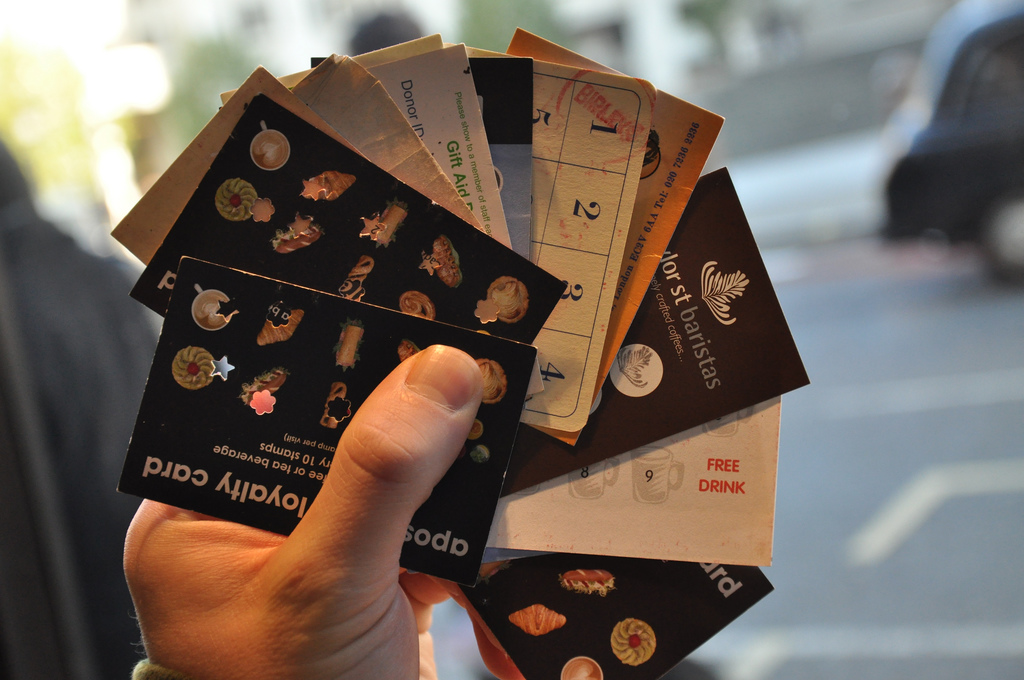
    Loyalty programs have been around for many years, but the availability of inexpensive computer technology, databases in particular, have spawned a new era of growth for these types of customer engagement set-ups. Sometimes these programs are created in conjunction with other partner businesses – witness the partnership between Giant Food and Shell Oil – grocery purchases are logged and items assigned a point total, and that total yields a discount on gasoline purchases at Shell stations. By linking two basic expenses, groceries and gas, the program allows customers to be rewarded for purchasing things they would normally buy anyway. Credit card “cash-back” programs fill this same need. But, they do engender loyalty.

    But a true loyalty program no only allows for more repeat business from your best customers, it give them a reason to tell others about what a great deal they get from you, thereby expanding your customer base organically without spending a dime. By rewarding the behavior you want -repeat purchase on a consistent and regular basis – you build transaction volume over time and increase profitability. But is this organic growth, or just incentivized interaction? The best loyalty programs no only facilitate repeat purchase, they also encourage referral, and some even provide disincentives for disloyal behavior.

    The very best programs not only engender loyalty, provide an incentive for not only loyalty but referral, and provide a mechanism for it. But they are also very customer centric, which means they are elegantly simple for the customer to enroll in and use regularly. Keytags with bar codes are convenient, but if it takes you half an hour and twenty pieces of personal information to enroll, the abandonment rate will be huge and usage will never meet expectation as a result. Simple for the consumer includes simplicity in enrollment, usage, and in accruing benefits. Credit card points programs are notoriously complex when it comes time to actually reap the benefits of your buying behavior, with many rules, complex formulas, and exceptions to the promised rewards that can make cashing in more difficult than it’s worth. To avoid fraud and abuse, those companies have put the onus on the consumer to do their back-end work for them, and find their own way through the maze of regulations and guidelines. Simpler is better.

    All the loyalty programs in the world won’t overcome product quality issues, poor customer service, bad product design, lack of distribution channels, low awareness or other inherent consumer business issues, but if you have the others conquered, a well thought out loyalty program can be a big help in tipping the scales toward brand loyalty, reducing churn, increasing engagement and retention. As usual in marketing, the secret to success is in the execution . . .

  • Brand Loyalty Is More Fragile Than You Think

    Brand Loyalty Is More Fragile Than You Think

    Marketing and sales pros know that people don’t really buy features and benefits, they buy feelings and stories. Your brand (hopefully) tells your buying audience a compelling story, one that gets retold each time they interact with your brand, which makes them feel a certain way, under a variety of circumstances. For retailers this means that each time customers shop your store, whether brick and mortar or online, they have certain expectations of that experience, and if you don’t live up to them, you may be doing damage to your brand. This makes customer service a key component to brand loyalty.

    I was speaking with a friend of ours the other day and we were comparing the stores where we buy wine. I buy at a small, boutique, one-off adult beverage emporium, one that specializes in having a large selection of micro-brews, and a strong selection of more esoteric Bourbons and Scotches, and a terrific selection of wines from around the world. She shops at a chain store, owned by a major grocery retailer, with a huge inventory of all the top brands, great pricing due to volume buys, and a no-frills approach to store design and displays.

    The reason she was asking me where I buy is because she had recently experienced three separate instances of poor customer service by store sales staff. She swore that after three strikes, she would never patronize that store again. Her brand loyalty to that brand, which had been off-the-charts strong before, based on it’s affiliation with the larger grocery chain, had been eroded to zero in just three perceived poor incidences of inattentive, rude, or unpleasant behavior. The selection, pricing, hours, decor and layout hadn’t changed one bit, but her perception of the store and its contents changed dramatically, for the worse.

    Now I’m pretty sure the large chain won’t really miss her business, and will likely never make positive changes to the sales staff’s training or behavior guidelines, probably because they will never know they have a problem, and she has no reason to tell them about it. But if you multiply her experience by a hundred, or several hundred, or several thousand chain-wide, you start to see some negative effects on the balance sheet. If you disappoint your target audience badly enough, or often enough, then your brand is no longer what it was.

    Ongoing feedback from customers, becoming more customer-centric in your operations as well as your marketing, can help stem this downward spiral and if caught early enough can give you a start on reversing it. Some companies are acutely aware of this, and take great pains to listen carefully to their customers. This customer brand monitoring takes several forms – feedback cards, social media monitoring, ongoing survey research, continual customer service call monitoring and review, and a host of technological solutions that track and measure customer attitude and preferences.

    One of the more diligent brands in this regard is Hilton. They religiously guard their premium brand, listening carefully to all customer feedback, and taking swift, effective steps to satisfy customer complaints. They do it so well that most complainers are turned into brand evangelists! They have an overwhelmingly positive customer rating in a variety of categories by organizations like J.D. Power, Zogby Analytics, and media outlet lists like MSN, List25, and Wall St. 24/7. They have realized that their customer interactions are a driving force in their brand loyalty, and take iron-clad, positive steps to protect it and bolster it with each customer experience they deliver.

    The real message is that while a single customer may not contribute much to your bottom line on their own, the symptoms and actions that lead to that customer losing their loyalty to the brand need to be addressed before they “go viral” among your customers and degrade the brand. As Barney Fife once said, “we can’t have that kind of behavior, we gotta nip it in the bud” when you fail to deliver the highest level customer experience each and every time.

  • When To Give The Customer A Quick In-And-Out

    When To Give The Customer A Quick In-And-Out

    For those of you with less than pure thoughts, got ya! I don’t write on customer service issues very often, once or twice a year, and it usually has to do with how to treat them with respect, how to enhance their experience, or how to engage them more thoroughly and for longer. But sometimes, you just want to get in, get yer stuff and get out, and that’s not always a bad thing.

    The thought of speed in a transaction is a foundation in certain sectors of brick and mortar retail – groceries, convenience, gasoline, and the like for instance. They aren’t large footprint locations, don’t have much room for folks to be roaming around, and studies have shown that they often are in a hurry or have a set list of things they need, and that total receipt won’t change much due to them lingering. They make up for this by providing a lot of opportunities for impulse buying while they have you the most captive – at the cash register. Some of these locations are so ardent about this, that they have arranged the items packed so closely together you can hardly see the cashier for the racks of stuff! But you can still get in, pick up your choices off of easily selectable shelves and quick-grab racks, get in a line (if there even is one) and pay inside of a couple of minutes, seemingly regardless of the number of items.

    In that instance, that’s good customer service – you gave the customer exactly what they wanted – speed. Their expectations were met and you’ve given them exactly what they needed, a no-frills transactional approach to commerce without a lot of fuss or conversation. Some of this is possible due to technology – they have the fastest register software available and the simplest, most common-denominator pricing and indexing for inventory of anyone in the business of retail. But some of it has to do with design, layout, and most importantly, human behavior.

    The reason people shop at convenience stores is exactly that – convenience. They don’t go bargain hunting, they don’t argue over the $3 mini bag of Cheeze Curlz, they don’t bring coupons (there aren’t any), and they often aren’t terribly loyal when it comes to brand. They’ll pay a premium for the speed and won’t argue about it with the cashier, who says as little as possible during the transaction. They’re not folksy, they’re not chatty, they don’t know you most of the time, and don’t plan on seeing you again, ever. No need to form a relationship, just bag the chips and the soft drink and move on.

    That’s not to say that you feel rushed, or hurried, or that the service is brusk or rude, because its not. It’s just devoid of emotion, good, bad, or indifferent. They serve a function, do it well, and please the customer – job done. For the cashier, this is a relatively simple, boring to the point of inanity, potentially dangerous job, often on an odd shift, done for the short-term based on a dearth of marketable skills and a need for capital – it’s not a career position. For the customer, it’s a quick pit stop with a specific purpose, no browsing or emotion required, and if they happen to find something whimsical or amusing at the register, or something there reminds them of another item they need, so much the better for everyone – what the heck, it’s only two bucks, right?

    Other types of retailers can benefit from this approach as well, specifically online. Everyone’s focus in the early days of web commerce was to extend “dwell time” – how long are they lingering on the site, what are they looking at, what page and what item draws their attention, were key metrics. Consumers were still getting used to shopping online, and there had yet to be developed standards of usability or code norms for websites, so the customer had to not only learn how to find the items they were looking for, but how to work the website in order to get them, from the shopping presentation matrix to the sizing and customizing of the item, to calculating the shipping time and cost, to the payments page(s), it was a learning experience, not so much a shopping experience.

    More recently, shoppers have gotten vary familiar with all the bells and whistles of online commerce, web designers have figured out how to present non-static digital items for greatest effect, and how to lay out pages intuitively so that your eye and cursor travels to what you want almost effortlessly. It’s a strong advantage, and only recently have online shoppers been allowed the freedom to use their own data to speed the process along. For commerce sites you frequent, there is significant data from your prior transactions that allows both you and the retailer to benefit.

    I frequent a couple of gift sites for things I send to clients for the holidays, and after a few years, I can visit them, select, buy, address and ship about 20 items in less than 30 minutes – blazing speed compared to a trip to a crowded mall, let alone the gift wrapping, boxing, shipping, and distribution time and cost. All the addresses are already there, my selections from last year and prior are logged, and it reminds me if, in my shopping haze, I duplicate a previous gift – nice feature for us oldsters. The shipping is often either included or free based on frequency and volume, and I know the quality and presentation are top notch with out having to investigate further – a quick in and out transaction that by no means diminishes the thoughtfulness of sending a gift to a loyal client.

    Sometimes providing a great customer experience really means delivering on your brand promise, as long as it’s been accurately telegraphed ahead of time. I know the convenience store doesn’t have premium brands, I know their selection is rather limited to a certain type of merchandise, and I know that I’m not going to get a bargain, or be met at the door and asked if I’d like a sample of Chai latte while I shop, or that the cashier is going to gushingly ask if there’s “anything else she can do for me.” But I also know they’ll have what I need to get by, right now, and get me back out and on the road without having to do anything special, or even say a word. Sometimes, that’s a great experience!

  • Could Your Business Survive Ten Days With No Internet?

    Could Your Business Survive Ten Days With No Internet?

    As fears go, loss of Internet access is climbing the ladder, and will soon join spiders, tornadoes, public speaking and cancer at the top of the national list. With all the threats presented by the modern world both international and domestic, the loss of the currently ubiquitous Internet is a very real possibility. Cyber Security has gone in just 15 years from a futurist topic on the seminar schedule at small, obscure IT conferences, to a huge industry and a Federal government priority,in an effort to preserve the integrity and functionality of this newly precious resource. Could your business survive the Internet-less apocalypse?

    So many businesses depend so heavily on the Internet for their marketing, either through organic search and SEO of their site, e-mail marketing and customer service, banner advertising, Adwords programs, re-marketing programs, to order-taking and fulfillment operations, that they could not function with no internet capability – web-only based businesses are out of luck from day one! Brick-and-mortar businesses have an advantage here, in that they may still have foot traffic, use traditional media like TV and radio ads, billboards, building signs, direct mail and print ads, to drive shoppers to the store – they would have to use cash to purchase anything if the Internet were “down” or didn’t exist, but they could function moderately well in the local geographic area. What would be most missed is the additional global outlet and customer base that the ‘net allows for.

    Professional services businesses would also function in a remedial way – law firms, accounting firms, consultants, and engineering firms still do much of their marketing and lead generation through traditional means – but would be hampered in providing some of those services in as quick or timely fashion as we’ve become used to – “e-mail me that spreadsheet,” and “give me everything Lexus-Nexus has on . . .” would be things of the past, but those laws are still “on the books” and in the books at most firms, and the search, while laborious and time consuming, could still be performed manually, and those ledgers still record debits and credits just fine, no batteries required.

    The US Postal Service would likely see a huge uptick in business, as e-mail ceases and businesses have to return to writing memos and mailing them, either internally or externally to clients, customers and far flung colleagues. It might make some of those long-winded and knee-jerk missives that show up in your inbox on a daily basis a bit more scarce as well, as business people are forced to craft more thoughtful communication to commit to paper and mail. It would certainly allow for more time to proofread and edit, something most e-mail desperately needs, so not all of this non-Internet fantasy is bad . . .

    Certainly the lack of social media communications platforms would free up more time to be productive, although those businesses that exist or thrive using social media marketing as a reason to live would disappear, they would likely be supplanted by higher attendance at conferences, tradeshows, meetings, seminars, more client contact, which would help out the hotels, airlines, conference venues, as face to face returns to fill the vacuum. Talented writers would have to work for a publication, magazine, newspaper, ad agency, or radio or TV outlet, as blogs would be impossible. Maybe they’d remember how to grow and hold a following, build an audience, and even get paid to write . . .! Editors would suddenly be back in fashion, curating the news and crafting public perception of current events, rather then the gang input, do it yourself, Wikipedia approach to learning about the world around us.

    Take five minutes, and mentally catalog all the things in your business, either marketing or operations, that depend upon the Internet to exist or function. Were a global calamity to occur, could you continue to function as a business without it? Is there a written (and printed out) plan for this eventuality? Keep in mind that we’re not talking about the stone age, electricity still works, computers still function as free standing machines, connect to printers and other computers over local network wires, the phones still work (unless you have VOIP service only), its the global connected-ness, the openness, the instantaneous access to global information that’s gone. If nefarious evil-doers were to knock out large sections of the global ‘net, would your business survive? If your fleet of trucks uses credit cards at the gas pump, your transactions are credit card only (the return of the chick-chuck slider machines would be rapid and expensive), your equipment needs GPS reports to function, your outreach is web-only, your pipeline driven solely by Google Adwords, you might be out of luck quicker than you think . . .

    Should we continue to base our businesses heavily around the Internet’s availability and ubiquity? Probably. Should it be our only way to continue to further drive commerce? Likely not, as you just never know . . .

  • In a World . . . Where There Is No Post Office . . . Direct Mail Professionals Aren’t Doomed

    In a World . . . Where There Is No Post Office . . . Direct Mail Professionals Aren’t Doomed

    Based on experience, on articles in a huge number of media outlets, on TV and radio, much has been said about the challenges facing the US Post Office. Fiscal reform efforts don’t seem to have stemmed the bleeding, a rate case is in the making that will likely make most mailers sit back and reconsider their mail schedule and creative costs with respect to mailability, machinability and postage costs, and even with offices consolidating and more rural locations closing, deliverability and schedules will have to be accounted for under the current scenario. But picture a world where the Federal Government, Congress, and the American People all agree for a change, and come to an agreement on closing the post office altogether. What might that world look like?

    From a business standpoint, a huge bulk of business correspondence has already shifted to e-mail from printed postal mail, as have bill and invoice presentment, financial reporting statements, even annual reports are delivered digitally as PDF files. The remainder of the mail stream includes direct marketing pieces, catalogs, parcels, fulfillments of various types that cannot be delivered digitally, legal documents that must be delivered on paper or signed for by the recipient, and some other odds and ends. In aggregate that still represents a huge swath of companies, and jobs, that will have to shift their thinking, and their marketing efforts and communications strategy, to account for the loss of postal delivery.

    Strategically, one of the other common carriers, or possibly both UPS and FedEx, will likely have to ramp up to fill the void, but that would certainly suggest that some changes would have to made in how they operate logistically. Air hubs would have to be expanded, fleet maintenance established and expanded from the current to service fuel and maintain the huge fleet of trucks, cars, planes and other specialty apparatus the USPS currently fields. The care and upkeep of the buildings, street boxes, already a rarity, would likely be curtailed, shifted and more centralized. Delivery would likely be curtailed, made only on select days, much like in EU nations, and only to select stations – residential delivery, especially in rural areas where efficiency is low, would likely cease. Individuals would be forced to visit a substation several days a week to pick up their mail after showing ID. Businesses would receive delivery to their internal mail handling sections, but maybe not daily.

    Businesses directly related exclusively to supporting the USPS would certainly be challenged, but what about those who use the mail extensively to market their goods and services, and the businesses who serve them (printers, designers, processing houses, list brokers and aggregators, equipment manufacturers who make printing, folding, inkjet and addressing equipment, inserters, sorters, cutters, stampers, high speed duplication and personalization printing machinery), and a wide swath of other businesses world-wide.

    Fortunately, most of those businesses will have the time to adjust to the new circumstances, and if they are nimble and diversified in their customer base and product offering, they will survive in the new post-post office world. Direct marketing professionals need not necessarily fear for their jobs, as nearly all of their skills can be ported over to the digital realm. Copy that sells still works digitally, with some minor adjustments; good design still enhances results, online or off; a good list is still the key to response success, and if my inbox is any indication, there are a good-sized chunk of list purveyors specializing in selects from business e-mail addresses to help companies and non-profits reach out to their target audience.

    The toughest cut will be the army of postal employees nationwide, for some of their skills will be made obsolete, marginalized, or undervalued. With no residential delivery, carriers, sorters, and other related jobs will be sidelined out of existence. Hopefully a retraining program of immense proportions will be built into the wind-down plan, and those hardworking individuals will be placed elsewhere as they desire.

    As an exercise, close your eyes and imagine that post-post office world and how it will affect you. Let me know if you like the new world . . .

    If you liked this and want to read more, subscribe to this blog above. And don’t forget to pick up your copy of “The Marketing Doctor’s Survival Notes”


  • To Provide a Positive Customer Experience, You Have To Know What They Want

    To Provide a Positive Customer Experience, You Have To Know What They Want

    In some ways the modern brand ambassador marketer’s job has changed focus in recent years. Recently, its not so much about informing or enticing the buyer, it’s about delivering on a promise and providing an “experience” to go with the transaction. In our experience, we’ve found it difficult to create and provide an enticing customer experience if you don’t have a rock-solid grip on what the customer really wants and will respond to from your brand and your product.

    This getting-to-know-you activity can take a number of forms, but the bottom line is that not only is your customer base a dynamic entity, ever changing, growing in need and sophistication, shifting in it’s preferences and requirements, but is composed of an ever-transient population, because most data, especially transactional data, is static, it’s a snapshot of the group at that particular moment. In order to avoid this, smart companies with the long-term view have devised and implemented a system for driving ongoing customer feedback, interaction and input that lets the company keep a finger on the pulse of it’s customers. Once that pulse has been taken, an environment, an experience can be crafted and replicated for each customer that resonates in a positive, energetic fashion.

    In the retail world, customer experience is often focused on the physical environment – rack height, sight lines, lighting, merchandise selection and placement, shelf space allocation, aisle configuration to drive traffic down high-profit aisles, signage digital and otherwise, music, even scent, are all priority considerations. The digital realm of retailing doesn’t offer those aspects, at least not yet, but they have their own “experience” concerns. Eye-tracking, navigation and dwell-times, abandonment of the cart, payment processing glitches, as well as things like color selection, use of white space, imagery, user-interaction studies and the like take the place of lighting and shelf space concerns. But the experience in both cases goes beyond the physical environment in which the shopping occurs.

    Customer experience has to do with the initial engagement (how you already feel about the company and the purchase before you even get there), to the initial contact (are you greeted sincerely at the door, are you made to feel welcome, do they even HAVE what you want), and continues to the shopping and selection phase (do they stock what you want, in your size or color, is it really the item you thought it was, and did the onsite staff assist you in making the selection or a decision between two similar items), through the payment, the upsell, and the return and aftercare phases.

    If somehow all of that goes well, the experience can still be less than perfect – did you FEEL that it was a good experience, did you feel guilty for making the purchase or did you get good justification for the quality/price/value equation of the purchase, among other elements.

    For marketers, especially online marketers, that means you have to have a stranglehold on what your customers value, what parts of that transactional chain they value most highly, how they prefer to be approached and what their ultimate goal is in making the purchase – a tall order for a couple of images and a screen or two of product description. But good research can answer those questions and save the day.

    Know the customer, show your interest through offering an accurate engagement and a welcoming, familiar presence, and carry through on the promise, and the customer experience will be a positive one.

    For more thoughts on how important research and customer engagement are to successful marketing, a FREE white paper on customer engagement is available at www.Granite-part.com just for the asking.

  • Is facebook Your New Customer Service Department?

    Is facebook Your New Customer Service Department?

    I was speaking with some colleagues at a networking function the other day, and the presenter asserted that some companies have scaled back their customer service phone centers, and some have virtually done away with theirs altogether. The natural extension of this is the assertion that eventually all customer service would be performed through, and customer interaction take place on, social media platforms. Initially, I was astounded at the audacity of such a possible future, but upon further reflection, this might not be such a bad thing . . .


    There are some advantages to this strategy, including:

    1) All interactions can be collected, cataloged into a database, and searched for trends later to guide not only marketing, but new product development.

    2) Both parties to the interaction would have a record, held on an independent server, so that the practice of CS takes a more friendly footing, rather that degenerating into a “He said, She said” proposition for long-term issues.

    3) Since CS is often outsourced, and off-shored, having all customer communication be transacted in writing eliminates problems with misunderstandings due to accents and local dialectic usage – spell check and autocorrect should take care of 80% of that problem, anyway.

    4) Having to write down your problem forces the customer to think through the problem from beginning and end, and to actually ask for the action they would like the company to take. So many customer call and say things like “I bought this and it’s not what I wanted” or something else equally vague, and expect the company to not only know what the problem is, but to try and solve it in satisfactory fashion without actually being asked to do so.

    5) Having to write down your issues brings down the tempo of the conversation, makes the customer think about how that problem might sound to others, and gives the customer some time to calm down and remove some of the emotion from the issue before assaulting the CS rep on the phone.

    Those are mostly advantages to the company, but the consumer gains a few benefits too.

    • It’s hard to be given the run-around being transferred to different departments as the company tries to figure out how to deal with you, or tries to avoid it at all
    • No more waiting on hold endlessly to ask a simple question not listed as a choice on the phone tree.
    • Now you have some time to gather your documents, account numbers, invoices and the like and organize your thoughts into something coherent someone can actually act upon.
    • Now there’s a public record of your complaint, available to all your friends! They can steer clear of the company if the problem is severe enough or not handles promptly and effectively – it’s like everyone’s a walking copy of Consumer Reports!
    • Digital interaction is here, the technology is so advanced that “chatting” has taken on an entirely new connotation, all encompassing a digital conversation online with a rep on the other end in real time.

    Now, that’s not to say there’s no downside to all this digital back and forth. Companies gain some great insights from their interpersonal contacts with customer, or at least they should if they are listening. Nothing telegraphs a problem better than watching the phone banks light up and hearing the noise level rise in the Call Center ten minutes after the release of a new version of a piece of software or the launch of a new product, or a new issue of a newsletter or magazine hits the mail stream. That cumulative noise tells you in a collective, aggregate fashion that something is amiss, and it had better be dealt with quickly and effectively to stem the tied of customer defection and mitigate damage to the brand.

    The big loss is the interpersonal connection customers feel with the brands they know and love. Sometimes you just want to talk to a “human being,” not be dealt with in turn by a machine or work through a series of choices on a phone tree. All the kitten pictures and blather about meals on social media will never replace that human connection, and the reassurance that there is “someone” responsible for taking care of your problem. Digital pixels aren’t accountable, and it leads to a distancing and disconnection between customers  and the company, which is what your marketing efforts are designed to avoid.

    What do you think? Will social media replace customer service in the near future? Comment below, or contact me through LinkedIn, facebook, Twitter, or through my automated customer service website . . .

  • Free Product Development Assistance – Just Ask Your Customers

    Free Product Development Assistance – Just Ask Your Customers

    We’ve long been a proponent of the use of primary customer research to guide and inform marketing activity, because it makes so much sense to simply ask your customers or members how they would like to receive communications from you, in what form that communication should be, and what the focus of those communications should be. “Give the people what they want” is something of a mantra around here, and it has been very effective for our clients, driving solid member growth, higher retention rates for non-profits, and smarter customer interaction, higher engagement levels and higher customer loyalty levels for commercial businesses.

    Taking that a step further should yield even better results – don’t just ask customers how to market to them, ask them how they want the product or service to look, feel, be delivered and how it should function! Bringing your customer input into the business stream at the product development level can offer stellar results, and not doing it can deliver disastrous consequences.

    Imagine pouring your blood, sweat, and tears, not to mention scads of time and money, into developing a product based solely on secondary market research – other products on the market, SWOT analysis, competitive scan, staff intelligence gathering and R&D imagination, then getting all the way to the sales pipeline and discovering that no one really likes or wants the product as it is. Heartbreaking, sure, but also damaging to the brand, the company, the bottom line, and the credibility of the company for potentially years to come.

    But, ask some key questions ahead of time, toss in a focus group or two, build some inexpensive prototypes (for products of a certain size and price point) by 3D printing or other inexpensive method, and see how actual users react, how they interact, how they approach using the product, and you can build a fully-viable product, well-suited to it’s intended target market. You get it right the first time, spend less on marketing costs, and can scale up with confidence, knowing that the product has a viable, receptive market.

    Yes, we know this doesn’t work for every product or service. We can’t very well have experimental pharmaceuticals out there floating around in a focus group and having the participants dropping like flies because they determined their own dose, and having the astronauts test the rocket on their own prior to building it can be expensive, and a little dangerous. But for many products, and a significant number of service businesses, a little primary research and customer input before the launch will save a huge number of missteps and headaches, and make the launch a bolder, more confident, less anxiety-racked event.

    Based on some of the products I’ve seen out in the marketplace recently, the phrase “There’s never time to do it right, but there’s always time to do it over” seems to resonate with inventors and product originators more often than ever, and in the rush to market, many seem to have ignored the mistakes of others in the past regarding assessing the needs, wants and preferences of the marketplace. With broad-spectrum consumer research an inexpensive option due to newly developed technology, there’s no excuse not to do it right the first time, and have nailed down your customer’s needs before the product ever hits the shelves.

    Do you agree? Let me know in a comment if you’ve discovered any new products or services you’ve seen where you thought “Who were they thinking would buy this?”