Category: Communications

  • How To Become Customer-Centric . . .

    How To Become Customer-Centric . . .

    Whether its B2B, B2C, global enterprise or local start-up, commercial or non-for-profit, all types of business can benefit from becoming more customer-centric. But what does that mean, what does that look like, and how can you achieve it without recreating your business from the ground up?

    True customer centrism is as much an attitude, an approach, as it is a model or structure, which means if companies want to take advantage of all the positives derived from knowing and treating your customers better, it all starts at the top, it’s built into your corporate or organizational culture, deeply interwoven into your corporate DNA. It’s one of several facets of business where you can’t just “talk the talk,” you HAVE to “walk the walk” every day, day after day, from all employees, customer-facing or not.

    OK, so now that you have the attitude adjusted, it’s time to check the altitude. That requires some real, trusted, correctly executed research data. But where do you start? One aspect of research data is that it’s like lettuce, it needs to be fresh to be at it’s best. Which means you need to develop a way of gathering data from your customers that you can rely on to be accurate, to pull from a high-confidence sample size, and can be put in place relatively quickly and can be relaunched on a regular basis, once a baseline is established. Surveys can be used in some instances, depending upon what you’re trying to accomplish. Our preferred methodology is the IDI, or In-Depth Interview. It’s a semi-scripted conversation, 30-60 minutes in length, guided by a pre-written discussion guide, executed by trained researchers, NOT telemarketers, who can hold an intelligent conversation with a wide range of professionals and consumers. That conversation is geared toward gathering not only facts about your customers buying habits and purchase patterns, but about their attitudes, feelings, preferences, and moods regarding your products, services or brand. Many of those will be driven by their most recent experience with your company, usually an interaction with either billing or customer service representatives. Keep this in mind when doing the data analysis later, its one of the reasons why research data needs to be fresh.

    Each IDI is recorded, transcripts made, each question response is then tabulated, and the responses segmented into positive and negative piles, or into a range of “buckets” based on type of response, severity of feeling, and prevalence among respondents. Those data points are given to three analysists (in our practice, anyway), and three independent analyses are written up based on the same data, to mitigate bias and skew. That’s the basic methodology, but the key to using these successfully comes in the performance of the questions themselves – if you don’t ask the “right” questions, you can’t act appropriately on the answers and achieve the desired result. That’s where the magic happens.

    Now that you have your data, and have done the analysis, now what? Data is just dumb numbers and words unless it leads to, or can be converted into, some positive action with respect to your customers. Some of the data will be most useful in making adjustments operationally to customer-facing processes. Is your fulfillment process causing problems, is the return policy too restrictive or difficult, is your phone tree routing system too complex or directing people insufficiently or are the menu options wrong – those are things that can be adjusted and shifted based on the data in a very direct way. They make a big difference in the customer experience, and can certainly affect their attitudes and emotions toward the company in the short term. It gets a bit more complex when you start examining some of the deeper attitudes and preferences about the company and its brand, what the company and it’s products mean to them emotionally, what feelings does the brand bring out in them, and why. Those are brand-linked attitudes and emotions, formed after repeated interactions and touch points with the company, its outreach materials and products. It’s much tougher to pin down the cause of these aggregate attitudes, but worth the time if you can make a correction that rights the brand’s direction going forward.

    At this point, many of the smaller B2B companies and service firms are thinking, ”isn’t that up to our sales people to assess those things and listen to their customers and shape their offer and interaction accordingly?” Even if your transaction volume is very low and your client number correspondingly low, there is still much to learn about your customers by doing research, and to be able to adjust your marketing to find more of them as a result. In fact, smaller, lower volume firms can make a bigger impact by paying attention to brand influence and making customer-centric adjustments than a larger firm can – small changes make a bigger difference in their bottom line, and a small increase in customer volume makes a bigger difference financially as a percentage of overall revenue.

    It’s said in the psychiatric profession that admitting you need help puts you half way to a cure. Becoming customer centric as a business is a similar situation – by discovering that you can improve your growth, meet objectives, increase revenue and profit by knowing your customer better and serving their needs more directly, you’ve already planted the seeds of that first attitude adjustment step, a big move forward in the process. Communicating that attitude down through the rank and file so that it becomes pervasive throughout the firm is the next step. Strong belief, direct simple communication, and a solid, positive example shown in every corporate action is the key to building a more customer-centric organization. No time like the present to get started. If you don’t know where to start, we’d be happy to help.

  • Legacy VS Longevity – Brand Makes The Difference

    Legacy VS Longevity – Brand Makes The Difference

    Some brands seem to become well known, some nearly ubiquitous, in a short period of time, relatively speaking. Some businesses that have names that are around for decades and decades, and for generations, and their brand reach is only a few miles from their location with virtually no recognition beyond that, aside from existing customers, which only number in the hundreds. What makes the difference between the long-time brand, and the real legacy brand, that gains national exposure and stays in the forefront for years and years?

    Clearly just sticking around for decades should count for something, right? Growing a business is not for the faint of heart, and it’s a lot of hard work over years to become established and known for what you do. Yet some seem to climb that mountain fairly quickly and become almost household names in just a short period, taking a large stake in market share for their category, while others simply continue day by day, seemingly doing a good job, gaining customers, but they never reach prominence either in their category or industry beyond the small local area.

    The difference can likely be attributed to three factors:

    • Paid or Earned Exposure – is there an advertising program on a large scale, is there some press and PR activity on the schedule, have you told the story to the media and let their network and their imagination do some work for you in spreading the word? If not, that may be a significant determiner of your reach and market share – someone once said that “a business that doesn’t advertise is like a nerd kissing a girl in the dark – you know it’s happening, but no one else knows you’re there.” Craft a credible, succinct brand story, and amplify it as far as wide as possible.
    • Industry Participation – Are you a member in good standing of the business and professional trade associations that cover your vertical and your business activities? Are you active and engaged in those groups? If not you’re missing a huge opportunity. Those organizations not only represent you and the other members to the general public, but they allow you to be known within your industry as an expert, a specialist, a provider of solid standing and credible ability – they all publish multiple vehicles, from websites, to magazines and newsletters and blogs that can be used to showcase your business to industry colleagues.
    • Differentiation – what is it that you do better, faster, cheaper, differently than your competitors? Do you use different or better procedures, superior materials, alternate parts or components, better product designs, respond to customers in a spectacular way, do you offer a full refund no questions asked no matter what? Free shipping on returns, multiple access points, 24/7 service, faster turnaround? Something gives you distance from your competitors. Use that to stand out from the pack, and spread the word nationally that you’re the one that can provide “X” when no other can.

    With those three pillars in place, if the product is of good quality, if you’re telling the right people, at the right time, often enough to “stick” in their minds when purchasing time comes, then your brand should be established, and spread as far as you can push it out.

    None of the three things listed above are terribly expensive, from a business standpoint. It is certainly possible to spend yourself into a sizeable hole on advertising that doesn’t work or that is misplaced, but there are scores of professionals out there to assist you in determining the appropriate spending levels and media selections so that this doesn’t happen. The industry participation is relatively inexpensive but can be time-consuming – almost always well worth the time to establish yourself as an industry player, which brings dividends for years. Differentiation is more an introspective exercise, and should be part of all your marketing planning, along with reiterating your brand characteristics and pillars of internal strength for the brand, to help keep the brand story consistent and on track over the years.

    Are you a local presence, or a national brand on the rise? The choice is really yours to make . . .

  • The Power Of Words . . .

    The Power Of Words . . .

    Marketers use words for many different purposes, to persuade, to cajole, to express urgency, to instill fear, to provide an identity, to convey calm or safety or trustworthiness. We’re like superheroes, in that we can use those powers connected to words for good or for evil, to help customers find the perfect item or service, or to drive them to register for a worthless but exciting-sounding product that they may regret later if indeed they ever receive it. Despite a documented decrease in the average person’s vocabulary inventory, the power of words has never been stronger. How far can that trend be extended?

    Our fervent hope is that it be reversed, that the general populace realize the power of words, the need for a full-scale, broad-spectrum education, which can open doors far beyond computers and technology. As little as 50 years ago, the average American high school graduate had a strong grasp of their own language, could read and write at a reasonably consistent level, and was equipped with the tools to take them as far in life as they could achieve using public, published information sources. The library was a place of knowledge, of reverence, and for those equipped to use it to its fullest potential, a place of wonder and excitement.

    Today, that same American graduate has a smaller functional vocabulary, lower level spelling skills, is slower to comprehend what they read, and can often not fully absorb the daily newspaper, which is typically written on an 8th grade reading level. They can also carry a small library in their hand, on a digital reader with a collection of public domain books, and with an internet-connected tablet, can learn things about the world around them every minute of every day. However, the words may be there and be readable by nearly all, but the wisdom and the editorial judgement and curation that vets those words are no longer present, so the onus is on the reader to choose their sources wisely, to choose who to believe very carefully. Inaccurate words have the same power as the accurate ones, and travel just as quickly.

    Marketers of questionable ethics and flexible morals have been known to take advantage of the power that words possess, to portray a situation or product in a certain light that might take advantage of those whose comprehension of words and their discernment of nuance of phrases might be diminished. Good marketers know they needn’t stoop to that level to be fantastically successful at what they do, to engage and persuade and enlighten audiences and provide a gentle nudge toward purchase. But the internet has become a playground for the more nefarious among us, causing the average person to act with additional caution when reading anything online, regardless of its source.

    Marketers need to remind themselves that this tactic of deceit and misdirection is a game of diminishing returns, that the more tricks, click bait, misleading tags and headlines that appear, the fewer people who will investigate anything in that channel overall, reducing response rates and cutting profits to the point where the credibility of digital outreach will reach a low ebb, and a new approach will have to be put in place. Those who are agile and can adapt to the new paradigm with flourish, those who are more Tyrannosaur-like will perish in the aftermath of the volcano. Be mindful of the power of words that you hold in your hands – misuse of that power affects us all . . .

  • Affinity Programs CAN Drive Engagement And Loyalty . . . If Executed Properly

    Affinity Programs CAN Drive Engagement And Loyalty . . . If Executed Properly

    Business owners who sell to consumers are constantly striving to grow their customer base, and to retain the one they have already established. Organic growth, whether driven by effective marketing and promotion or by product quality, or customer service that leads to word-of-mouth referral, is the first priority for most consumer-centric businesses. But most sales pros will tell you that it’s much less expensive to keep your existing customers happy and have them buy more, than it is to acquire new ones. So why are most businesses taking the expensive route, rather than increase retention and engagement of the existing customer base? Most likely, it’s because loyalty programs, or affinity programs that encourage repeat business and customer loyalty, are difficult to execute effectively. There are lots of moving parts, lots of detail to keep track of and account for, and they attempt to codify human behavior and account for each variation to counter potential abuse. This creates other obstacles, which will be addressed shortly.

    Most businesses are good promoters of product, so crafting offers around product, centered on price or volume, is routine and straightforward. Put together a few “Buy one get one free” promotions, or “Early-Bird Specials” to add urgency, and they become your go-to strategy for driving foot traffic (or clicks). It takes little in the way of creativity or customer insight to knock off 10% or split 50-50 for volume purchase, and they do the job to a certain degree. But are you creating real brand loyalty, or just offering casual customers a reason to save a little money?

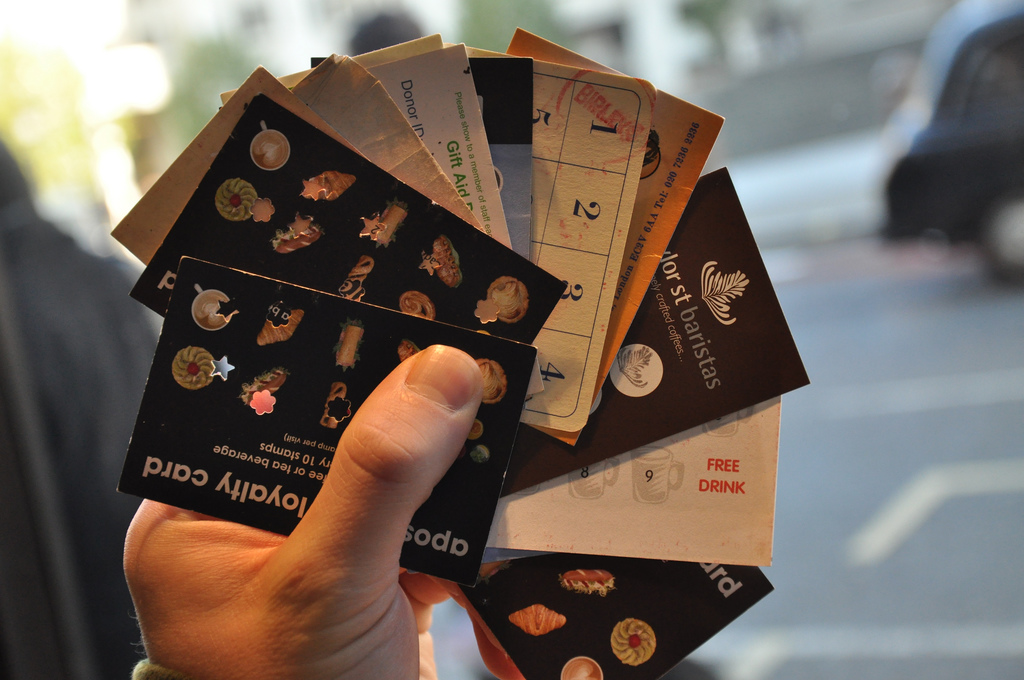
    Loyalty programs have been around for many years, but the availability of inexpensive computer technology, databases in particular, have spawned a new era of growth for these types of customer engagement set-ups. Sometimes these programs are created in conjunction with other partner businesses – witness the partnership between Giant Food and Shell Oil – grocery purchases are logged and items assigned a point total, and that total yields a discount on gasoline purchases at Shell stations. By linking two basic expenses, groceries and gas, the program allows customers to be rewarded for purchasing things they would normally buy anyway. Credit card “cash-back” programs fill this same need. But, they do engender loyalty.

    But a true loyalty program no only allows for more repeat business from your best customers, it give them a reason to tell others about what a great deal they get from you, thereby expanding your customer base organically without spending a dime. By rewarding the behavior you want -repeat purchase on a consistent and regular basis – you build transaction volume over time and increase profitability. But is this organic growth, or just incentivized interaction? The best loyalty programs no only facilitate repeat purchase, they also encourage referral, and some even provide disincentives for disloyal behavior.

    The very best programs not only engender loyalty, provide an incentive for not only loyalty but referral, and provide a mechanism for it. But they are also very customer centric, which means they are elegantly simple for the customer to enroll in and use regularly. Keytags with bar codes are convenient, but if it takes you half an hour and twenty pieces of personal information to enroll, the abandonment rate will be huge and usage will never meet expectation as a result. Simple for the consumer includes simplicity in enrollment, usage, and in accruing benefits. Credit card points programs are notoriously complex when it comes time to actually reap the benefits of your buying behavior, with many rules, complex formulas, and exceptions to the promised rewards that can make cashing in more difficult than it’s worth. To avoid fraud and abuse, those companies have put the onus on the consumer to do their back-end work for them, and find their own way through the maze of regulations and guidelines. Simpler is better.

    All the loyalty programs in the world won’t overcome product quality issues, poor customer service, bad product design, lack of distribution channels, low awareness or other inherent consumer business issues, but if you have the others conquered, a well thought out loyalty program can be a big help in tipping the scales toward brand loyalty, reducing churn, increasing engagement and retention. As usual in marketing, the secret to success is in the execution . . .

  • Marketing Automation Can Go Too Far

    Marketing Automation Can Go Too Far

    With as many digital marketing programs, apps, platforms and dashboards as are currently available to the modern marketer, clearly marketing automation is an idea whose time has come. But at what point does all that automation start to mask, hide, obfuscate and cloak the real goal of the marketer – to persuade, influence, elicit emotion and garner a specific reaction by connecting in some emotional way with the individuals who make up the target market. If the machines are deciding the timing, tone, quality, frequency, subject matter and even copy point priority, is there really a relationship being created there?

    While I’m still emotionally a bit of a luddite when it comes to technology, I understand it’s uses and marvel at its potential to make our lives easier, and more productive, alleviating the drudgery of some of the more mundane daily tasks and delegating the type of “step, repeat” activities that make up our daily existence to simple machines. However, there are limits to the level and type of task I’m willing to relinquish to the machines. The little voice in the back of my head that warns “If it can do this, what else could it do if I don’t keep control over it” is running that script more frequently when I take a few moments to fill the que of my social media automation platform. It speeds up knowing that the machine will be totally in charge of what people see, when they see it, how often they see it. Relin       quishing that level of control is a little scary.

    Now, take that a step further. The next generation of software is likely to have wider permissions within your physical and online universe. It’s possible, given the necessary set up structure, for a similar platform to deliver a message to a given recipient, with the ability to search their hard drive and cloud account, dredge up bits of information gauge their reactions to online posts by others, collect viewing habits for photos and videos, and be able to piece these disparate pieces of data together into a coherent letter rife with personal references that only make sense to them. Its invasive, it’s creepy, it gives the recipient a sense of exposure, but if crafted correctly and reigned in appropriately, it would be so personal and so relevant, it would out-pull almost any generic control letter by a factor of 10. Are you scared of the machines yet?

    Currently, the overuse of personalization typically takes the form of using the person’s name or address or other key piece of publicly available information too many times. The only damage there is to the sender, as it pulls back the curtain and exposes the use of data in the letter, destroying the illusion of personal relations and destroying trust. This depresses response, but doesn’t hurt anything. But taken a notch further, say that same letter is riddled with personal information, including images of your home and kids, banking and financial “hints”, information about your mortgage or car loan, the kids’ school names or addresses, extracurricular activities. Looks and sounds personal, right? Now imagine that letter is stolen out of the mailbox, or picked up out of the delivery bin before it even gets to you. The person with ill intent now knows more about you than they could ever discover any other way, and can use that data to do anything they want, unfettered by regulations, legislation, professional ethics or legal restriction.

    Used correctly, personalization and data “injection” can make messages feel relevant, feel familiar, feel comfortable, and lead to a positive response. Used incorrectly, personalization can open the door to abuse, cause damage to both the sender and the recipient, and lead to a range of problems from minor headache to legal action. When employing automation for driving or disseminating marketing messages, best to err on the side of caution and keep your human fingers in the pie at critical points – just to be sure everyone stays on good terms – be careful out there . . .

  • Self-Branding: Keys to Making a Great First, Second and Third Impression On Prospects, Clients

    Self-Branding: Keys to Making a Great First, Second and Third Impression On Prospects, Clients

    Most professionals in a wide variety of industry verticals are aware that they need to create a positive impression when they meet a potential client or colleague. Service pros of all stripes have at least some understanding and self-awareness regarding the impression they leave people with upon first meeting. What many neglect however, is that branding is an ongoing activity, and that if you want to activate the positive impression you’ve created with that person or group, you need to keep providing evidence to reinforce this impression – that brand is yours to damage or degrade, and a few smart, conscious choices can help you provide reinforcement to that initial impression and enlarge upon it in a productive, actionable way.

    Branding has much to do with consistency, and human beings by nature are rather arbitrary, although certain behaviors are potentially predictable. Behaving the same way, reacting in a similar way to certain inputs and stimuli, developing routines and habits that are simple and obvious are ways you can reassure those around you that you are dependable, reliable, solid and can be counted on to to be reasonable. This requires a level of maturity, self-control and self-awareness, but once mastered, you might be surprised how effective it can be. Something as simple as arriving at the office at the same time a majority of the time, if possible, lets people around you know that if they’re patient, you’ll arrive in time to assist them if they need it.

    Work on picking a style of clothing that really works well for you, is comfortable for you and others around you, is appropriate for the situation, and still expresses your individuality. Steve Jobs locked onto a pair of dark jeans and a black mock turtleneck, and wore them constantly for years. Not only does it save you some time in the morning “deciding” what to wear, but it sends a consistent message that says “I’m reliable, and focused on behaving consistently with your expectations.”

    Be honest, straightforward, transparent and ethical in your dealings with clients and colleagues. Trust is the core of every brand, and if there’s a hint of inauthenticity, people will pick up on it and shy away when given a choice. Authenticity is critical to those in more publicly-visible positions. If you represent the face of your company, it is absolutely critical that you be as authentic and direct as you can, to stay in keeping with the brand expectation of stakeholders everywhere. People will sense a false note, and equate it with hiding something or covering up.

    Treat everyone equally. Be as egalitarian in your dealings with everyone in the building as you can be. Treat the maintenance workers and cleaning crews with the same respect and attention that you pay to the CEO or Chairman. A quick word to everyone carries an amazing amount of weight with everyone you encounter, and it makes you personal, approachable and memorable, because very few can pull it off consistently.

    Every move you make, every meeting you attend, every memo you send out, can either work to build the brand or dilute it – the choice is really yours. If you’re someone who is consistently late for appointments, meetings and happy hours, when you start to show up on time, it actually builds the brand, as long as you can keep it up! The opposite is true if you’ve started off being the first to arrive and then slip into sauntering in at ten minutes after . . . If your emails win awards for brevity and succinct word choice, and later you start to elaborate some, it builds the brand, and lets you open yourself up a bit, makes you approachable. If you push out 800-word tomes regularly, when you shift to the short and sweet formula, it can be interpreted that you are upset or angry at the recipient, or don’t care to include them in your thinking.

    Stay on point. Everyone has goals, but few write them down, and fewer revisit them, review and revise them regularly. When your actions start to drive you toward your goals, staying on point and on message will help you build and maintain momentum. It also helps you hone and maintain your core message consistently, which builds trust with stakeholders throughout the organization, both up and down the org chart.

    Devising a personal brand can be a terrific springboard to career and personal success. It plays to others’ expectations and allows them to feel comfortable with you more quickly and completely. Some self-reflection, self-awareness, self-control and self-discipline will help you craft a brand that propels you forward almost effortlessly, and will be worth the effort and time it takes to do it “right”.

  • Brand Loyalty Is More Fragile Than You Think

    Brand Loyalty Is More Fragile Than You Think

    Marketing and sales pros know that people don’t really buy features and benefits, they buy feelings and stories. Your brand (hopefully) tells your buying audience a compelling story, one that gets retold each time they interact with your brand, which makes them feel a certain way, under a variety of circumstances. For retailers this means that each time customers shop your store, whether brick and mortar or online, they have certain expectations of that experience, and if you don’t live up to them, you may be doing damage to your brand. This makes customer service a key component to brand loyalty.

    I was speaking with a friend of ours the other day and we were comparing the stores where we buy wine. I buy at a small, boutique, one-off adult beverage emporium, one that specializes in having a large selection of micro-brews, and a strong selection of more esoteric Bourbons and Scotches, and a terrific selection of wines from around the world. She shops at a chain store, owned by a major grocery retailer, with a huge inventory of all the top brands, great pricing due to volume buys, and a no-frills approach to store design and displays.

    The reason she was asking me where I buy is because she had recently experienced three separate instances of poor customer service by store sales staff. She swore that after three strikes, she would never patronize that store again. Her brand loyalty to that brand, which had been off-the-charts strong before, based on it’s affiliation with the larger grocery chain, had been eroded to zero in just three perceived poor incidences of inattentive, rude, or unpleasant behavior. The selection, pricing, hours, decor and layout hadn’t changed one bit, but her perception of the store and its contents changed dramatically, for the worse.

    Now I’m pretty sure the large chain won’t really miss her business, and will likely never make positive changes to the sales staff’s training or behavior guidelines, probably because they will never know they have a problem, and she has no reason to tell them about it. But if you multiply her experience by a hundred, or several hundred, or several thousand chain-wide, you start to see some negative effects on the balance sheet. If you disappoint your target audience badly enough, or often enough, then your brand is no longer what it was.

    Ongoing feedback from customers, becoming more customer-centric in your operations as well as your marketing, can help stem this downward spiral and if caught early enough can give you a start on reversing it. Some companies are acutely aware of this, and take great pains to listen carefully to their customers. This customer brand monitoring takes several forms – feedback cards, social media monitoring, ongoing survey research, continual customer service call monitoring and review, and a host of technological solutions that track and measure customer attitude and preferences.

    One of the more diligent brands in this regard is Hilton. They religiously guard their premium brand, listening carefully to all customer feedback, and taking swift, effective steps to satisfy customer complaints. They do it so well that most complainers are turned into brand evangelists! They have an overwhelmingly positive customer rating in a variety of categories by organizations like J.D. Power, Zogby Analytics, and media outlet lists like MSN, List25, and Wall St. 24/7. They have realized that their customer interactions are a driving force in their brand loyalty, and take iron-clad, positive steps to protect it and bolster it with each customer experience they deliver.

    The real message is that while a single customer may not contribute much to your bottom line on their own, the symptoms and actions that lead to that customer losing their loyalty to the brand need to be addressed before they “go viral” among your customers and degrade the brand. As Barney Fife once said, “we can’t have that kind of behavior, we gotta nip it in the bud” when you fail to deliver the highest level customer experience each and every time.

  • Make It All Consistent – -Brand Consistency Builds Strength, Awareness

    Make It All Consistent – -Brand Consistency Builds Strength, Awareness

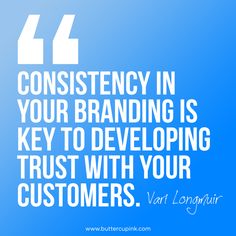
    There is a lot of talk and noise in the marketing interwebs regarding brand. At the base end of the spectrum, there are articles on what brand is, how to build a personal brand, and what brand is not. At the upper end, there are published studies on brand engagement and measurement thereof, brand strength and awareness linkages to sales, and other more esoteric subjects. What’s missing is one of the central themes on brand, that it is imperative that brand presentation and implementation must be consistent from instance to instance.

    Consistency is the key to delivering on that brand promise, no matter where it is encountered, and particular care must be taken when the brand is licensed to third-party outlets or producers to maintain the quality and consistency of the brand, to maintain its integrity. The level of importance of consistency cannot be underestimated, to the point where any brand-related engagement of our firm starts with an implementation consistency test, starting with date of first use, and carrying out to current executions. We collect all available examples in every media we can find, lay them all out and physically compare them, to point out lapses in consistency, poor quality control, bad executions on the part of licensees, or off-brand knock-offs.

    consistency quote

    For retailers and product purveyors, this type of exercise can be especially helpful in spotting counterfeit goods. Often, the goods are closer to the real thing in quality and accuracy than the brand usage, which is often either misplaced, mounted upside down, the wrong color, reversed when none is allowed, or even misspelled, sometimes on purpose in an attempt to escape prosecution. Vigilance is key to keeping knock-offs out of the market place and diluting the power of the brand, so performing this exercise semi-annually can help keep the counterfeiters at bay.

    Some brands are fanatics about consistent presentation, and some of that fanaticism is justified, especially for those firms operating globally, with a wide range of distant or disparate locations and decentralized operations. Coke-a-Cola is one who vigilantly protects its brand executions. They have a brand usage manual that runs over 200 pages, and covers every instance of usage you can imagine, from signage, to cups, to promotions on billboards, to television ads and internet posts on social media. This manual is translated into over 35 languages around the world, so there are no excuses by bottlers or licensees from Buford, AL to Bangladesh for misusing the Coke emblem. Coke has it’s own trademarked PMS color, described in the manual using three color selection systems used worldwide, and translated into other color systems like automobile paint and video reference color codes. Talk about thorough!

    That kind of control definitely has advantages, especially when trying to spot fakes in the market place. Even if your usage is not that extensive or far flung, you should still exercise strong controls when the work goes out of house for other purposes, like sponsorship programs, charity visibility, translation into other languages, or implementations in unusual media, like apparel or textiles, or low-res print representations. Coarse screen values, RGB conversion, poor registration or low quality paper all conspire to make a mess of logos and brands in less than professional settings, and some care must be taken to guard against these aberrations. One may not do much damage at all, but over time, they can collectively do damage to the credibility of the brand, and the mistakes tend to end up in some unusual places, and as such, come back to haunt you at inopportune times.

    You’ve worked hard to build a highly believable, credible, expressive and purposeful brand – don’t let poor execution consistency undo all your hard work!

  • You CAN Teach An Old Dog New Tricks . . . Sometimes You Don’t Have To

    You CAN Teach An Old Dog New Tricks . . . Sometimes You Don’t Have To

    In the world of marketing, there are new things to learn, new innovations introduced, new techniques that surface, every day. It’s a fast-moving, wide-open world where marketers chase the next big thing, the new, shiny object that promises more information, faster feedback, better data or segmentation, easier tracking, more operations under one platform, and other enticing offers to help marketers make sense of this huge, complex puzzle called marketing.

    But sometimes, that new shiny object turns out to be a tarnished, older, less spiffy tactic in a new package, or a reboot of a more traditional tactic, dressed in digital clothing. Old or new, the object of the game is to connect with, to engage, to persuade, and to change opinion and the subsequent behavior to a purchase.

    Sometimes marketing skills and practices can be applied to new tactics as well. E-mail is a strong, successful tactic when used under the right circumstances with the right audience. The same characteristics that make an effective e-mail campaign, the same skills that e-mail uses to reach the audience effectively –

    • strong, persuasive copy;
    • a solid, clear, concise and compelling offer
    • eye-catching headlines and carrier tagline (read “Subject Line”);
    • the right list, one that is accepting, responsive and relevant and clean of undeliverable addresses;
    • attractive imagery that resonates with the audience and conveys the message and reinforces the brand;

    are those used in direct mail. Yet direct mail, and it’s practitioners, are increasingly marginalized by clients, agency leaders, and pundits as a dying art, an antiquated technique, an anachronism. However, those same experts agree that those elements are what makes e-mail campaigns successful – so why are those skills declining?

    One reason might be the ease of using e-mail versus crafting a direct mail campaign. There are lots of moving parts to doing direct mail well – there are formats, sizes, stock selections, printing techniques, postal regulations, list prep, personalization issues, pre-sort and data processing, on top of the writing, imagery, offer, list and subject line to consider. The time required to put together and manage a direct mail campaign is almost always longer than an e-mail campaign – production time, mailing time, list data management, merge-purge, and other operations to allow for postal delivery, and the physical transport from one production process to another takes much more time than writing, designing, loading, and sending an e-mail. That additional time comes in handy, it allows for lots of thought, editing, revision and review by lots of different sets of eyes along the way, with lots of opportunity to spot errors, typos, color and size problems, regulatory and weight issues, and a host of other potential errors that can sink your program and tank the results. E-mail, thanks to a variety of competent and inexpensive software programs, can be executed solo, with no oversight as to what goes out, how it’s designed, and no restraint as to the content, the biggest constraint being the list has to be deemed an “opt-in” originated, so that SPAM regulations don’t apply.

    [pullquote align=”left or right”]Old or new, the object of the game is to connect with, to engage, to persuade, and to change opinion and the subsequent behavior to a purchase.[/pullquote]

    Yet, all the simplicity and speed of e-mail should free up time to write tremendous copy, to craft a very persuasive offer, to tell a story with endless insight and as much real estate on the page as you need to tell the full compelling tale. But with all that extra time, how many top-quality, really creative and persuasive e-mails have you read recently? Based on the total received on a given day, not many arrive in my inbox that compel me to do anything but hit “delete” . . .

    . . . and the ones that do, I’ve found, were usually crafted and written by those with direct mail experience in their past. DM pros make great e-mailers, but the reverse is not usually true.

    Turns out, the craft of copywriting, the ability to relate directly to an audience in writing, the skill required to turn features into benefits, to make offers that are easily interpreted and unambiguous, to build rapport with the audience, to engage and entice that audience with something as mundane as a plastic widget or a monthly meeting, is still just as valuable in the new digital frontier as it was in the bad old days of catalogs and direct marketing. Kudos go to those who’ve taken the time and energy to learn their craft, to perfect their art, to become true 10,000-hour experts at the art and science of communicating to an audience of individuals. Next time you think you’ll dash off an e-mail to your hot list and it takes you twenty minutes or less to get it out the door, take a few minutes before you hit the “send” button, and see if that’s really the best, the strongest, the most interesting and compelling message you could possibly send . . . if not, maybe wait until someone else gets to read it before you launch it out into the ether . . . the job you save may be your own!

  • Insight Versus Data – Don’t Mistake The Two

    Insight Versus Data – Don’t Mistake The Two

    Contrary to popular belief, not only can’t “everyone do marketing”, but the myth that “the Marketing department dreams this stuff up every day . . .” still persists in modern corporate America. I’d like to dispel that last myth, and cover one other as well, that “We have lots of customer data, we can use that to guide our copy and creative platforms with greater success,” that has arisen again and again in discussions of big data with regard to marketing.

    Myth 1 – Marketing comes up with offers, images, copy, color palette, tag lines, slogans, ads and social media posts on their own, every day, just any old idea that surfaces can be put into play and used.

    Nothing could be further from the truth. This myth originated with and has been propagated by those who DON’T work regularly in marketing. Those who are on the outside looking in, so to speak, see a hive of analytical and creative activity going on, with seemingly little input from them or anyone else on the premises. This makes sense on it’s surface, because aside from the initial vetting of a campaign internally, people in the building have little to do with outreach marketing of the firm, unless by some chance they fit the target customer profile as well. We’re not marketing to staff, folks, we’re raising awareness among some very specific individuals outside of here, and their input is used heavily by our marketing pros to shape, craft and refine messages, offers, imagery, brand resonance, media choices and a host of other elements to make sure that those outreach efforts are as successful and cost p-effective as humanly possible. We work in a vacuum at our own peril, and avoid it like the plague as a result.

    Just because we create multi-page printed pieces, video and radio copy, social media posts and potentially entertaining memes and vines, doesn’t mean we’re all having “fun” in the marketing department, “making creative stuff up” all day.

    Myth 2 – “We have lots and lots of data points from our customers, we can use that in our marketing efforts, we don’t need customer insight research,” is the refrain we’ve heard.

    Not true. Customer insights are gleaned through a variety of methods, using all kinds of data. No single source is likely to yield enough information to form a truly overarching customer insight that will effectively cover the segment and guide creative and media elements accurately. Most customer data gathered today is transactionally-based data, either that they purchased something or attended something, (to become a customer), or relational data, (like logging into a website or social media outlet to view a product, referred or recommended our product to someone, or as part of a search). These are very tiny snapshots of singular incidents in the past, and we have no way of knowing what may have lead to or motivated those actions, or if they will ever take place again. Taken in aggregate, they can give you an inkling of preferences or trends, or show patterns with regard to seasonality, economic cycles, or changing needs, but they do not fully and accurately reflect any real human truth with regard to your product or company.

    In short, customer insights should be derived from an amalgam of different inputs, including former customers, potential prospects who fit the audience, staff, industry stakeholders and a host of others to provide a fully rounded, robust portrait of a single verifiable insight that can be extrapolated across the full sector, and applied to actionable efforts to drive emotional resonance and push to purchase. Short of that, true customer insight derived from a single set of data will likely be flawed and less than fully successful in driving marketing results forward.

    Gaining, analyzing and actualizing customer insights involves a specific process, involves a significant number of people, and still needs to have the resulting insight tested in the real world before being applied across the board in outreach marketing efforts. Anything less, and the insights you should be seeking are about your own marketing chops . . .