Category: Branding

  • Your Brand Is A Path

    Your Brand Is A Path

    There is a LOT of chatter and conversation centered around the concept of Brand, so there’s not much original thought around it, mostly rehash from some of the advertising greats of the 50s and 60s. I’m not promising this is new, but it may be new to you, and it seems to work very well.


    Think of your brand as a path.There are seven characteristics of brand that can be likened to a path in the woods – learn them and live them and your brand will flourish!

  • Expert Positioning For Success

    Expert Positioning For Success

    It seems that “Experts” are everywhere theses days. In the old days, to become an expert, one had to devote years to building credentials, through education, publishing, speaking at conferences, trade events, peer-reviewed ideology, and to show some success using your chosen theory or practice concept, to be an expert.

    Today, with everyone allowed access to the public via the Internet, everyone’s a publisher, there isn’t much peer review or curation of any kind, and with far less than the “10,000 hours” required to master something, one can be considered an expert. So how do you position yourself as a credible expert?
    Our guest, Luke Harlan, of Aspire Strategic Marketing, will show you how to put all the modern tools to use, how to build the credentials, how to craft a platform to properly and permanently position yourself as a real expert. You’ll learn:
    • How to get started
    • What elements you need to put in place
    • How to build a platform to launch your idea
    • How to build a funnel to monetize your expertise
    • How to scale up by extending the ideas you already have

    Learn how to position yourself as a true expert in your field in less than 30 minutes!

  • Is The Right-Brain The “Right” Brain to Appeal to When Boosting Marketing Effectiveness?

    Is The Right-Brain The “Right” Brain to Appeal to When Boosting Marketing Effectiveness?

    For decades, psychologists, therapists and behaviorists labored under the mistaken impression that the brain was separated into two hemispheres, and each had a different set of executive functions. The continuation of the myth in marketing terms has lead to a field of study and application called “Right-Brain Research”.  More modern and sophisticated studies have debunked the myth, and it’s been accepted that both hemispheres control a variety of functions and that cross-over between the two is significant and intricate. So where does that leave marketers?

    Right where they started, trying to find the emotional triggers that with prompt an action, a response to advertising, images, video, messaging and other inputs, that drive purchasing behavior. But all is not lost . . .

    Good primary customer insight research, when well-designed and executed, can generate reams of relevant and useful data that can be studied, parsed and dissected to derive insights into the customers of your particular brand, product or service.

    Listeners will discover:

    • How to get inside the head of their customer and use the information to spur action
    • How to set up and analyze the resulting conversational qual data
    • How to use the results to make decisions on media, message, and imagery

    Learn the secrets hidden in your customer’s heads, and how to use them to attract more buyers and boost your brand, in less than 30 minutes!

  • Four Ways To Boost Your Brand Power With NeuroMarketing

    Four Ways To Boost Your Brand Power With NeuroMarketing

    You worked hard on your visual identity, your brand has been time tested and focus grouped to death, but do you know why it works (or doesn’t) in some formats or in some contexts? The answer is likely involved with Neuromarketing Science.

    How the brand appears, how it’s used in advertising in print on television, or online, affects buyer perception of the product the company and the brand. It’s one of the reasons brand standards and usage guides evolved, to help maintain consistency of presentation from usage to usage, to give to structure and control flexibility of the various uses and appearances of the brand. That usage manual, in a perfect world, was also backed up by Neuormarketing science, the science of perception with regard to persuasion.

    [pullquote align=”left or right”]That usage manual, in a perfect world, was also backed up by Neuormarketing science, the science of perception with regard to persuasion.[/pullquote]

    Perception can be shifted based on a number of characteristics of the product the packaging and the brand usage. How the brand appears, where it appears, it’s placement in-situ for packaging, advertising and other outlets, and other factors. Here’s four ways you can make your brand more powerful using this brilliant perception science.


    • Give It Weight – positioning of the brand on packaging and in advertising can affect the perception of the weight (both literal and figurative) of the product. Studies have shown that product logos positioned at the bottom of the page or the lowest part of the package are perceived as heavier than those where the logo or product squib is placed near the top of the package or the page. If you want to be taken seriously, let the weight do some work for you (if weight is a positive attribute for your product), and put your product logo toward the bottom.


    • Let Color Work For You – Weight and credibility can also be inferred, and therefore manipulated, through the use of color. This one is more specific to product advertising, but many brands can take advantage of this attribute. Studies have shown that a lighter color can indicate a perception of lighter weight. How many times have you seen a product logo appear in one color for the “standard” product, and a lighter version of that same color appears on their “light” version (low sugar, low fat, low calorie, low density, low carb, low gluten, take advantage of this perception). Studies showed however that this only works on versions of the same color – putting your product in a black box won’t be perceived as any heavier than in a white one, but light red or pink is perceived as lighter than dark red or scarlet.


    • Pay It Forward – The brand’s place on the perceived time continuum can be positioned for the purpose of creating a specific impression. English speakers and Romance language users perceive time as moving from left to right, while other languages and their users perceive time in the opposite direction (Hebrew, for example). If you want it to appear that your brand is older and more established, place the brand or product depiction on the left, and it will read as more traditional, nostalgic, or time-tested. Place the brand on the right side of the page, the closer to the right edge the better, and it will be perceived as fresh, modern, forward-thinking, high-tech. This effect can also be embodied in the brand itself. Logos that show motion or direct the eye to the right tend to be perceived as more progressive, skew younger and more active, more advanced. The NIKE swoosh moves to the right showing speed, advancement, direction, purpose, forward motion.


    • Avoid Dissonance and Negativity – Sensory inputs should work in harmony for the best results, both in use of the brand, and in where it appears – context matters. Color, sound, small, ambient lighting, all play a part in the perception of the product, and these elements need to work together to get maximum impact from the brand. A bright colored package, with an astringent or citric aroma, with fast blaring music, will all work to create the perception of youth, vigor, action, engagement, high-energy. A pastel colored package viewed under diminished lighting, with soothing music and the scent of lavender will evoke relaxation, solidity, kindness and positivity. Mixing the elements creates dissonance in the mind of the buyer, and generates insecurity and indecision.


    Additionally, negativity in imagery or brand context can drive down sales behavior. Studies have shown that uncomfortable situations or depiction of negativity or sadness, however brief, can cause an overall negative perception of the brand, enough to depress buying behavior. Keeping a fully positive outlook, use of positive and uplifting imagery has the opposite effect, engendering a sense of trust and wellbeing, and driving buying behavior upward.


    Is your brand being used in its most powerful context to build the right perception? Test these four elements, and see if you’re sending the right message . . .

  • Can We Finally Dispense With The “Digital” In Digital Marketing?

    Can We Finally Dispense With The “Digital” In Digital Marketing?

    It’s 2017, and so much in marketing practice has changed since we opened our doors in 1997. The range of disciplines has widened beyond print, radio, TV, Outdoor, PR, product placement, sampling, and direct mail. Now the list should include e-mail, SEO and Search, web optimization, social media platforms without number, mobile, YouTube and related channels, Netflix, Amazon, and a host of integration and planning options to tie all of that internet activity together and use customer information to market products and services more effectively, more selectively, more tightly targeted, more high-impact.


    There is very little left in marketing today that is not fully digital or directly stems from a digital source. Even the old stalwarts, like outdoor and newspaper, have gone fully digital. Digital signage has replaced movie lobby cards and wall posters in retail. Digital billboards aren’t yet ubiquitous, but will be soon, once the larger screen costs come down and the weatherproofing is perfected. Print? Ha! The files are digital in origin, the plates if used for large runs are digital, the output printer for smaller runs and standard substrates are digital, large format banners, billboards, fabrics and textiles, construction wrapping, you name it, all digital.


    Images originate in digital form almost exclusively, and they travel digitally as well. They are taken with a digital camera, edited in a digital editing platform, transmitted digitally to the destination for use digitally or for output to paper on a digital printer or press. Video is shot on digital recorders, digitally edited, transmitted digitally, for display, rebroadcast, download and “sharing” on digital media platforms – ones and zeros from end to end.


    E-mail has in part replaced direct mail and originates digitally, is delivered digitally, is consumed digitally, is acted upon (clicks or form completions, electronic purchase) digitally. Even in direct mail, the letters are written and edited digitally, often the order form is merely a link or PURL to drive traffic to the web to interact with (remember struggling to fit all the response form info on a single two-sided page?).  With no Internet, (digital) there would be no “search” to optimize, so everything to do with the internet is digital. Cookies, remarketing, banner ads and display campaigns, Google AdWords, all digital.


    Television and radio are completely digital, nearly end to end, with the exception of the voice over (recorded digitally), and the actors (recorded digitally and edited with CGI). Often the product itself in TV ads is digitally generated, which gives producers and directors more flexibility to execute, saves time and money creating physical mock-ups, and eliminates things like prototyping and food stylists.


    Promotional branded products? Sure, designed digitally using a CAD program, can even be printed digitally using a 3D printer, but if not, the molds are rendered digitally, using a computer to guide the cutting head with digital precision through the metal, and the resulting molded product is branded using a digital ink jet printer.


    In-store display for retail? Sure. The boxes and stands are digitally printed, and often include a video screen for displaying digital video talking about the product, some with interactive capability, also digitally voiced and activated. PR is nearly completely digital, as releases and announcements are written and originate digitally, with interviews recorded on a digital recorder. Placements are made in digital media, transmitted and read in digital form, even the story ideas and go-to experts for articles, blogs, and newspapers are communicated electronically in digital form.


    So at this point it seems clear, nearly everything to do with marketing is digital. So why, in position descriptions, media requests, consulting reports, research requests, management recommendations, internal and external memos and announcements and the like, do we insist on specifying “digital marketing”? It’s redundant at this point in history, and will likely take a while to drop from use entirely, but to my way of thinking, we no longer need it – it’s just marketing. We can assume that it’s digital, since there’s very little that isn’t. Art has given way to science, “feel” has been usurped by a mass of data (digital), and insight comes not from knowing how your friends and neighbors react to a product, but to scientifically-derived and researched customer insights and virtual focus groups. Tactile has been replaced by visual, and customer experiences have less to do with brick and mortar, with lighting, displays, music, and paint schemes, and more to do with how many clicks to reach the product you desire, and how easy it is too find the shopping cart, to complete the credit card form, to calculate your postage and shipping rates, to understand the return and personal information use policy.


    Time to drop the digital and get on with the mission – reaching customers and prospect in a timely fashion, with the right message, at the right time, and making it easy to buy from you.

  • Ad Agencies Rethink How They Collect Data, Recruit Staff

    Ad Agencies Rethink How They Collect Data, Recruit Staff

    In the wake of Donald Trump’s election as U.S. president with a wave of support from middle American voters, advertisers are reflecting on whether they are out of touch with the same people—rural, economically frustrated, elite-distrusting, anti-globalization voters—who propelled the businessman into the White House. Mr. Trump’s rise has them rethinking the way they collect data about consumers, recruit staff and pitch products.

    A few days after the Nov. 8 election, the chief executive of the ad agency giant McCann Worldgroup summoned top executives to discuss what the company could learn from the surprising outcome. One takeaway for him and his staff was that too much advertising falsely assumes that all U.S. consumers desire to be like coastal elites.

    “Every so often you have to reset what is the aspirational goal the public has with regard to the products we sell,” said Harris Diamond, McCann’s CEO. “So many marketing programs are oriented toward metro elite imagery.” Marketing needs to reflect less of New York and Los Angeles culture, he said, and more of “Des Moines and Scranton.”

    Some marketers, concerned that data isn’t telling them everything they need to know, are considering increasing their use of personal interviews in research. Meanwhile, some ad agencies are looking to hire more people from rural areas as they rethink the popular use of aspirational messaging showcasing a ritzy life on the two metropolitan coasts. One company is also weighing whether to open more local offices around the world, where the people who create ads are closer to the people who see them.

    “This election is a seminal moment for marketers to step back and understand what is in people’s heads and what actually drives consumer choice,” said Joe Tripodi, chief marketing officer of the Subway sandwich chain.

    Even as many ad agencies try to improve their gender and racial diversity, industry executives say they also need to ensure their U.S. employees come from varied socioeconomic and geographic backgrounds.

    A diversity hire “can be a farm girl from Indiana as much as a Cuban immigrant who lives in Pensacola,” said John Boiler, chief executive of the agency 72andSunny, whose clients include General Mills Inc. and Coors Light. The agency plans to expand its university recruitment programs to include rural areas.

    [A diversity hire] can be a farm girl from Indiana as much as a Cuban immigrant who lives in Pensacola.

    —John Boiler, chief executive of the agency 72andSunny

    Given how polling underestimated Mr. Trump’s support, the election underscores the limitations of “research methodologies that even in the era of big data are subject to human bias,” said Antonio Lucio, the chief marketing officer of HP Inc.

    As a result HP, the personal computer and printer arm of the former Hewlett-Packard Co., is re-evaluating its reliance on research techniques like online polls and seeing if it needs to increase its use of personal interviews and ethnography, which is when researchers try to understand how people live by visiting them in their homes or work environments.

    David Sable, global chief executive of Y&R, a creative agency owned by WPP PLC, said the election is a lesson for marketers and agencies that have become too infatuated with big data. Mr. Sable said that Y&R will “double down” on its eXploring program, which involves spending time with consumers in their own habitats. For example, the agency has in the past done laundry with families in London as part of its research for a packaged-goods company.

    “If you want to understand how a lion hunts you don’t go to the zoo, you go to the jungle,” he said.

    David Droga, creative chairman and founder of Droga5, whose clients include Yum Brands Inc.’s Pizza Hut and J.P. Morgan Chase, said the election validated its immersive approach. The shop this year sent employees to Johnsonville headquarters in Wisconsin to interview many of the sausage company’s employees for an ad campaign. “We really want to make sure we not just understand our demo, but the mind-set of our demo right now,” Mr. Droga said. (Droga5 also did work for Hillary Clinton, including a TV spot that depicts her fighting for children throughout her public life.)

    A scene from Droga5's Johnsonville ad campaign. Droga5 sent employees to Johnsonville headquarters in Wisconsin to interview many of the sausage company’s employees for the campaign.
    A scene from Droga5’s Johnsonville ad campaign. Droga5 sent employees to Johnsonville headquarters in Wisconsin to interview many of the sausage company’s employees for the campaign. Photo: Droga5

    Advertising executives also said the surprising outcome to the election would likely hamper advertising spending next year, as marketers try to figure out what implications the new administration’s decisions will have on businesses.

    “I believe there will be a slowdown” in the first quarter as marketers take a “wait and see” approach to Mr. Trump’s policies, said Maurice Lévy, chief executive officer of Publicis Groupe SA.

    WPP’s GroupM, the largest ad buying firm in the world, had been anticipating U.S. ad spending would grow 3% to $183.9 billion next year. Kelly Clark, global CEO of GroupM, now said he anticipates ad spending growth in the U.S. will likely decline a few percentage points over the next six months. “We do believe that investment decisions will be delayed,” said Mr. Clark.

    If agencies internalize the societal changes the election reflected, the content or tone of advertising could change, some ad executives predicted.

    “The election will have spooked the liberal elite away from high concept, ‘make the world a better place’” advertising to “a more down-to-earth ‘tell me what you will do for me’ approach” said Robert Senior, worldwide chief executive of Saatchi & Saatchi, a creative firm owned by Publicis Groupe.

    Mr. Senior said the change will likely manifest itself in less use of fantastical imagery and escapism and more real world and real people in ads.

    Mr. Tripodi of Subway says marketers are too focused on aggregating people into broader groups and painting them with the same brush. He said global marketers such as Subway should try to do more local marketing and advertising that can better reflect the concerns of specific communities.

    Mr. Diamond of McCann says the ad industry’s move to have regional hubs servicing large patches of the world is now out of sync with movements in many countries—the U.S., U.K., and China, for example—where citizens seem frustrated with aspirational globalism. He said McCann, which has offices in about 90 countries, had been moving toward more regional hubs. It now wants to beef up its local creative teams.

    In a world “demanding local distinctiveness, you have to have creative that reflects that,” Mr. Diamond said.

    Some advertisers weren’t caught off guard. Susan Credle, global creative chief of ad agency FCB, relayed a conversation she had before the election with a marketer who felt that an aspirational message would hurt its business.

    “If we were having that conversation today, it would be an even stronger point,” she said.

    Write to Alexandra Bruell at alexandra.bruell@wsj.com and Suzanne Vranica at suzanne.vranica@wsj.com

  • If Your Brand Was A Person, Would You Date Them?

    If Your Brand Was A Person, Would You Date Them?

    Brand gets defined in many different ways depending on the source, the context and the scope and depth of the investigation and the purpose of the definition. We’ve found a great way to help simplify this definition process and allow marketers to cut to the heart of the brand and incorporate that insight into all of their marketing efforts more seamlessly and easily.

    Brands function as an identity for companies, just like a name does for people. Brands have a reputation, just like people. Brands have a personality, just like people (brandinality?). So why not examine your brand as if it were a person? Brand personalization is a great way to help your company’s employees and associates think of your firm in a consistent, easily-relatable fashion, one they can tell others about quickly and easily.

    It’s also a way to get to know your brand better, because people are hard wired to humanize inanimate objects in order to better understand and relate to them, a fact that is a founding principle of the Disney company, and the basis for their movies and animated features. Think talking tea kettles with a British accent, and you get the picture.

    [pullquote align=”left or right”]Brand personification is “a Projective Technique that asks people to think about brands as if they were people and to describe how the brands would think and feel,” according to mktresearch.org.[/pullquote]

    The process is fairly straightforward, and we use it to help define customer’s perceptions of brands for client companies. Start off by asking a few basic questions:


    • Is the brand male or female?
    • Is the brand smart like school, or smart like a poker player?
    • Is your brand a slob or a neat freak?
    • Is your brand a jock or a nerd? Cheerleader or Goth?
    • Is your brand trustworthy?

    Now that you have some basics, flesh them out by asking yourself or your subjects “Why do you think that?” Those “why” responses are critical to keying on central core attributes or characteristics about the brand, be they experiential, visual or verbal. From those why responses, you can tease out various aspects of the brand that reappear across responses as more central to the identity. Those are the pillars of the brand and should be adhered to in all brand-relevant activities.

    Now that you know it’s personality, it’s time to think about appearance. What does your brand look like – not the logo or visual identity, although that will come along a bit later. This relates to if this brand was a person, how would those key personality traits be revealed at a cocktail party or in their dating website profile photos. Visualize how they might represent themselves, as a person. Start with a name, (is it a Gary or a Lawrence, a Wendy or a Sahara) then flesh out the appearance of the person – are the clothes clean and do they fit well, are they age appropriate? Is this person kinetic and high-energy, or more laid back and laconic? Are they credible in speech, manner and appearance, or are they overblown or timid? Are they solidly in a category, like a surfer dude, or a Wall St. guy, or a coal miner, or a tire store manager? This can go on for quite a while, until a fully-realized person presents themselves to your vision. Now ask yourself “is this person a good representative to relate to our target audience?” If you’re selling amps and road cases, the laid-back rocker might be perfect. If you’re selling securities and annuities and other financial services and products, maybe not so much.

    Now the big question: Now that you have created the brand personality, fully formed in front of you, would you spend time with this person? Would your target audience find him attractive and credible? Would they take him/her home to meet Mom?

    Creating a brand personality does more than provide a short hand way for you as a marketer to think about your brand – it’s also a great way for you to explain your brand to colleagues and to get to know it more intimately, and allows you to improve the effectiveness of your brand marketing across all channels and media, company-wide.

    Would you date your brand? If not, it might be time to make some adjustments . . .

  • Market Research Is the Answer to ‘Uberization’ and the Customer Challenges of the 21st Century

    Market Research Is the Answer to ‘Uberization’ and the Customer Challenges of the 21st Century

    Jessica delivers this message better than I could, so I thought I’d pass this along . . . we’ve been explaining this to clients for years, and she nails it!


    by Jessica DeVlieger  |

    April 4, 2016

    Customer behaviors around the world are changing. Fast. For businesses, the risk in not keeping up is all too real.

    The companies that really “get” their customers, like Apple and Amazon, are setting the standards, raising the bar high.

    Because of “Uberization“—in broad terms, displacement and marginalization by nontraditional competitors—customers across all industries now have higher expectations.

    As a result, staying relevant to customers is becoming increasingly difficult to achieve in a time when doing so couldn’t be more critical to success.

    Gradually, leaders are recognizing that relevancy demands empathy—to know customers as the real, complex, creative people they are—then instilling that empathy across the entire organization. It’s why, according to a recent IBM C-suite global study, 66% of C-level execs say they plan to focus on customers as individuals rather than segments (up from 54% who said so in 2013).

    Pole vault


    But cultivating a shared understanding of customers as individuals is easier said than done, especially for multinationals with millions of customers and dozens of offices scattered across continents. It requires departments to align and pay closer attention to the people they serve. To embrace new perspectives and fresh ways of seeing the world and the business. To then internalize that knowledge and use it to act with intuition and urgency. And, it needs to happen on an ongoing basis—not on a need-to-know basis—to meet customers’ needs as they change, therefore making the business more agile and adaptable.

    The way most businesses are structured today, it’s the market research and insights teams that are positioned to champion the customer-as-individual. Those departments are the official caretakers of consumer truths, and they are the people in the organization closest to customers.

    The question is whether market research departments are empowered enough, and have the right resources for, inspiring leaders and the company culture to change.

    The answer, usually, is no. Most market research departments operate as 20th century customer feedback engines, focused primarily on collecting and disseminating customer information through a well-intentioned series of disparate messages and reports. That approach rarely creates the desired impact. The empathy generated is fleeting, at best; and the drive to action stalls.

    Businesses can’t afford to continue to operate that way. Not when they’re faced with new challenges like “Uberization”; 21st century challenges require 21st century market research.

    The market research department must play a dual role: consultant and marketer, expert in both uncovering opportunities from customer stories and motivating colleagues, with clarity and simplicity, to take action. It will function with as much vigor on engaging stakeholders within the business as it does in collecting customer information from outside of it.

    That change will give Market Research a permanent seat at the C-level table. It’ll be held accountable by leaders to create broad customer empathy that drives growth, complete with defined goals, measurable KPIs, smart strategies, and creative tactics.

    Researchers will need to update their LinkedIn profiles and resumes to match the following four business objectives of the 21st century market research department.

    1. Connect the dots to bring customers to life

    Ask any market researcher today, and she or he will tell you: I don’t need more information, I need help synthesizing what it all means for the business. Finding value in a sea of data from various sources is difficult. And once found, it’s how it’s socialized that actually matters. It needs to be such a powerful and memorable narrative that it inspires decision-makers.

    For example, a retail bank launched an initiative to help their employees understand different types of banking customers more intimately. After collecting data on household income, average number of credit cards, retailers frequented, and other spending and saving behaviors, the insights team brought those customers to life in a fun and creative way. It assembled individual customers’ wallets (based on the bank’s key customer personas), each filled with common items, like a driver’s license, receipts, credit cards, loyalty rewards cards, cash, and family photos. Though the wallets weren’t “real,” they were tangible replicas, just about the realest window one can get into how a customer spends and saves. The wallets were shared among employees so that they could see, feel, and experience exactly who their customers are and how they manage their money.

    1. Create buy-in to help others see and act on the opportunity

    All the insight in the world doesn’t matter if it doesn’t somehow create urgency and willingness to make a meaningful change. And making that change means that everyone feels what the customer feels and understands the opportunity for the business.

    For example, a major retailer had lots of data showing customers’ frustrations with advertised products that were often sold out—or simply not there—by the time customers got to the store. But the data alone wasn’t persuasive enough to initiate action to fix the problems. So the insights team created a documentary-style film about one woman’s daily routine, highlighting the gaps in her experience and why the store’s failures made her life harder. It humanized the customer’s problems, leaders felt her pain immediately, and the company responded with greater urgency to fix them as a result.

    1. Align priorities and departments with a clear and collective agenda

    Facilitating alignment across departments can be complicated when teams are siloed and have their own priorities and perspectives based on their role and department. To create a collective agenda, you must make customers the central rallying point.

    In fact, 63% of CEOs say rallying their organization around the customer is one of their top three investment priorities.

    It makes sense: Customers create focus; centering work on their needs ends debate and swiftly moves solutions into action.

    A great example of this comes from a major pet food and supply retailer. The company realized that pet owners were answering questions about their pets from their pet’s perspective, not the owners’: “Prudence loves her new grain-free wet food!” for instance, or “Rufus is such a calm pup when he’s in the hands of the grooming staff.” That realization led to a game-changing insight: Owners consider their pets as the customer. In-person collaboration between executives at the most senior levels and shoppers helped the company land on a guiding principle that put pets at the center of business, like stocking foods at “pet-level” or pinning the names of employee’s pets to their lapels. Today, it’s a pet-centric lens through which every decision by every employee—from cashiers to the marketing team to the C-level—is made.

    1. Infuse a constant flow of customer empathy that affects company culture

    People become fluent in a new language by immersing themselves in the culture of native speakers—not just by listening to Rosetta Stone on their commute to work. The same is true when trying to build genuine customer empathy among employees. It can’t be a one-off engagement. It needs to be an immersive and ongoing experience that evolves over time, ultimately altering the company culture.

    Take, for example, a well-known consumer electronics company that had enjoyed years of success when led by its product-focused engineers. But, as competition heated up, the company’s growth stagnated. It wasn’t until company leaders made a long-term investment in embedding customers’ voices, experiences, and stories to drive strategy across divisions that the culture truly began to change. Executives and customers now regularly solve problems together in face-to-face sessions. Engineers innovate outside the box thanks to pictures and videos of the creative and unexpected ways customers use the company’s products. The culture has shifted, fueled by one thing: the customer. The business is growing enormously today as a result.

    * * *

    The ability to learn from customers and evolve with them is inextricably linked to a company’s potential for growth. After consultant and marketer, there might be a third hat that the 21st century market researcher wears: teacher.

    It’s the researcher’s job to shape the minds of the business so that everyone knows the rich and diverse perspectives of the customer. It’s the best defense against “Uberization,” and the only sustainable way companies will grow in the 21st century.

  • How To Think Like Designers

    How To Think Like Designers

    This is What We Do – Thought this was interesting . . .

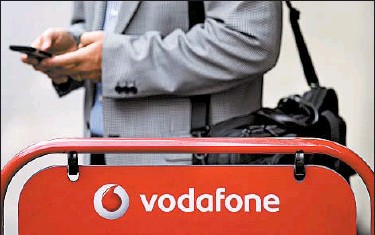
     IBM hires hundreds of these workers to shake up clients — including Vodafone — and figure out what customers want

    JUSTIN TALLIS/GETTY-AFP

    What do your customers want? That’s not a skill that comes naturally to the engineers who build software for big corporations. But in a world filled with user-friendly smartphone apps, clunky enterprise software is no longer tenable.

    So to shake up the status quo, IBM, Cognizant, Infosys and others have been racing to hire thousands of designers who once would have taken more specialized jobs-at an ad agency, say, or an industrial-design shop.

    At IBM, they team up with engineers and consultants and embed with a multiplicity of clients. Besides providing customer i nsights, t he t eams encourage constant feedback and tweak products as they’re built — a process aimed at getting them out faster. It’s how successful Silicon Valley startups operate but radical for the IT services industry.

    IBM Chief Executive Officer Ginni Rometty has bet the future of the services division on design thinking. She badly needs the strategy to work if her company is to reverse 17 consecutive quarters of falling revenue and adapt to a cloud-based world. In the past few years, the company has recruited about 1,250 designers, built a global network of design studios and is training employees to incorporate design thinking into almost everything they do.

    By the end of this year, the company says, about a third of the 377,000-strong workforce will have been retrained. The goal is to build a customer-centric, startup-esque culture — and then persuade clients to do the same.

    Brian Corish never planned on joining a big corporation like Vodafone; the serial entrepreneur was used to working at startups where knowing what the customer wanted was baked into the DNA. But when the head of Vodafone’s Irish operations came calling for help enhancing the company’s online pres- ence, Corish saw an opportunity to teach the startup ethos to a company with lots of unused information about its customers.

    His new bosses didn’t say precisely what they meant by the digital transformation, but Corish soon concluded he needed to reorganize the entire culture around its customers.

    As a big, established company, he says, Vodafone hadn’t bothered providing the best consumer experience because it already had a massive customer base and was making money building and selling products the way it always had.

    Corish decided to bring in outside help but was underwhelmed when all the consulting firms talked up previous projects rather than focusing on the challenge at hand. IBM sent its team back for a second try. This time they ran design thinking exercises with 30 or so attendees.

    A lot of the discussions centered on actual customers, what they didn’t want and what they wanted more of. Darren Gerry, an IBM designer, says Vodafone attendees were shocked at the revelations, having never thought about customer needs and desires in those ways.

    To start, IBM was asked to build a self-service portal that would let employees working for Vodafone’s enterprise clients order phones and other workrelated gadgets themselves.

    Gerry says his team developed a close relationship with the client, keeping the project transparent and demonstrating to Vodafone how design thinking works. Corish, keen to teach as many people as possible about design thinking, helped facilitate the indoctrination, starting at the top; that’s when senior management met the Snapchatobsessed teenager.

    Traditional enterprise software projects can drag on for years before bearing fruit. IBM delivered the first version of Vodafone’s self-service portal in six weeks. Corish says his colleagues were astounded how quickly the job got done. “The rest of the organization went, ‘ Oh, you really can do this,’ ” he says. “It doesn’t have to take five years.”

    Before the self-service portal was built, enterprise clients had to call Vodafone to order a new device, often spending days getting it configured. Now they can use their own logins to order a phone or tablet, which arrives in a couple of days and works right out of the box. “If we don’t focus on the customer,” Corish says, “we’ll be irrelevant.” Much the same could be said about IBM.

  • How To Become Customer-Centric . . .

    How To Become Customer-Centric . . .

    Whether its B2B, B2C, global enterprise or local start-up, commercial or non-for-profit, all types of business can benefit from becoming more customer-centric. But what does that mean, what does that look like, and how can you achieve it without recreating your business from the ground up?

    True customer centrism is as much an attitude, an approach, as it is a model or structure, which means if companies want to take advantage of all the positives derived from knowing and treating your customers better, it all starts at the top, it’s built into your corporate or organizational culture, deeply interwoven into your corporate DNA. It’s one of several facets of business where you can’t just “talk the talk,” you HAVE to “walk the walk” every day, day after day, from all employees, customer-facing or not.

    OK, so now that you have the attitude adjusted, it’s time to check the altitude. That requires some real, trusted, correctly executed research data. But where do you start? One aspect of research data is that it’s like lettuce, it needs to be fresh to be at it’s best. Which means you need to develop a way of gathering data from your customers that you can rely on to be accurate, to pull from a high-confidence sample size, and can be put in place relatively quickly and can be relaunched on a regular basis, once a baseline is established. Surveys can be used in some instances, depending upon what you’re trying to accomplish. Our preferred methodology is the IDI, or In-Depth Interview. It’s a semi-scripted conversation, 30-60 minutes in length, guided by a pre-written discussion guide, executed by trained researchers, NOT telemarketers, who can hold an intelligent conversation with a wide range of professionals and consumers. That conversation is geared toward gathering not only facts about your customers buying habits and purchase patterns, but about their attitudes, feelings, preferences, and moods regarding your products, services or brand. Many of those will be driven by their most recent experience with your company, usually an interaction with either billing or customer service representatives. Keep this in mind when doing the data analysis later, its one of the reasons why research data needs to be fresh.

    Each IDI is recorded, transcripts made, each question response is then tabulated, and the responses segmented into positive and negative piles, or into a range of “buckets” based on type of response, severity of feeling, and prevalence among respondents. Those data points are given to three analysists (in our practice, anyway), and three independent analyses are written up based on the same data, to mitigate bias and skew. That’s the basic methodology, but the key to using these successfully comes in the performance of the questions themselves – if you don’t ask the “right” questions, you can’t act appropriately on the answers and achieve the desired result. That’s where the magic happens.

    Now that you have your data, and have done the analysis, now what? Data is just dumb numbers and words unless it leads to, or can be converted into, some positive action with respect to your customers. Some of the data will be most useful in making adjustments operationally to customer-facing processes. Is your fulfillment process causing problems, is the return policy too restrictive or difficult, is your phone tree routing system too complex or directing people insufficiently or are the menu options wrong – those are things that can be adjusted and shifted based on the data in a very direct way. They make a big difference in the customer experience, and can certainly affect their attitudes and emotions toward the company in the short term. It gets a bit more complex when you start examining some of the deeper attitudes and preferences about the company and its brand, what the company and it’s products mean to them emotionally, what feelings does the brand bring out in them, and why. Those are brand-linked attitudes and emotions, formed after repeated interactions and touch points with the company, its outreach materials and products. It’s much tougher to pin down the cause of these aggregate attitudes, but worth the time if you can make a correction that rights the brand’s direction going forward.

    At this point, many of the smaller B2B companies and service firms are thinking, ”isn’t that up to our sales people to assess those things and listen to their customers and shape their offer and interaction accordingly?” Even if your transaction volume is very low and your client number correspondingly low, there is still much to learn about your customers by doing research, and to be able to adjust your marketing to find more of them as a result. In fact, smaller, lower volume firms can make a bigger impact by paying attention to brand influence and making customer-centric adjustments than a larger firm can – small changes make a bigger difference in their bottom line, and a small increase in customer volume makes a bigger difference financially as a percentage of overall revenue.

    It’s said in the psychiatric profession that admitting you need help puts you half way to a cure. Becoming customer centric as a business is a similar situation – by discovering that you can improve your growth, meet objectives, increase revenue and profit by knowing your customer better and serving their needs more directly, you’ve already planted the seeds of that first attitude adjustment step, a big move forward in the process. Communicating that attitude down through the rank and file so that it becomes pervasive throughout the firm is the next step. Strong belief, direct simple communication, and a solid, positive example shown in every corporate action is the key to building a more customer-centric organization. No time like the present to get started. If you don’t know where to start, we’d be happy to help.