Tag: tradeshows

  • Do’s and Don’ts for Your Trade Show

    Do’s and Don’ts for Your Trade Show

    Revisited due to popular demand – FOX news on Tradeshows, with some input from me . . .

    By Cindy Vanegas Published April 23, 2012 FOXBusiness

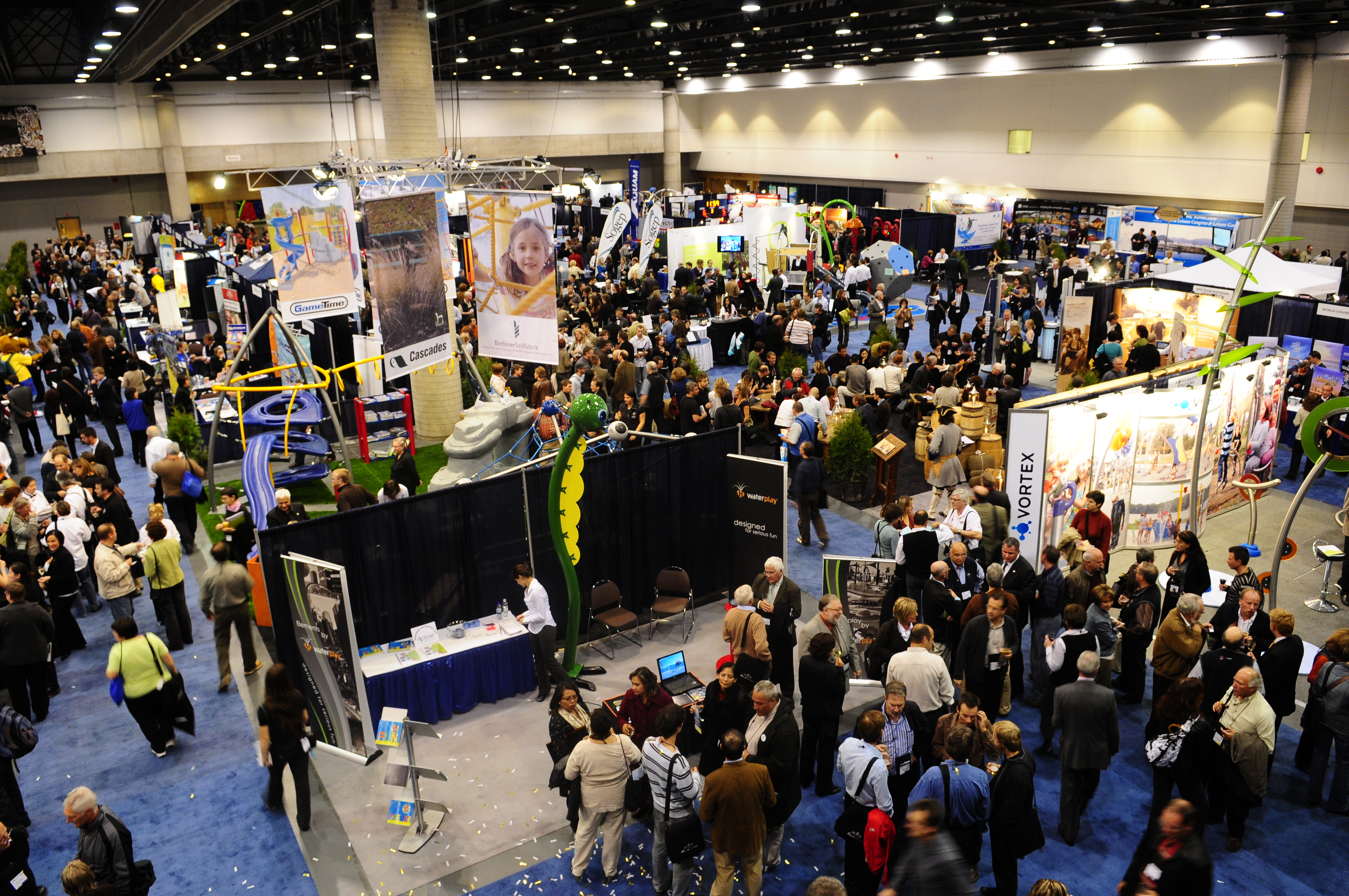
    Many business owners who eagerly pay big bucks to exhibit at industry trade shows often end up disappointed when it comes down to calculating the return on investment. Small business owners can minimize their investment or maximize their exposure through some simple marketing and partnership techniques that will help them get the most bang for their buck.

    Position Position Position: On the trade show floor, booth placement is king. “Know where the prime spots for booths are when you make selections,” advised Eddie Lange, vice president of Exhibit Experts. Lange advised business owners to look for the direction of the traffic flow, the location of the main doors and the area where there will be food and drinks. He also warned entrepreneurs: avoid “dead-end aisles and large columns where people will have to go out of their way to find you.”

    Partner-Up: If a business owner can’t afford a whole booth, try sharing. Some trade show organizers allow businesses to split space, allowing entrepreneurs to derive the benefits without incurring all of the costs. A careful read through of the contract will alert entrepreneurs to ‘subletting’ restrictions. Dave Poulos, founder of marketing company Granite Partners and former marketing director at a trade show production company, recommended business owners look for exhibitors whose product is complementary to theirs. “For example, a printer manufacturer could partner with a paper manufacturer. For every printer sold, the paper manufacturer could throw in some paper, and both business owners could share booth space and leads,” said Poulos.

    Establish an Expertise: Often times, trade shows not only offer entrepreneurs booth space to promote their wares, but they also provide on-site educational opportunities. Business owners who develop a good relationship with show and seminar organizers should consider suggesting topics where they can serve as speakers and promote their expertise. This year Green Festival, showing in NYC, Chicago, Washington, San Francisco and Los Angeles, invited people to apply to speak at the events by submitting a topic proposal.

    SPONSOR SOMETHING: From a cocktail hour to chair massages or a popcorn station, giving attendees a treat for free is a sure fire way for business owners to ensure they will be remembered. Some trade shows restrict sponsorships, offering them only to exhibitors. Others are more flexible, especially if it is coming down to show time and they are strapped for cash. Poulos of Granite Partners recommended entrepreneurs work with vendors and trade show organizer to see where sponsorship opportunities lie, since often these deals can be worked out individually.

    Read more: http://smallbusiness.foxbusiness.com/entrepreneurs/2012/04/23/do-and-donts-for-your-trade-show/#ixzz1t4vzblSL

  • Promotional Items Should Be Carefully Selected for Maximum Impact

    Promotional Items Should Be Carefully Selected for Maximum Impact

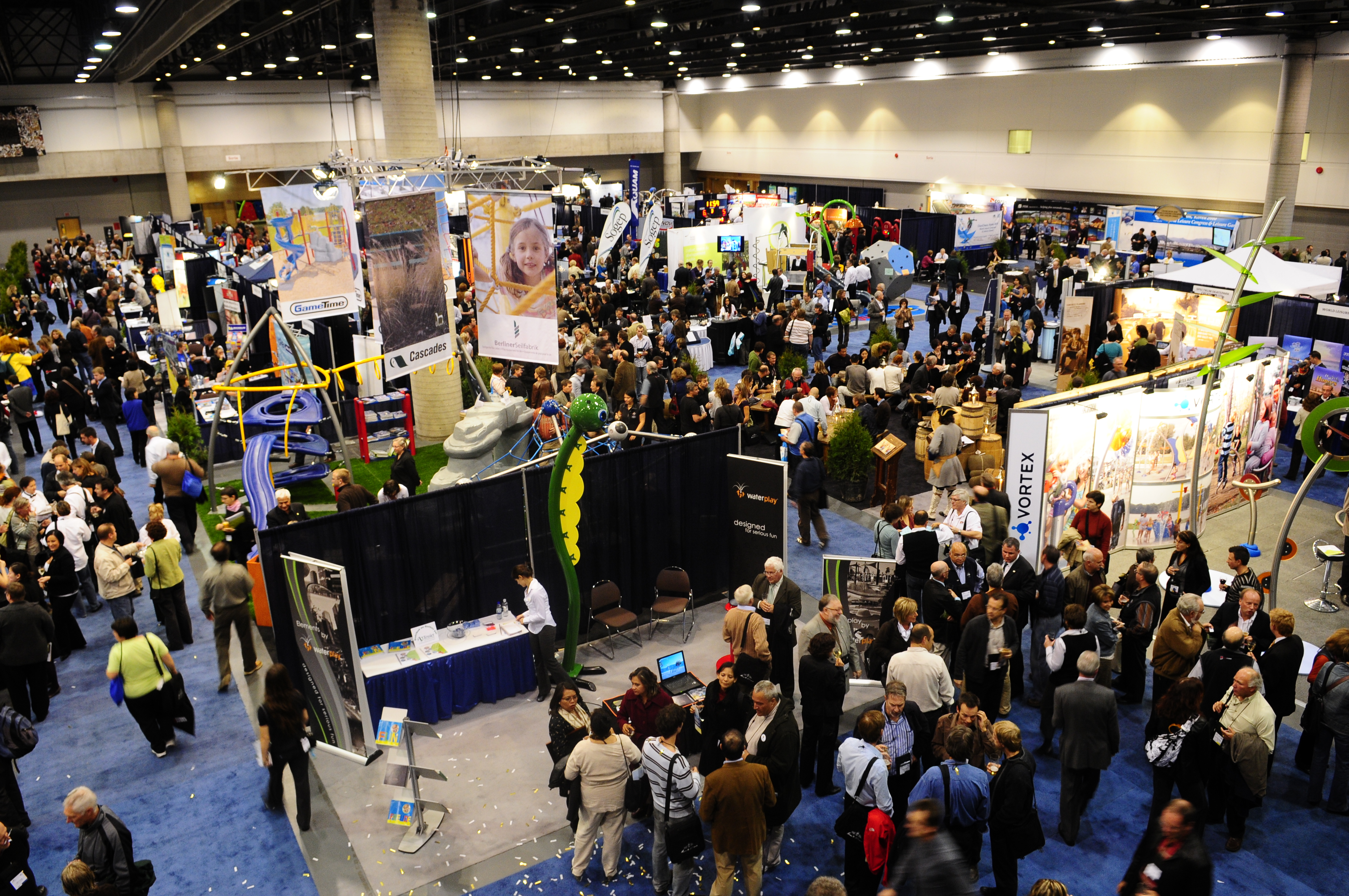
    There are lots of elements to be considered if your marketing plan for the year includes participation in tradeshows, and a number of good reasons to include it in your plan in the first place. One element that has been closely focused on over the years, sometimes to the exhibitors detriment: the tradeshow “giveaway”. The use of promotional items for creating lasting attention and retention of brand image has cycled up and down in popularity over the last 50 years or so. There are some interesting correlations between the state of the economy and the level of quantity and sophistication attached to the promotional items given out at shows. In general, when times get tough, the quantity goes up, and the quality/cost goes down. When times are hard, something in marketers minds says “better to give away lots of cheap stuff just to get the name out there, than to spend the same but only give away half as many nice items that actually connect accurately to the brand”. Why, I have no idea, but it’s bunk.

    In reality, if you choose to distribute promotional items at a tradeshow, that choice should be as well-thought-out as the display construction, the sales training scheme for the event, the selection of size and location of the stand, and the selection of representatives working the show. Often such items are an afterthought, an add-on after everything else has been decided. Sometimes, there are “Standard” items that the company keeps a stock of, or makes available to each location for marketing purposes – they get a better price buying in higher quantity, and they make available or distribute it throughout their “system” for use in ad hoc marketing efforts, including local tradeshows. Ever visited a home improvement show, and the local bank has purchased a table space and brings water bottles and stress balls, and thinks this will make them memorable to the attendees and that they will open an account or apply for a loan? For the impact that really has on the audience, they may as well have taken the money and put it in one of those plexiglass Grab-a-Buck boxes – that at least connects money and banks in people’s minds and might have gotten them some attention!

    If you’ve made the decision to promote your business with a branded item, if that selection is made carefully, it can be of great benefit at that event, and can drive recognition and awareness, not necessarily sales. If really obvious, it can create buzz on the show floor and drive traffic to your display from elsewhere on the floor. And if you’ve really read the audience right, that item will be so specific to a particular population that it will help qualify that traffic and thin and focus the lead selection before they arrive! Now that’s a promotion.

    Some general rules of thumb for a successful promotional item giveaway.

    1) If you can do so, and it’s appropriate, try passing out samples of the product. Smaller, not necessarily fully functional, but a good replica of your product will at least remind the recipient for months to come, who gave them that item and what they make.

    2) If you can’t sample, for whatever reason, select something that links practically to what you do or what you offer. This type of item at least will carry some activation, that coupled with the logo printed on the item, will conjure up a memory of your firm and what it offers.

    3)If you can’t sample, and you can’t link practically with your product, link with the audiences habits or industry specific needs or processes. If you’re marketing to engineers, a measuring device of some type is a good example of this – they can actually use the item at work, where they hopefully make purchasing decisions.

    4) If you can’t do 1, 2, or 3, at least make the item something useful or entertaining and of good quality, including the imprint method. Also, be aware of the audience. If you can, try to select items that are at least non-toxic – sounds strange, but I can’t tell you how many stress balls and foam toys I’ve handed to my young kids only to find out the printing rubbed off when they got drool on it, or put it in their mouths.

    In short, smart, engaging, creative choices that engage the audience’s imagination, trigger a memory of what you do, your products or your brand promise, that are practical and useful within your industry are the best bets for effective giveaways.

    There are lots of other tips and tricks to using promotional items to drive traffic and leads. More later . . .

  • Spring Tradeshow Season is Here – Are You Prepared?

    Spring Tradeshow Season is Here – Are You Prepared?

    In many business verticals, Spring/Summer is trade show season. If your marketing plan includes trade shows for your vertical or peripheral industries, and your booth selections and floor plans are set, now you’re facing the task of pulling together a strategy, designing and fabricating a display of some sort, creating collateral and sales support materials, and training staff to get the biggest bang for your trade show buck.


    That last piece of the puzzle, staff training, may be the most overlooked and the most mission critical to achieving your goals for each show.


    Firms we’ve worked with treated staff training for trade shows as an after-thought, making seemingly random staff selections, and handing them a brochure and saying “learn this” – not a good idea. Some firms who hire spokesmodels do this, but their goal is different and the model’s role is different than a staff person.


    If you’re going to spend many thousands of dollars leasing floor space, designing and fabricating a custom display, paying staff T&E to go to a show and work, feeding them, housing them, and paying expenses for them to entertain clients and potential clients, the people you send ought to at least be proficient enough to maximize the opportunity. Sending the mailroom manager, the receptionist, and two PR people because they are young, unattached, unconstrained and attractive will come back to haunt you when the results for the year’s sales come in. You’ll have a much harder time justifying your budget for trade shows if you don’t show good results. Sending the whole sales team may backfire as well, without at least a few technical people there to answer some of the tougher questions, and some senior management to run the show and meet with those key clients as a show of respect for their past and future business.


    Proper selection of a good mix of professionals to man the booth is only part of the equation. Making sure they are all on the same page, with the same message and a similar approach, pushing the same products in the same way, speaking knowledgeably about your products or services, is critical to a good show result. They should all be taught how to use their booth time productively, to make the most of the opportunity, how to engage prospects, how to qualify them, how to screen them, how to steer them to the correct individual internally, how to appear and how to behave when they are “on stage” in the booth.


    The other key element of trade show success is the follow-up. Studies by CEIR have shown that nearly 80% of all leads gathered at a trade show are NEVER followed-up. You paid for them, why not use them? When you calculate your cost of acquisition at that trade show for new customers, you’ll realize what a gold mine they can be, if you’ve done your homework and set up a system to make sure the leads generated get followed properly.


    Some companies do this extremely well, and they usually let technology do the work for them. I know of several companies that go to shows with a complete set of pre-written e-mail follow-up letters, divided into different levels of interest, different product interests or whatever their scheme supports. As soon as a lead is logged, either from a business card or through the badge reader system, an e-mail is issued to follow up, send links to the company website, impart additional information, give out coupons, keys to prizes, whatever. Sales people have the opportunity to add personal notes to these, to add specific answers to technical questions. Sometimes these systems are extremely fast – I’ve received e-mails on my smart phone within minutes of leaving the booth!


    Whatever system you employ, make sure the staff is trained to use it, and that they use it often. And remember, it’s not usually about quantity, it’s about quality. If there are lots of leads, but the resulting sales after diligent follow-up are low, maybe that’s not the best venue, and it should be reconsidered carefully for next year’s plan. On the other hand, if you only get five leads, but they all convert, your cost of acquisition will be very high!


    Trade shows are a lot of work, use a lot of resources, and can be an extremely effective tool for generating new leads and new customers, for polishing your brand within the industry, for launching a new product, or for doing product research. But without a properly trained staff, good follow-up mechanisms, and a solid integration plan, all those dollars and hours are for naught. Good luck!


    If you liked what you read here, and found it valuable and would like to read more,  pick up a copy of “The Marketing Doctor’s Survival Notes”

    https://www.createspace.com/4066578