Tag: event

  • Attendee Acquisition Is A Long-Term Investment That Pays Off

    Attendee Acquisition Is A Long-Term Investment That Pays Off

    With the recent rise in attention among marketers to customer engagement, and customer experience, customer journey, call it what you like, event marketing has risen on the marketing totem pole to a higher priority than ever. But with that new status comes a new sense of accountability as well – “If we’re going to host all these people and feed them, educate them, allow them into our world to meet us and each other, I want to see that the expense associated with that activity pays off . . .”


    Finding out what that expense is would be a logical first step, and then bench-marking that expense against what competitors are paying might be another. We’re marketers, after all, competitive and curious, and we test and measure everything!


    The finding out part is pretty simple. The 2016 Benchmark & Trends in Attendee Acquisition study was released by Lippman Connects, Exhibit Surveys, Inc. and Tradeshow Executive magazine as a joint study. That study shows that the average cost of attendee acquisition marketing is over $300,000 per event, and when you get more granular, the average show with flat or inflating growth spends roughly $32.66 for each attendee they attract. If you’re spending less than that, and your show is still growing year over year, then you have reached a level of marketing efficiency that bests roughly half the shows out there – congratulations. If you’re spending less than that, and your shows are declining, you have a decision to make: Invest more in your marketing efforts, across all channels, unless you have clear evidence of an inefficient or low-performing channel, or continue to contract until you level back out and your attendance flattens, and then re-examine the relevance of your event to the current audience.


    Now the value-tracking portion, which is a little tougher. Start with how many visitors you’re attracting for each paid exhibitor. This is a good number to know for marketing purposes, because exhibitors use this to calculate their expense of acquisition for new customers from your show, and use it as a benchmark when making the decision to exhibit in your show. According to the same study, shows studied had 22 attendees per exhibitor and scheduled the floor time for a total of 21 hours or more.


    But attendees don’t just sign up for the exhibitors. Some 50+% of show attendees are there as conference enrollees, and the show portion is just gravy. 42% indicated that they were interested in the exhibits. Smart show organizers recognize this, and are attempting to make this portion even larger by enlisting the help of the exhibitors themselves. Pre-show marketing by exhibitors is a staple of attendee attraction, and the more you encourage and enable your exhibitors to market their presence at your show, the more attendees you end up with, at no additional expense. That’s a win for everyone!


    One of the key challenges in event marketing is justifying that $32 per head acquisition cost, and more importantly, tying it back to a specific marketing activity. Given that most event marketers use a broad variety of channels to market events, including direct mail, traditional print advertising, where appropriate radio and TV advertising, social media promotions, outdoor, e-mail, and other channels, linking any single activity to an uptick or drop in attendance is difficult at best. Your post-show survey work should shed some light on what the most likely driving force behind registration might have been, but it’s really the integrated effort that drives the boat on this one – each channel supports the others to drive overall awareness and memorability for you events, and what you’re testing in your survey is simply the one channel that most closely came to triggering the registration process.


    If you do a lot of digital marketing, and have links sprinkles all over everything that drives traffic to your registration page or an online form, it is very likely that this will appear to be what is driving attendance – but is it? If you put up billboards surrounding the venue at a consumer show, and get a lot of walk-in traffic (non-pre-registered), is the billboard driving attendance, or is it just a reminder of the date? If you ask attendees point blank why they registered, chances are excellent the answer won’t be “I got an e-mail and filled out the registration form.” It will more likely take the form of “I saw that my colleagues were going and wanted to go with them,” or “we go every year to see the new technology, and to reconnect with colleagues in the industry.” Those results are harder to directly link to a single marketing activity, but go directly to awareness of your event, which is driven by all of your integrated efforts combined.


    Strong, consistent research can help pin down what efforts are working the hardest, and you can use the data to reallocate resources in your budget to take advantage of certain triggers, and drive incremental growth in the short term. But real, sustainable growth is a long-term commitment of time, effort, and resources to contain and drive momentum year over year, and requires constant testing and reinvestment to show results.
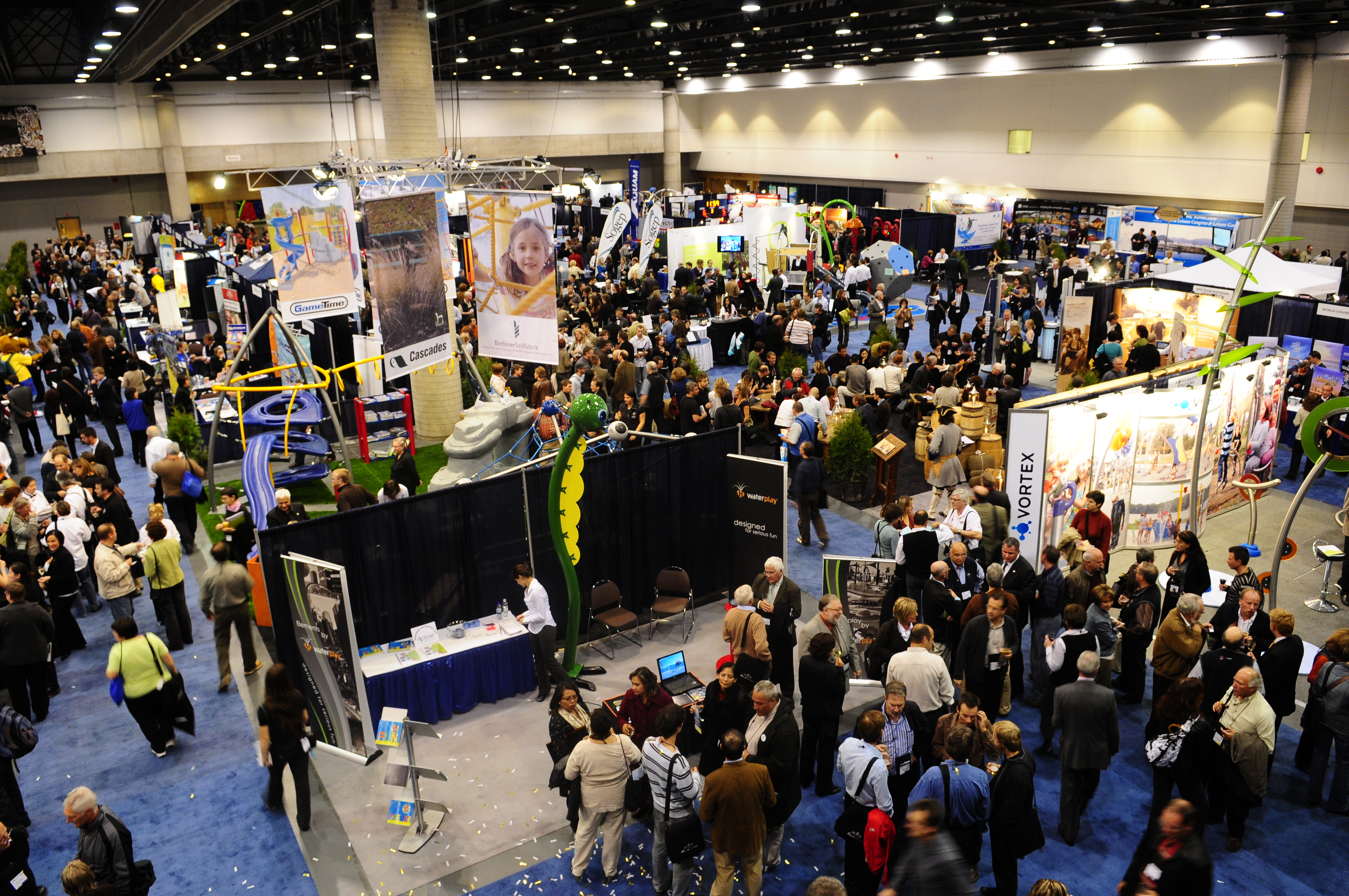
  • Do’s and Don’ts for Your Trade Show

    Do’s and Don’ts for Your Trade Show

    Revisited due to popular demand – FOX news on Tradeshows, with some input from me . . .

    By Cindy Vanegas Published April 23, 2012 FOXBusiness

    Many business owners who eagerly pay big bucks to exhibit at industry trade shows often end up disappointed when it comes down to calculating the return on investment. Small business owners can minimize their investment or maximize their exposure through some simple marketing and partnership techniques that will help them get the most bang for their buck.

    Position Position Position: On the trade show floor, booth placement is king. “Know where the prime spots for booths are when you make selections,” advised Eddie Lange, vice president of Exhibit Experts. Lange advised business owners to look for the direction of the traffic flow, the location of the main doors and the area where there will be food and drinks. He also warned entrepreneurs: avoid “dead-end aisles and large columns where people will have to go out of their way to find you.”

    Partner-Up: If a business owner can’t afford a whole booth, try sharing. Some trade show organizers allow businesses to split space, allowing entrepreneurs to derive the benefits without incurring all of the costs. A careful read through of the contract will alert entrepreneurs to ‘subletting’ restrictions. Dave Poulos, founder of marketing company Granite Partners and former marketing director at a trade show production company, recommended business owners look for exhibitors whose product is complementary to theirs. “For example, a printer manufacturer could partner with a paper manufacturer. For every printer sold, the paper manufacturer could throw in some paper, and both business owners could share booth space and leads,” said Poulos.

    Establish an Expertise: Often times, trade shows not only offer entrepreneurs booth space to promote their wares, but they also provide on-site educational opportunities. Business owners who develop a good relationship with show and seminar organizers should consider suggesting topics where they can serve as speakers and promote their expertise. This year Green Festival, showing in NYC, Chicago, Washington, San Francisco and Los Angeles, invited people to apply to speak at the events by submitting a topic proposal.

    SPONSOR SOMETHING: From a cocktail hour to chair massages or a popcorn station, giving attendees a treat for free is a sure fire way for business owners to ensure they will be remembered. Some trade shows restrict sponsorships, offering them only to exhibitors. Others are more flexible, especially if it is coming down to show time and they are strapped for cash. Poulos of Granite Partners recommended entrepreneurs work with vendors and trade show organizer to see where sponsorship opportunities lie, since often these deals can be worked out individually.

    Read more: http://smallbusiness.foxbusiness.com/entrepreneurs/2012/04/23/do-and-donts-for-your-trade-show/#ixzz1t4vzblSL

  • Tradeshows – Make A Commitment, Make It Count

    Tradeshows – Make A Commitment, Make It Count

    We recently attended a tradeshow (Granite Partners principal and staff, not the royal “we”) with a client, in an effort to help them gather competitive information prior to entering a new market for a line of products they were planning to launch in a few months. We got together prior to entering the show floor, and discussed a specific set of goals and tactics to be applied to our activities during the morning, including observing and asking questions anonymously of the competition, researching potential production partners or related ancillary product partners that worked with our product, finding possible new applications for our product beyond the intended use, and observing the marketing tactics used by our potential competitors.

    A tall order, but one that can usually be filled in a couple of hours of strolling the show floor, watching, chatting with vendors, asking questions as if we were in the market to purchase, along with a few covert snapshots of displays and a collection of collateral materials in our show bag.

    After spending an hour on the floor, we had accomplished most of the goals we discussed. Some general take-aways on the state of small tradeshows:

    1) Vendor displays have gotten less expensive – and less professional. If you’re going to spend the time and money to highlight a new product at a tradeshow, don’t have your sister-in-law design the booth and the collateral signs because she won Third at the science fair in 11th grade! Go to the professionals for your exhibit design, and have a professional help you with a marketing plan that will help activate and leverage that display and turn it into viable leads! Just because the structure is less expensive than it used to be, doesn’t mean you shouldn’t spend the savings on good design!

    2) If you’ve gone to the trouble to design and transport a display, at least show up, set up and participate. We saw three or four empty booths, half constructed and missing key elements, with no sales or technical staff in evidence – shame on you, what a waste!

    3) If you are prepared and suited up, working the booth, don’t just shoot out a generic question to passer-by to try and snag their attention – it’s tacky and worse, ineffective. Simply come out from behind the table, out into the aisle, make eye contact with attendees, and maybe ask a legitimate question, maybe something related to the problem your product solves. If you hit on a sore point, you’ve hooked them, if that’s not their problem it’ll be a pretty tough sell to start with and you’ve not annoyed anyone. Being a tradeshow attendee doesn’t mean you’ve signed up to be molested in the aisles!

    4) This is not a re-run of “Boiler-room” – stop trying to close me on a complex, high-dollar, multi-step sale three minutes after I meet you at a show. Ain’t Gonna Happen! This is essentially a meet-and-greet with A/V support. Simply take my information, give me some data and some salient points that can be beneficial or differentiating for your product, and actually do the follow-up work later in the week. Even at consumer-based, residentially-oriented shows, I may not want to sign a contract on a $10,000 piece of infrastructure construction on my house – such things need researched, discussed with family, budgets allocated, etc. It’s a long-term, complex, consultative sale, not a $10 widget that helps wash the car faster.

    5) Do some pre-show marketing. Don’t rely on the show organizer to do it all for you, your results will reflect such an approach. If you plan to sell into the local market, do some homework, craft a decent direct mail piece, do some segmenting, mail a few key zip codes and let some likely consumers know you’re going to be in their neighborhood. You’ll be the busiest guy on the floor.

    No matter how small a show it is, if you’re going to spend the money and time, make it count. Make the commitment, do it 100%, make an effort to be your professional best. If you’re counting on a show like this to make your year, your plan is flawed, and your desperation will be readable from a mile down the aisle. A show should be a small part of a more holistic approach to your overall marketing effort, not a make-or-break event.

    Happy trolling . . .

    If you found this information valuable, and would like more, subscribe to this blog above, and don’t forget to pick up your copy of “The Marketing Doctor’s Survival Notes” . . .