Tag: display

  • Are These 12 Roadblocks Stopping Your Valuable Trade Show Leads?

    Are These 12 Roadblocks Stopping Your Valuable Trade Show Leads?

    Unfortunately, too many waste these valiant efforts, because they fall down on managing their trade show leads.  That’s because there are more hidden roadblocks than they realize, obstacles to getting the full value from their leads.

    So let’s bring those roadblocks out into the light.  I believe the list below includes the 12 most common obstacles to effective lead management – how many of these are issues do you need to address?

    1. Incomplete lead management process
    2. No single person responsible for the entire process
    3. No consultation with sales about what information needs to be gathered at the show
    4. No training of trade show booth staffers about what makes a qualified lead, how to record lead quality
    5. Qualifying information from leads is not captured with a lead card or a lead retrieval system
    6. If complete information is captured, it is not conveyed to the appropriate sales person after the show
    7. Slow, incomplete, or non-existent lead fulfillment
    8. No computer system or customer relationship management software in place to facilitate lead management
    9. Lead fulfillment packages not chosen nor prepared in advance
    10. Lead fulfillment is generic and does not respond specifically to what individual attendees asked about while visiting your trade show exhibit.
    11. No one pre-assigned to data enter and fulfill the large quantity of leads
    12. No accountability for sales people to follow up on leads within a specific, short period of time after the show

    Any of these sound familiar?  Fixing this will take a team effort, including your sales, marketing, and information technology teams.  Get them all in a room and work to knock down these obstacles. For motivation, bring to the meeting a pile of your latest trade show leads, a spreadsheet of the costs of your show, and the highest level exec you can get that these people all report to.

    Then you can work to avoid all 12 of these obstacles and create a smoother lead management process that gives your company the full potential value of your trade show leads.

  • Do’s and Don’ts for Your Trade Show

    Do’s and Don’ts for Your Trade Show

    Revisited due to popular demand – FOX news on Tradeshows, with some input from me . . .

    By Cindy Vanegas Published April 23, 2012 FOXBusiness

    Many business owners who eagerly pay big bucks to exhibit at industry trade shows often end up disappointed when it comes down to calculating the return on investment. Small business owners can minimize their investment or maximize their exposure through some simple marketing and partnership techniques that will help them get the most bang for their buck.

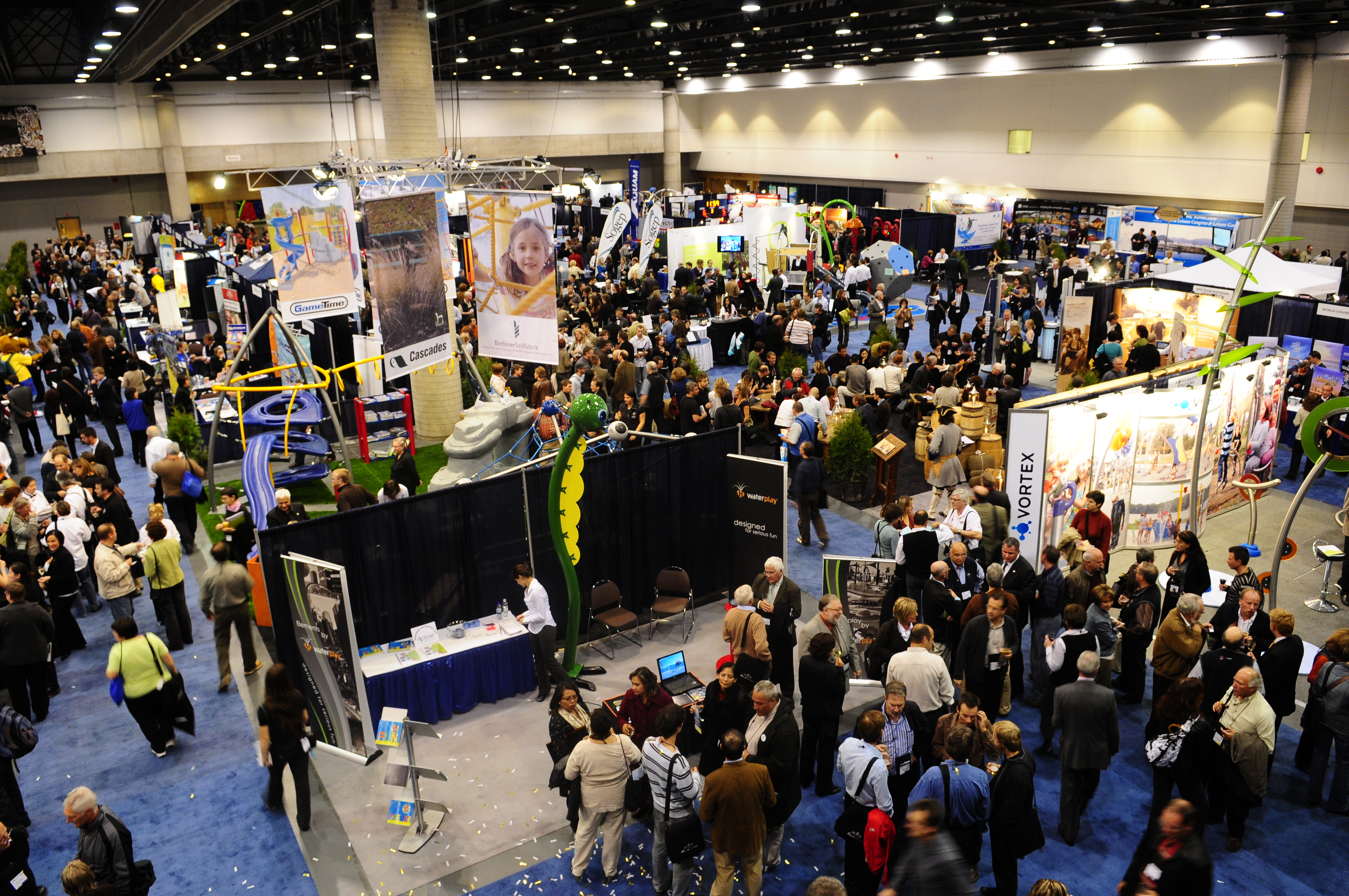
    Position Position Position: On the trade show floor, booth placement is king. “Know where the prime spots for booths are when you make selections,” advised Eddie Lange, vice president of Exhibit Experts. Lange advised business owners to look for the direction of the traffic flow, the location of the main doors and the area where there will be food and drinks. He also warned entrepreneurs: avoid “dead-end aisles and large columns where people will have to go out of their way to find you.”

    Partner-Up: If a business owner can’t afford a whole booth, try sharing. Some trade show organizers allow businesses to split space, allowing entrepreneurs to derive the benefits without incurring all of the costs. A careful read through of the contract will alert entrepreneurs to ‘subletting’ restrictions. Dave Poulos, founder of marketing company Granite Partners and former marketing director at a trade show production company, recommended business owners look for exhibitors whose product is complementary to theirs. “For example, a printer manufacturer could partner with a paper manufacturer. For every printer sold, the paper manufacturer could throw in some paper, and both business owners could share booth space and leads,” said Poulos.

    Establish an Expertise: Often times, trade shows not only offer entrepreneurs booth space to promote their wares, but they also provide on-site educational opportunities. Business owners who develop a good relationship with show and seminar organizers should consider suggesting topics where they can serve as speakers and promote their expertise. This year Green Festival, showing in NYC, Chicago, Washington, San Francisco and Los Angeles, invited people to apply to speak at the events by submitting a topic proposal.

    SPONSOR SOMETHING: From a cocktail hour to chair massages or a popcorn station, giving attendees a treat for free is a sure fire way for business owners to ensure they will be remembered. Some trade shows restrict sponsorships, offering them only to exhibitors. Others are more flexible, especially if it is coming down to show time and they are strapped for cash. Poulos of Granite Partners recommended entrepreneurs work with vendors and trade show organizer to see where sponsorship opportunities lie, since often these deals can be worked out individually.

    Read more: http://smallbusiness.foxbusiness.com/entrepreneurs/2012/04/23/do-and-donts-for-your-trade-show/#ixzz1t4vzblSL

  • Exhibitions and Trade Shows – A Thing of the Past?

    Exhibitions and Trade Shows – A Thing of the Past?

    Guest blog

    Posted by garethcase ⋅ August 30, 2011 ⋅ 5 Comments

    It’s a subject that comes up every year. There is always an Account Manager who wants to do an exhibition because it’s closely aligned to their vertical market, but is there still real value in these events?

    The internet’s exponential growth over the last decade has meant that we have access to pretty much any information we want, no matter where we are or what device we are viewing it on. Research in general, for that latest gadget, your next holiday or even which e-marketing platform you are going to deploy is at our finger tips 24 hours a day.

    Before these technological advances, research was the reason I used to attend trade shows, but over the last 10 years, I have noticed a dramatic decline in both the size of events and the number of attendees.

    There are many reasons company’s choose to exhibit at trade shows. For example, it’s a good forum to launch your brand into a new market or geography. It’s also good to have brand presence at an event well subscribed to by your customers. The other main driver is lead generation. How many of you can honestly hold your hands up and say you have had a really good ROI from events and exhibitions overall? I hope I hear about some great successes but in my experience the ROI does not stack up. Yes there have been shows where we have converted some great opportunities, bit If I compare it £ to £ against over marketing activities it probably comes out bottom of the list. When working out the ROI, don’t forget to include the investment of time from your employees, a trade show with 4 of your sales team not only means you’re paying them to be there, but also missing out on them selling elsewhere during that time.

    If you are going to do trade shows and exhibitions then my advice is to pick niche events aligned to specific vertical markets you want to attack, rather that generic shows that cover your solution/product set. The key is to develop a proposition that really helps your target market overcome a ‘common challenge’. This way you will quickly gain engagement and been seen as a value add rather than a box shifter.

    Surely it’s better to be the only company at an event that offers your products and solutions than being one of 150 all offering something similar?

    My Response:

    Gareth – I, too, have sat on both sides of this fence, organizing some of the largest industrial events in the country (US) and attending and exhibiting in hundreds of shows for a variety of clients. I, too, have seen reductions in attendance and square feet sold, likely a factor of a combination of better information sources (the internet and elsewhere) and the current economy. However, if applied to the marketing plan in a focused strategic way, there is still a huge value in live trade events. NOTHING can replace the face-to-face interaction, the energy, the insight gathered at a live event. True, hard data research can be gained electronically, but the “Who” portion of the show is just as important as the “What” that you get electronically – seeing your competitors approach, viewing new entrants into the market for possible partnership, gauging the health and direction of an industry at large, are invaluable to the well-rounded executive.

    True, lead generation is one of the principal reasons to exhibit, and many shows don’t support this activity aggressively enough, though they should. But on the corporate side, 8 out of 10 viable leads are NEVER followed up with – after spending all that time, money and energy to exhibit, craft a display, man the exhibit with top, expensive sales staff, the leads lie fallow, reducing the ROI by a huge percentage. Shame on the sales manager who lets this practice continue . . .

    There are indeed numerous branding tactics associated with a tradeshow outside your individual exhibit, but some of the guerrilla tactics mentioned here in other poster’s comments would do more than “irritate the organizers” – they can get them thrown out of the venue, ostracized within the industry, their brand destroyed or reduced to a cartoonish bottom-feeding lout. If you work closely with the organizer, such tactics can be negotiated and usually an accommodation made so that these activities are viable and above-board, and a win for everyone.

    The branding aspect cannot be overstated – you’re given an opportunity to put your best foot forward in the most prominent arena your company has – a room full of customers and potential customers! Can’t ask for more than that in ANY business. When all this is factored in to the ROI equation, a well-selected show that gives you a forum to launch a new product, do primary customer research, show off a rebranding, put on a good face for the industry, and eyeball all your competitors in one room is an unbeatable opportunity. The rumors of the tradeshow’s death are greatly exaggerated and superbly premature . . .