Tag: Customer Service

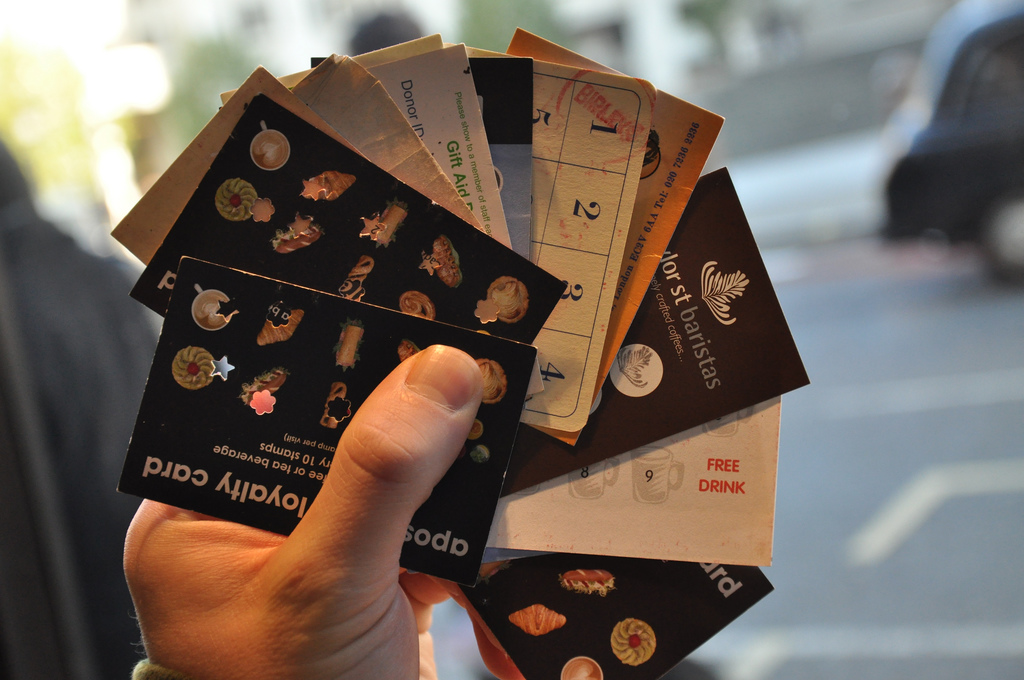
  • Affinity Programs CAN Drive Engagement And Loyalty . . . If Executed Properly

    Affinity Programs CAN Drive Engagement And Loyalty . . . If Executed Properly

    Business owners who sell to consumers are constantly striving to grow their customer base, and to retain the one they have already established. Organic growth, whether driven by effective marketing and promotion or by product quality, or customer service that leads to word-of-mouth referral, is the first priority for most consumer-centric businesses. But most sales pros will tell you that it’s much less expensive to keep your existing customers happy and have them buy more, than it is to acquire new ones. So why are most businesses taking the expensive route, rather than increase retention and engagement of the existing customer base? Most likely, it’s because loyalty programs, or affinity programs that encourage repeat business and customer loyalty, are difficult to execute effectively. There are lots of moving parts, lots of detail to keep track of and account for, and they attempt to codify human behavior and account for each variation to counter potential abuse. This creates other obstacles, which will be addressed shortly.

    Most businesses are good promoters of product, so crafting offers around product, centered on price or volume, is routine and straightforward. Put together a few “Buy one get one free” promotions, or “Early-Bird Specials” to add urgency, and they become your go-to strategy for driving foot traffic (or clicks). It takes little in the way of creativity or customer insight to knock off 10% or split 50-50 for volume purchase, and they do the job to a certain degree. But are you creating real brand loyalty, or just offering casual customers a reason to save a little money?

    Loyalty programs have been around for many years, but the availability of inexpensive computer technology, databases in particular, have spawned a new era of growth for these types of customer engagement set-ups. Sometimes these programs are created in conjunction with other partner businesses – witness the partnership between Giant Food and Shell Oil – grocery purchases are logged and items assigned a point total, and that total yields a discount on gasoline purchases at Shell stations. By linking two basic expenses, groceries and gas, the program allows customers to be rewarded for purchasing things they would normally buy anyway. Credit card “cash-back” programs fill this same need. But, they do engender loyalty.

    But a true loyalty program no only allows for more repeat business from your best customers, it give them a reason to tell others about what a great deal they get from you, thereby expanding your customer base organically without spending a dime. By rewarding the behavior you want -repeat purchase on a consistent and regular basis – you build transaction volume over time and increase profitability. But is this organic growth, or just incentivized interaction? The best loyalty programs no only facilitate repeat purchase, they also encourage referral, and some even provide disincentives for disloyal behavior.

    The very best programs not only engender loyalty, provide an incentive for not only loyalty but referral, and provide a mechanism for it. But they are also very customer centric, which means they are elegantly simple for the customer to enroll in and use regularly. Keytags with bar codes are convenient, but if it takes you half an hour and twenty pieces of personal information to enroll, the abandonment rate will be huge and usage will never meet expectation as a result. Simple for the consumer includes simplicity in enrollment, usage, and in accruing benefits. Credit card points programs are notoriously complex when it comes time to actually reap the benefits of your buying behavior, with many rules, complex formulas, and exceptions to the promised rewards that can make cashing in more difficult than it’s worth. To avoid fraud and abuse, those companies have put the onus on the consumer to do their back-end work for them, and find their own way through the maze of regulations and guidelines. Simpler is better.

    All the loyalty programs in the world won’t overcome product quality issues, poor customer service, bad product design, lack of distribution channels, low awareness or other inherent consumer business issues, but if you have the others conquered, a well thought out loyalty program can be a big help in tipping the scales toward brand loyalty, reducing churn, increasing engagement and retention. As usual in marketing, the secret to success is in the execution . . .

  • Brand Loyalty Is More Fragile Than You Think

    Brand Loyalty Is More Fragile Than You Think

    Marketing and sales pros know that people don’t really buy features and benefits, they buy feelings and stories. Your brand (hopefully) tells your buying audience a compelling story, one that gets retold each time they interact with your brand, which makes them feel a certain way, under a variety of circumstances. For retailers this means that each time customers shop your store, whether brick and mortar or online, they have certain expectations of that experience, and if you don’t live up to them, you may be doing damage to your brand. This makes customer service a key component to brand loyalty.

    I was speaking with a friend of ours the other day and we were comparing the stores where we buy wine. I buy at a small, boutique, one-off adult beverage emporium, one that specializes in having a large selection of micro-brews, and a strong selection of more esoteric Bourbons and Scotches, and a terrific selection of wines from around the world. She shops at a chain store, owned by a major grocery retailer, with a huge inventory of all the top brands, great pricing due to volume buys, and a no-frills approach to store design and displays.

    The reason she was asking me where I buy is because she had recently experienced three separate instances of poor customer service by store sales staff. She swore that after three strikes, she would never patronize that store again. Her brand loyalty to that brand, which had been off-the-charts strong before, based on it’s affiliation with the larger grocery chain, had been eroded to zero in just three perceived poor incidences of inattentive, rude, or unpleasant behavior. The selection, pricing, hours, decor and layout hadn’t changed one bit, but her perception of the store and its contents changed dramatically, for the worse.

    Now I’m pretty sure the large chain won’t really miss her business, and will likely never make positive changes to the sales staff’s training or behavior guidelines, probably because they will never know they have a problem, and she has no reason to tell them about it. But if you multiply her experience by a hundred, or several hundred, or several thousand chain-wide, you start to see some negative effects on the balance sheet. If you disappoint your target audience badly enough, or often enough, then your brand is no longer what it was.

    Ongoing feedback from customers, becoming more customer-centric in your operations as well as your marketing, can help stem this downward spiral and if caught early enough can give you a start on reversing it. Some companies are acutely aware of this, and take great pains to listen carefully to their customers. This customer brand monitoring takes several forms – feedback cards, social media monitoring, ongoing survey research, continual customer service call monitoring and review, and a host of technological solutions that track and measure customer attitude and preferences.

    One of the more diligent brands in this regard is Hilton. They religiously guard their premium brand, listening carefully to all customer feedback, and taking swift, effective steps to satisfy customer complaints. They do it so well that most complainers are turned into brand evangelists! They have an overwhelmingly positive customer rating in a variety of categories by organizations like J.D. Power, Zogby Analytics, and media outlet lists like MSN, List25, and Wall St. 24/7. They have realized that their customer interactions are a driving force in their brand loyalty, and take iron-clad, positive steps to protect it and bolster it with each customer experience they deliver.

    The real message is that while a single customer may not contribute much to your bottom line on their own, the symptoms and actions that lead to that customer losing their loyalty to the brand need to be addressed before they “go viral” among your customers and degrade the brand. As Barney Fife once said, “we can’t have that kind of behavior, we gotta nip it in the bud” when you fail to deliver the highest level customer experience each and every time.

  • Is facebook Your New Customer Service Department?

    Is facebook Your New Customer Service Department?

    I was speaking with some colleagues at a networking function the other day, and the presenter asserted that some companies have scaled back their customer service phone centers, and some have virtually done away with theirs altogether. The natural extension of this is the assertion that eventually all customer service would be performed through, and customer interaction take place on, social media platforms. Initially, I was astounded at the audacity of such a possible future, but upon further reflection, this might not be such a bad thing . . .


    There are some advantages to this strategy, including:

    1) All interactions can be collected, cataloged into a database, and searched for trends later to guide not only marketing, but new product development.

    2) Both parties to the interaction would have a record, held on an independent server, so that the practice of CS takes a more friendly footing, rather that degenerating into a “He said, She said” proposition for long-term issues.

    3) Since CS is often outsourced, and off-shored, having all customer communication be transacted in writing eliminates problems with misunderstandings due to accents and local dialectic usage – spell check and autocorrect should take care of 80% of that problem, anyway.

    4) Having to write down your problem forces the customer to think through the problem from beginning and end, and to actually ask for the action they would like the company to take. So many customer call and say things like “I bought this and it’s not what I wanted” or something else equally vague, and expect the company to not only know what the problem is, but to try and solve it in satisfactory fashion without actually being asked to do so.

    5) Having to write down your issues brings down the tempo of the conversation, makes the customer think about how that problem might sound to others, and gives the customer some time to calm down and remove some of the emotion from the issue before assaulting the CS rep on the phone.

    Those are mostly advantages to the company, but the consumer gains a few benefits too.

    • It’s hard to be given the run-around being transferred to different departments as the company tries to figure out how to deal with you, or tries to avoid it at all
    • No more waiting on hold endlessly to ask a simple question not listed as a choice on the phone tree.
    • Now you have some time to gather your documents, account numbers, invoices and the like and organize your thoughts into something coherent someone can actually act upon.
    • Now there’s a public record of your complaint, available to all your friends! They can steer clear of the company if the problem is severe enough or not handles promptly and effectively – it’s like everyone’s a walking copy of Consumer Reports!
    • Digital interaction is here, the technology is so advanced that “chatting” has taken on an entirely new connotation, all encompassing a digital conversation online with a rep on the other end in real time.

    Now, that’s not to say there’s no downside to all this digital back and forth. Companies gain some great insights from their interpersonal contacts with customer, or at least they should if they are listening. Nothing telegraphs a problem better than watching the phone banks light up and hearing the noise level rise in the Call Center ten minutes after the release of a new version of a piece of software or the launch of a new product, or a new issue of a newsletter or magazine hits the mail stream. That cumulative noise tells you in a collective, aggregate fashion that something is amiss, and it had better be dealt with quickly and effectively to stem the tied of customer defection and mitigate damage to the brand.

    The big loss is the interpersonal connection customers feel with the brands they know and love. Sometimes you just want to talk to a “human being,” not be dealt with in turn by a machine or work through a series of choices on a phone tree. All the kitten pictures and blather about meals on social media will never replace that human connection, and the reassurance that there is “someone” responsible for taking care of your problem. Digital pixels aren’t accountable, and it leads to a distancing and disconnection between customers  and the company, which is what your marketing efforts are designed to avoid.

    What do you think? Will social media replace customer service in the near future? Comment below, or contact me through LinkedIn, facebook, Twitter, or through my automated customer service website . . .

  • Customer Service is Still Your Best Marketing Weapon

    Customer Service is Still Your Best Marketing Weapon

    I’ve traveled all over the country for years for business and personal reasons, and have a Louis-Vuitton sized trunk full of travel nightmare stories as a result, most involving air travel, but not all. I have also had some wonderful experiences, largely due to the people I’ve met or interacted with along the way.

    Recently I was traveling for business and collected a huge, whale of a tale to add to my collection. I was going to Chicago for a meeting, landing in our favorite Midwestern hub airport, for just a few hours, and then intended to return home that afternoon, both on, notably enough, United airlines.

    Now, as a matter of full disclosure, I have traveled to Chicago on United for years, and have had only a handful of bad experiences, most were minor in nature. I’ve recently had friends and relatives traveling for pleasure take United and experienced horrific treatment, unconscionable delays, poor service and extended travails and battles with management. I can’t count those as part of my story-luggage, but I should have kept them in mind when booking this particular trip.

    I boarded at BWI, on time, with no significant incident (beyond being treated like a criminal by TSA, but that’s another story for another day). Flight arrived at O’Hare without incident, but promptly upon hitting the ground, the ordeal began. Apparently, FAA regulations (and I haven’t looked this up), prohibit planes from entering the ramp area if there is any lightning within five miles of the airport. This was news to me, having taxied and deplaned in some horrific storms in the past without incident or mishap, and having been on planes that were struck by lightning. Their feeling was that sitting on the pavement fifty feet away from the building was safe, but not fifty feet closer to the building. Is the pavement different?

    After 40 minutes of delay waiting for the lightning to move a little further away, we deplaned and I went on my way to my meeting.

    My return flight was scheduled to board at 7:48 PM that same day. At 1:46 PM I get an e-mail from United saying my flight was cancelled, and that I had been re-booked on a flight at 11:48. . . AM the following morning, that connected through Newark airport and would have me arriving at home at approximately 6:30 PM, nearly 20 hours after my initial arrival time! I had no room, no luggage, no anything for an overnight stay, including a charging cable for my phone. No one bothered to call and ask if this booking was satisfactory to me, or even possible!

    Rather than try to negotiate this issue through a swiftly expiring mobile device, I called my office and had someone book me on another, available, direct, one-way flight leaving at 9 PM that evening, but landing at DCA, 90 minutes away from my destination airport where my car was parked, at my own expense. I figured I could grab a light-rail train and get to the other airport and pick up my car, and drive home from there – total delay time roughly 5 hours – not a tragedy by any stretch, especially compared to waiting until the next day.

    I received a total of 8 e-mail messages from United, alerting me to delays, cancellations and re-bookings as the fluid situation changed, all caused by a little rain in the center of the country. In the end, my original flight had been cancelled and re-booked three times, and my arrival time had extended until 6 PM on Friday, for what was intended to be a quick two hour meeting and return the same afternoon. My one-way flight, when it eventually took off, left at 10:30 PM, got me to DCA at 2AM local time, and left me with an additional 90 minutes of driving to get home, arriving at roughly 4 AM, 23 hours after I had set off on my journey.

    The following day, I drove back to BWI to pick up my car, and stopped in to the terminal to try and untangle the thicket of cancellations, re-bookings and ticket changes. The ticket agent I spoke with had no power to take any action to refund or cancel my still existing flight, despite the obvious fact that I clearly wasn’t going to be on the flight from Chicago if I was standing in front of her in Baltimore! She called a supervisor of some sort, who after no less than 6 re-tellings, however inaccurate, of my story, agreed to refund my expense for the half of the original flight I wasn’t going to use. They refused to acknowledge any responsibility for the delay, the need to purchase an additional ticket, or to refund the price of the newly purchased ticket, any meals, or the two hotel rooms I had booked, based on their poor track record of flights actually leaving the airport that day, one of which got used by a colleague trying to do the same thing I was – get out of Chicago! No one seemed the least bit remorseful, apologetic or even willing to recognize that there had been a problem.

    Now the marketing moral of the story. If they had treated me like a person, disclosed information about the nature and duration of the problem, asked how I would have liked it handled, admitted that they had not fulfilled their end of the contract, or wanted in any way to treat me like a valued customer, I wouldn’t have written this, and then sent the link around the world, spreading the negative story globally for all potential flyers to see and read. Not only will my experience preclude me from flying on their airline again the foreseeable future, but I will tell this story to anyone who will listen and try and persuade them to do the same. I’m now a REVERSE EVANGELIST for their company, the exact opposite of what their corporate branding and marketing department has spent hundreds of millions of dollars to achieve. All it would have taken was one person from the company to send me a message saying, “we’re sorry you were inconvenienced, call this number and we’ll see what we can do to help you out.” For the lack of that sentiment, a customer, and possibly many others, was lost. For lack of customers, an airline was lost.

    Good luck, United.

  • Want To Boost Profits? Never Mind Customer Satisfaction, Watch Your Rank

    Want To Boost Profits? Never Mind Customer Satisfaction, Watch Your Rank

    According to a study released by researchers at Fordham University and Ipsos Loyalty, customer satisfaction is not the best indicator of brand performance for consumer product or service companies. According to the study of 17,000 consumers over two years, the researchers developed a new measuring tool for brand effectiveness, dubbed the Wallet Allocation Rule, and skillful use of the principal can net companies millions of dollars, putting them ahead of their competitors and boosting recognition and loyalty along with customer engagement.

    Apparently “satisfied” customers are not necessarily the most loyal or profitable. Wal-Mart found this out the hard way. After launching a major renovation initiative after reviewing massive amounts of customer feedback, it cleared aisles, deleted endcaps, removed pallets of products and such, and sure enough, customer satisfaction scores rose – and same-store sales revenue entered the longest decline in store history! Apparently customers were happy to shop at Wal-Mart, but did a larger proportion of their shopping elsewhere. Share of “wallet” dissipated.

    So if happy customers aren’t loyal, and their happiness doesn’t lead to spending, what does? Ranking of priority does, based on a simple formula that illustrates a high correlation between brand ranking and share of wallet, in a very predictable fashion. This takes into account not only the rank, where the consumer places your brand on the priority list, first, second etc., but also how many brands that do the same thing exist in the landscape of their shopping experience.

    There is an elegant formula for calculating your rank, and for calculating your share of wallet, which I won’t go into here. For details, see http://hbr.org/2011/10/customer-loyalty-isnt-enough-grow-your-share-of-wallet/ar/1 .

    While the article states essentially that companies that boost their ranking will be more successful, what the formula doesn’t tell you is how to boost the ranking of your brand upward. Based on the way they conducted the study, and our own research on the way consumers feel about brands, I can make some educated guesses. Consumers have an emotional connection to the brands they engage with, no matter how infrequently they cross paths. Most people won’t admit to that connection or characterize it as emotional, but in interview research on brand awareness and delivery on the brand promise, consistently the brands with the highest emotional engagement, or most noticeable and consistent delivery on the promise would be the most popular, regardless of the nature of that emotion. Sometimes getting people riled up about something cements that brand sufficiently in consumer’s minds to rank highly, due to the high level of emotional engagement, even though the emotion might appear negative.

    The other factor at work here has more to do with awareness and visibility. The higher the frequency of engagement with a given brand, at least in brands that elicit a high emotional response, the higher the rank will be. Recency plays a part here, too, although not as big a part as you might think. If you’ve engaged with a brand more recently than others, that brand’s ranking will tend to be higher, but only by a small percentage, and any negative aspect to the engagement will erode the recency effect almost immediately. That paradigm puts a lot of the responsibility for boosting brand ranking squarely in the Marketing Department. Marketing has long been the home of the brand steward, but this study gives some teeth to their feeling that “the more we spend the more we make”. Big, vibrant, effective marketing campaigns that put product in consumer’s hands more frequently and regularly, as long as the experience is living up to the promise, will move more units by boosting ranking, taking money away from your competitors and spiking share of wallet.

    While consumer product or service sales is not a zero-sum game, you can grab market share from your competitors, and if you grab share of wallet, revenue and profits rise noticeably. Those extra sales had to come from somewhere, unless you’re the only product in the category. Moral of the story is that you don’t have to be the fastest guy in the jungle, you just have to be faster than the guy next to you, to avoid being eaten.

  • Under-promise and Over-deliver – Good Customer Service is Tougher Than it Sounds

    Under-promise and Over-deliver – Good Customer Service is Tougher Than it Sounds

    Had a good customer service experience that I thought tied into my theme of customer service as marketing device. I’ve written several articles on the value of good customer service as a marketing tool, so when I run across an instance in real life that proves the theory, I like to recognize their efforts.

    I drive a gas guzzling, over-huge SUV – since I don’t commute regularly, my annual mileage is about 8,000 a year, about 1/3 of the national average. Unfortunately it has the same maintenance needs as if I drove it 20k a year – except for the frequency of things like tires, brakes, and other wearable parts, that still wear out on schedule just my elongated version.

    In 2006, on vehicles that size, now on virtually all of them, the manufacturer installed special valve stems that have the ability to measure the tire pressure on each tire, and a sender to tell you what the pressure is on a continual basis. As you might expect, these little marvels of modern technology are a bit costly, especially compared to the $.49 cent stems they replace. At $125 a whack and you need 5 of them with a full-size spare, that adds a bit to the bottom line when you buy it, and a lot to your tire bill when you replace them. They are also rather fragile, and if you put anything on them to cover them up, it must be made of plastic – metal covers apparently react with the metal in the stem and corrode them away in rapid fashion, causing them to leak and need replacement. I found this out the hard way and had to replace all four at a cost of nearly $600, something I’ll not repeat for quite a while with any luck.

    Thanks to these sensors, I noticed that one of the tires was losing air consistently, so since I just had the stems replaced, I took it back to where the work was done, thinking one of them might have been defective. I walk in the door to a Mr. Tire location near my house, tell them my saga, and they promise to take a look at it, but that there were a couple of people ahead of me – indeed for mid-week in late August, the waiting room was remarkably full, and some folks looked like they’d dug in for the long haul.

    I waited only 45 minutes before I saw the car come around the front and a ticket with my keys and lug lock land on the front desk. I didn’t even finish watching the day’s episode of “The View” before they were writing me up – they had rebuilt the pesky little sensor valve, replacing a seal and the core, and remounting the valve, replaced the tire and buttoned it all up. They had under promised the waiting time by being vague, and had over-delivered by not just replacing the expensive part but by saving me lots of money by rebuilding the existing one.

    What do my tires have to do with marketing? I’m now an evangelist, an auxiliary marketer for Mr. Tire – I’ll recommend them to friends, I’ll tell people about my experience (blog about it), use it as a landmark when giving directions, etc. Think what would happen to your business if all of your customers behaved this way about your product or service. The growth rate would be incalculable, your popularity unchallenged, your brand ubiquitous, your pockets forever full.

    If you’re a marketer, get out from behind your desk right now, take a stroll down to the customer service department and say a hearty “Thank You” to the folks that REALLY provide your reputation for you to customers. They are the real heroes, who do the job every day and don’t get to have the creative fun that you do. They deserve a tip of your cap!

    If you found this valuable, sign up to receive my blog sent right to your mailbox, above. don’t forget to pick up your copy of “The Marketing Doctor’s Survival Notes”

  • Five Things About Branding We Can Learn from Geek Squad

    Five Things About Branding We Can Learn from Geek Squad

    I’m always in search of particularly effective branding efforts, just to enjoy a job well-done. Knowing how hard it is to carry out brand development on a daily basis, and how important the initial thinking is in springboarding the brand forward, I’m always looking for those that put in the effort up front and got it right.

    This week’s winner is Geek Squad, the computer service firm that operates out of Best Buy stores. These guys thought about EVERYTHING, and live the brand every day. I’ve had the opportunity to try these guys out several times in the last year, and they are nothing if not consistent.

    Each technician is called an “Officer”, and they always come in full uniform, including a badge and ID card, and arrive in a branded car, usually a white Volkswagon Beetle with black fenders and the logo on the doors – further reinforcing the quasi-police image. Their delivery is rather police-like, definitely gentle, but no-nonsense, they are extremely respectful of the customer’s home and work-space, touching as little as possible, asking few questions that are not directly related to the job at hand, and get right to work. They solve the problem or make a recommendation to repair at more extensive facilities or replace the machine, they come armed with a full bevy of software diagnostic tools, all branded, and get the job done, transact payment, and disappear to the next jobsite.

    There was so little variation in my three experiences it was spooky, like I said, these guys are consistent. Given the labor pool from which the company draws for this position and the human factors that have to be accommodated in any national company, I’m still astounded how well they carry the brand. I know when I see those little cars on the road, that they’re on their way to help some other poor computer-illiterate victim of Microsoft, and the feeling associated with the brand is always extremely positive.

    They set out with a good idea, they went full tilt toward fleshing it out, and they train the employees to clearly live and transmit the brand effectively with EVERY interaction. That’s why they’re this week’s EFFECTIVE BRANDING AWARD winner. Write to me about effective brands you’ve seen, and I’ll share them . . .

    If you found this interesting or insightful and would like to read more, subscribe tot his blog above, and don’t forget to pick up your copy of “The Marketing Doctor’s Survival Notes

  • Good Customer Service MAKES Your Company Money

    Good Customer Service MAKES Your Company Money

    One of the hallmarks of a strong b-to-c company is the reputation of their customer service approach. Think how much the CS interaction defines the brand for customers. As an example, two companies highlight this clearly – L.L. Bean = Good! Comcast = Bad.

    Comcast may be delivering an outstanding, clear, signal over a vast network of installations, over 99% of the operating time – a competitively good product in many people’s eyes. But mention their name to a customer who’s had a problem, no matter how minor, that they tried to resolve over the phone, and they will inevitably bend your ear for an hour about how hard it was to communicate and get issues resolved quickly and effectively. Horror stories abound, and multiply daily.

    Now, mention L.L. Bean to a customer who’s tried to send something back, or return something to a retail outlet, and they will smile and say that it couldn’t have been easier, and they were nice about it. Bean ships globally to millions of customers a year, from a huge fulfillment facility with hundreds of different products, sizes, colors, styles and variations, leading to millions of pick-and-pack combinations for a given order. Inevitably mistakes occur, but it’s how they handle them that matters to customers. Their policy is that they will take returns of their merchandise and refund or replace, no questions asked. They LIVE that policy every day, and it shows.

    If your marketing department is working in concert with your customer service department as they should be, your company can harness the power of the CS relationship with customers to build your reputation, and polish your brand to it’s desired brilliance. If they’re not, you could be languishing in the basement with the likes of those who outsource their CS, ignore complaints, abuse customers, and lose revenue as a result.

    Customers will tell you some amazing things, about your own products, sometimes even come up with new uses for your products that you can use to market them! But you have to build in the mechanism for that information to find it’s way up to those who can use it.

    Good customer service starts with the ability to empower CS personnel to resolve problems immediately and effectively. The customer is not the enemy, but you’d be surprised how many CS depts treat them that way. It’s not about policy, its about people. They don’t have to be all sweetness and light, but they should be professional, reasonable, helpful and genuinely want to assist the customer. If the response they are trained to offer includes the words “our policy won’t allow for that” – rewrite the policy and retrain the whole crew – it’s defensive, it’s confrontational, its antithetical to “serving” the customer.

    Think how many evangelists you’d create if each and every customer interaction was a positive one. How many upsells, how much pass along, how many influencers would you create in the world if every time your company touched a customer, they came away better off for the effort. Think of the sales increase you’ll create, what that would do to the lifetime value of a customer! You can effectively take what is commonly treated as an overhead item and turn it into a profit center, with a few adjustments to the training, scripting and approach of your customer service team.

    Tell us your worst customer service stories, and we’ll share them and use them to help make better companies with them.

    First time reader? If you liked this and want to read more, subscribe to this blog above – its FREE!

    Also, don’t forget to pick up your copy of “The Marketing Doctor’s Survival Notes”