Tag: Control

  • Make It All Consistent – -Brand Consistency Builds Strength, Awareness

    Make It All Consistent – -Brand Consistency Builds Strength, Awareness

    There is a lot of talk and noise in the marketing interwebs regarding brand. At the base end of the spectrum, there are articles on what brand is, how to build a personal brand, and what brand is not. At the upper end, there are published studies on brand engagement and measurement thereof, brand strength and awareness linkages to sales, and other more esoteric subjects. What’s missing is one of the central themes on brand, that it is imperative that brand presentation and implementation must be consistent from instance to instance.

    Consistency is the key to delivering on that brand promise, no matter where it is encountered, and particular care must be taken when the brand is licensed to third-party outlets or producers to maintain the quality and consistency of the brand, to maintain its integrity. The level of importance of consistency cannot be underestimated, to the point where any brand-related engagement of our firm starts with an implementation consistency test, starting with date of first use, and carrying out to current executions. We collect all available examples in every media we can find, lay them all out and physically compare them, to point out lapses in consistency, poor quality control, bad executions on the part of licensees, or off-brand knock-offs.
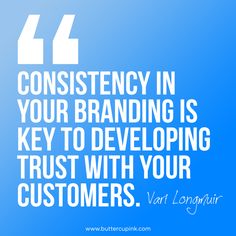
    consistency quote

    For retailers and product purveyors, this type of exercise can be especially helpful in spotting counterfeit goods. Often, the goods are closer to the real thing in quality and accuracy than the brand usage, which is often either misplaced, mounted upside down, the wrong color, reversed when none is allowed, or even misspelled, sometimes on purpose in an attempt to escape prosecution. Vigilance is key to keeping knock-offs out of the market place and diluting the power of the brand, so performing this exercise semi-annually can help keep the counterfeiters at bay.

    Some brands are fanatics about consistent presentation, and some of that fanaticism is justified, especially for those firms operating globally, with a wide range of distant or disparate locations and decentralized operations. Coke-a-Cola is one who vigilantly protects its brand executions. They have a brand usage manual that runs over 200 pages, and covers every instance of usage you can imagine, from signage, to cups, to promotions on billboards, to television ads and internet posts on social media. This manual is translated into over 35 languages around the world, so there are no excuses by bottlers or licensees from Buford, AL to Bangladesh for misusing the Coke emblem. Coke has it’s own trademarked PMS color, described in the manual using three color selection systems used worldwide, and translated into other color systems like automobile paint and video reference color codes. Talk about thorough!

    That kind of control definitely has advantages, especially when trying to spot fakes in the market place. Even if your usage is not that extensive or far flung, you should still exercise strong controls when the work goes out of house for other purposes, like sponsorship programs, charity visibility, translation into other languages, or implementations in unusual media, like apparel or textiles, or low-res print representations. Coarse screen values, RGB conversion, poor registration or low quality paper all conspire to make a mess of logos and brands in less than professional settings, and some care must be taken to guard against these aberrations. One may not do much damage at all, but over time, they can collectively do damage to the credibility of the brand, and the mistakes tend to end up in some unusual places, and as such, come back to haunt you at inopportune times.

    You’ve worked hard to build a highly believable, credible, expressive and purposeful brand – don’t let poor execution consistency undo all your hard work!

  • The Illusion of Control

    The Illusion of Control

    I think we can agree that most top marketing professionals are what used to be called a “Type A” personality – high speed, high motivation, attention to detail, internally driven, goal oriented, strong need for control. Sound about right? If so, you’re likely in the right role if you’re a marketer, but are all of these traits actually helping you succeed? Sometimes less is more, and I think as a race, most of us labor under the misconception that we can control much more than we can in reality.

    That control issue can lead to problems. We can plan for just about any scenario, we can be prepared for the worst outcome, we can remove or stabilize as many variables as possible, but there is always a large element of the unknown involved in our work. That’s not to say that we can give up responsibility for the outcome of any of it, but there is only so much we can control about the results of our efforts. We can’t go to people’s homes and force them to buy what we have to offer at gunpoint. We can only use history, research, or self-proclamation to divine the likelihood of each one buying a product, lump them all together, and put forth our best pitch based on common characteristics among the group.

    We can test, but we can’t control. Test results, be it focus group, direct response test, concept survey, or other method, can only give us a snapshot of the most obvious feelings and actions of the given group at that moment. If you got the same group together again the following month, you might get different results to the same test, based on circumstances beyond our, and their, control. All you can really do is play to the odds, decrease your chances of missing as much as you’re able, and hope to catch potential buyers under favorable circumstances. That’s not control.

    On a larger scale, our lives contain the illusion of control as well. Anyone who’s planned an outdoor wedding knows, you can’t control everything. You can have the best vendors, the most elegant choices, the best caterer and decorator and a force-of-nature coordinator, and none of that makes up for the fact that it could rain buckets that day. You can increase your odds by considering timing, location, and site protection, but those are not control, just contingency planning – it’s still raining, you just made it tolerable for the guests by ordering a tent.

    That’s not to say that such events don’t have a cause somewhere that can be eliminated, deferred or altered – the Butterfly Effect is a theoretical conceptual diagram designed to show the rippling and far-reaching impact of actions in a closed system that highlights this – but at the end of the chain it is simply a set of unalterable circumstances.

    Lack of control can cause us to make errors – lack of recognition of loss of control can lead to disaster. Take a direct marketing test grid. We can’t control those buyers, but we can test that group of uncontrollable people’s preferences as a group, and control for wide differences within the group. When we read the test results, there may be a set of data that appears inconsistent with what we know in history, with what we feel, with what we “think” we know. That data may be discounted as an anomaly, an aberration, some irrelevant variable that isn’t affecting the overall program. But what if that piece of data, when expanded upon and tested further by itself, is critical to a strong response – that the audience needs that portion of the mailing needs to be there as a catalyst to response, and by ignoring it, we negatively affect response to a great degree going forward? Our own sense of control has effectively overwhelmed the data in front of us and reduced our effectiveness and our impact on profits with that mailing mistake.

    We can’t control everything, but we can control how we react to things. If your first reaction when faced with an uncontrolled situation is to hide or ignore it, or worse, try to control the uncontrollable, failure is a likely outcome. As marketers we would be better served by our flexibility, our ability to “roll with it” in our reaction to the situation, to make the best of what might be a less than desirable outcome. Plan for the worst, hope for the best, be ready for anything.

    Did you find this valuable? You can have more like this delivered right to your inbox weekly, for FREE! Subscribe above. Also, Don’t forget to pick up your copy of “The Marketing Doctor’s Survival Notes”