Category: Marketing Cures

  • Ad Agencies Rethink How They Collect Data, Recruit Staff

    Ad Agencies Rethink How They Collect Data, Recruit Staff

    In the wake of Donald Trump’s election as U.S. president with a wave of support from middle American voters, advertisers are reflecting on whether they are out of touch with the same people—rural, economically frustrated, elite-distrusting, anti-globalization voters—who propelled the businessman into the White House. Mr. Trump’s rise has them rethinking the way they collect data about consumers, recruit staff and pitch products.

    A few days after the Nov. 8 election, the chief executive of the ad agency giant McCann Worldgroup summoned top executives to discuss what the company could learn from the surprising outcome. One takeaway for him and his staff was that too much advertising falsely assumes that all U.S. consumers desire to be like coastal elites.

    “Every so often you have to reset what is the aspirational goal the public has with regard to the products we sell,” said Harris Diamond, McCann’s CEO. “So many marketing programs are oriented toward metro elite imagery.” Marketing needs to reflect less of New York and Los Angeles culture, he said, and more of “Des Moines and Scranton.”

    Some marketers, concerned that data isn’t telling them everything they need to know, are considering increasing their use of personal interviews in research. Meanwhile, some ad agencies are looking to hire more people from rural areas as they rethink the popular use of aspirational messaging showcasing a ritzy life on the two metropolitan coasts. One company is also weighing whether to open more local offices around the world, where the people who create ads are closer to the people who see them.

    “This election is a seminal moment for marketers to step back and understand what is in people’s heads and what actually drives consumer choice,” said Joe Tripodi, chief marketing officer of the Subway sandwich chain.

    Even as many ad agencies try to improve their gender and racial diversity, industry executives say they also need to ensure their U.S. employees come from varied socioeconomic and geographic backgrounds.

    A diversity hire “can be a farm girl from Indiana as much as a Cuban immigrant who lives in Pensacola,” said John Boiler, chief executive of the agency 72andSunny, whose clients include General Mills Inc. and Coors Light. The agency plans to expand its university recruitment programs to include rural areas.

    [A diversity hire] can be a farm girl from Indiana as much as a Cuban immigrant who lives in Pensacola.

    —John Boiler, chief executive of the agency 72andSunny

    Given how polling underestimated Mr. Trump’s support, the election underscores the limitations of “research methodologies that even in the era of big data are subject to human bias,” said Antonio Lucio, the chief marketing officer of HP Inc.

    As a result HP, the personal computer and printer arm of the former Hewlett-Packard Co., is re-evaluating its reliance on research techniques like online polls and seeing if it needs to increase its use of personal interviews and ethnography, which is when researchers try to understand how people live by visiting them in their homes or work environments.

    David Sable, global chief executive of Y&R, a creative agency owned by WPP PLC, said the election is a lesson for marketers and agencies that have become too infatuated with big data. Mr. Sable said that Y&R will “double down” on its eXploring program, which involves spending time with consumers in their own habitats. For example, the agency has in the past done laundry with families in London as part of its research for a packaged-goods company.

    “If you want to understand how a lion hunts you don’t go to the zoo, you go to the jungle,” he said.

    David Droga, creative chairman and founder of Droga5, whose clients include Yum Brands Inc.’s Pizza Hut and J.P. Morgan Chase, said the election validated its immersive approach. The shop this year sent employees to Johnsonville headquarters in Wisconsin to interview many of the sausage company’s employees for an ad campaign. “We really want to make sure we not just understand our demo, but the mind-set of our demo right now,” Mr. Droga said. (Droga5 also did work for Hillary Clinton, including a TV spot that depicts her fighting for children throughout her public life.)

    A scene from Droga5's Johnsonville ad campaign. Droga5 sent employees to Johnsonville headquarters in Wisconsin to interview many of the sausage company’s employees for the campaign.
    A scene from Droga5’s Johnsonville ad campaign. Droga5 sent employees to Johnsonville headquarters in Wisconsin to interview many of the sausage company’s employees for the campaign. Photo: Droga5

    Advertising executives also said the surprising outcome to the election would likely hamper advertising spending next year, as marketers try to figure out what implications the new administration’s decisions will have on businesses.

    “I believe there will be a slowdown” in the first quarter as marketers take a “wait and see” approach to Mr. Trump’s policies, said Maurice Lévy, chief executive officer of Publicis Groupe SA.

    WPP’s GroupM, the largest ad buying firm in the world, had been anticipating U.S. ad spending would grow 3% to $183.9 billion next year. Kelly Clark, global CEO of GroupM, now said he anticipates ad spending growth in the U.S. will likely decline a few percentage points over the next six months. “We do believe that investment decisions will be delayed,” said Mr. Clark.

    If agencies internalize the societal changes the election reflected, the content or tone of advertising could change, some ad executives predicted.

    “The election will have spooked the liberal elite away from high concept, ‘make the world a better place’” advertising to “a more down-to-earth ‘tell me what you will do for me’ approach” said Robert Senior, worldwide chief executive of Saatchi & Saatchi, a creative firm owned by Publicis Groupe.

    Mr. Senior said the change will likely manifest itself in less use of fantastical imagery and escapism and more real world and real people in ads.

    Mr. Tripodi of Subway says marketers are too focused on aggregating people into broader groups and painting them with the same brush. He said global marketers such as Subway should try to do more local marketing and advertising that can better reflect the concerns of specific communities.

    Mr. Diamond of McCann says the ad industry’s move to have regional hubs servicing large patches of the world is now out of sync with movements in many countries—the U.S., U.K., and China, for example—where citizens seem frustrated with aspirational globalism. He said McCann, which has offices in about 90 countries, had been moving toward more regional hubs. It now wants to beef up its local creative teams.

    In a world “demanding local distinctiveness, you have to have creative that reflects that,” Mr. Diamond said.

    Some advertisers weren’t caught off guard. Susan Credle, global creative chief of ad agency FCB, relayed a conversation she had before the election with a marketer who felt that an aspirational message would hurt its business.

    “If we were having that conversation today, it would be an even stronger point,” she said.

    Write to Alexandra Bruell at alexandra.bruell@wsj.com and Suzanne Vranica at suzanne.vranica@wsj.com

  • The Advantage of Primary Source Data With Respect To Aggregated, Accumulated or Transactional Data

    The Advantage of Primary Source Data With Respect To Aggregated, Accumulated or Transactional Data

    By Dave Poulos, Chief Consultant, Granite Partners, LLC

    David Poulos

    Big Data – There, I said it, now the bots can find this article and show it to the millions of eyeballs watching the internet for articles on big data and Big Brother. We are all contributing daily to this giant cache of data, every move we make, from buying groceries, to pumping gas, to using a toll road, to making a phone call or sending a text, to posting on social media, we’re adding to the huge pool of information called big data. But here’s the problem – data isn’t knowledge, and knowledge isn’t wisdom. Just because we collect facts, aggregate them, sift them, analyze them, order and rank them, connect the dots between them – doesn’t mean we really KNOW those individuals who originated the data. We can only make educated guesses, informed by history, not intent.


    It has been said that trying to harness that massive stream of data and use it to make decisions is like trying to drink from a fully-charged municipal fire hose – the power can literally blow your head off! The real trick to using data to make, or at least inform decisions, is to select the bits that get you closer to the truth of the motivation you’re trying to trigger. From a marketing standpoint, finding what to measure is at least as big a challenge as how tomeasure it, and how you use the answers to guide marketing outreach activity. Once you’ve made some determination as to what data you need, you can nearly always find a way to extract and aggregate it to use to your advantage. But how do you decide what you’re looking for?


    One of the best sources of solid, reliable, workable data we’ve discovered in actual practice is primary research with a split pool of the target audience. We use both digital survey and long-form, In-Depth Interview (IDI) methodology to glean primary customer insight data from a split pool of logical likely customers and actual purchasers. The phone interviews are structured like a conversation, the questions asked in a seemingly logical order, although not always in the same order from call to call. Each call is recorded, and transcripts made of each. This is what assures the research staff that they have “covered all the bases” and that each call is consistent with the goal of the study. The responses are analyzed to glean insights as to satisfaction or awareness, or preference, or attitude toward, or dislike of a product, service or brand. There are many uses for this methodology, but the results are almost always enlightening and revealing. Unfortunately for the enterprise IT specialist, this is one methodology you can’t throw more hardware and software at to scale up or solve a problem – the only compatible hard drive available is in each person’s head, and the software is custom made and varies by individual’s emotional and intellectual make-up.


    Once the IDI data has been analyzed, some consistent issues will invariably present themselves among the target audience – they will all or almost all mention one or two specific likes, dislikes, preferences, or peeves, about the product or service. Now the challenge is to see how wide and how deep the problem with these elements runs, and if it affects the buying decision to a significant degree. Survey research is now employed to drill down and discover the depth of the problem. The ins and outs of survey marketing are myriad, and best practices are easily found elsewhere. Suffice to say here that by overlaying the survey data upon the IDI inputs, a very accurate, true picture of the customer’s viewpoint can be created.


    This data, when analyzed, can give you invaluable insights in to all sorts of different emotional triggers, life-stage triggers, off-label uses, alternative audiences, and a host of intelligence regarding the product with respect to the intended target audience. For companies wishing to be or become customer-centric in their approach, these insights are vital to the effort, as they form the platform from which you build an engaging customer experience. If you know what the audience wants, you can deliver it, preferably in a way that resonates with that audience, is economically feasible to produce and buy, at the time when it is most advantageous to both.


    The best part of using primary insights to guide your creation of marketing outreach is that not only do you know you’re correct – the customer said so – but that it will hold up over time. Customer insights are not dependent on past activity, on a transaction that has been made at some point in the past. If you study how consumers make buying decisions, you’ll discover that there are a host of factors involved in making that decision, many of which are situational. In other words, if that same products were presented to the consumer under different circumstances, it may not be as preferable as it was when the transaction occurred. The time of day, the financial situation of the purchaser, the proximity to other destinations or products, the lighting in the aisle, the breath or cologne of the sales person, a huge number of variables you have no access to have to align in order to drive that transaction forward.


    Transactional data will never really reveal those variables, and while some can be controlled for using predictive software algorithms, the technology is imperfect and incomplete – humans are regrettably inconsistent. When you’re betting tens of millions of dollars on a marketing campaign, it may not be a good idea to rely solely on past purchase history and algorithms, and ground your decisions in data that considers the present, the future, and the emotional triggers of the purchase, not just the variables you can’t control.


    Removal of those variables, or at least controlling for them, can provide you with insights far beyond the current strategy or campaign plan, and lead you down roads to revenue you never even considered. An ongoing program of gathering and analyzing customer insights only strengthens and broadens the value of the insight data, and the richer that data, the more on-target you can be. Those additional streams of revenue from off-label usages, new markets, affinity and co-branded products, follow-on services and upsell strategies that actually work can add up to millions of dollars in the positive column for an enterprise-scale firm. The upfront investment in a customer insight program may appear steep at the outset, but when balanced against the potential upside and the lack of waste or loss due to misinterpretation or contaminated data, it looks like a bargain in the long run, one most enterprises would be smart to leverage.

  • If Your Brand Was A Person, Would You Date Them?

    If Your Brand Was A Person, Would You Date Them?

    Brand gets defined in many different ways depending on the source, the context and the scope and depth of the investigation and the purpose of the definition. We’ve found a great way to help simplify this definition process and allow marketers to cut to the heart of the brand and incorporate that insight into all of their marketing efforts more seamlessly and easily.

    Brands function as an identity for companies, just like a name does for people. Brands have a reputation, just like people. Brands have a personality, just like people (brandinality?). So why not examine your brand as if it were a person? Brand personalization is a great way to help your company’s employees and associates think of your firm in a consistent, easily-relatable fashion, one they can tell others about quickly and easily.

    It’s also a way to get to know your brand better, because people are hard wired to humanize inanimate objects in order to better understand and relate to them, a fact that is a founding principle of the Disney company, and the basis for their movies and animated features. Think talking tea kettles with a British accent, and you get the picture.

    [pullquote align=”left or right”]Brand personification is “a Projective Technique that asks people to think about brands as if they were people and to describe how the brands would think and feel,” according to mktresearch.org.[/pullquote]

    The process is fairly straightforward, and we use it to help define customer’s perceptions of brands for client companies. Start off by asking a few basic questions:


    • Is the brand male or female?
    • Is the brand smart like school, or smart like a poker player?
    • Is your brand a slob or a neat freak?
    • Is your brand a jock or a nerd? Cheerleader or Goth?
    • Is your brand trustworthy?

    Now that you have some basics, flesh them out by asking yourself or your subjects “Why do you think that?” Those “why” responses are critical to keying on central core attributes or characteristics about the brand, be they experiential, visual or verbal. From those why responses, you can tease out various aspects of the brand that reappear across responses as more central to the identity. Those are the pillars of the brand and should be adhered to in all brand-relevant activities.

    Now that you know it’s personality, it’s time to think about appearance. What does your brand look like – not the logo or visual identity, although that will come along a bit later. This relates to if this brand was a person, how would those key personality traits be revealed at a cocktail party or in their dating website profile photos. Visualize how they might represent themselves, as a person. Start with a name, (is it a Gary or a Lawrence, a Wendy or a Sahara) then flesh out the appearance of the person – are the clothes clean and do they fit well, are they age appropriate? Is this person kinetic and high-energy, or more laid back and laconic? Are they credible in speech, manner and appearance, or are they overblown or timid? Are they solidly in a category, like a surfer dude, or a Wall St. guy, or a coal miner, or a tire store manager? This can go on for quite a while, until a fully-realized person presents themselves to your vision. Now ask yourself “is this person a good representative to relate to our target audience?” If you’re selling amps and road cases, the laid-back rocker might be perfect. If you’re selling securities and annuities and other financial services and products, maybe not so much.

    Now the big question: Now that you have created the brand personality, fully formed in front of you, would you spend time with this person? Would your target audience find him attractive and credible? Would they take him/her home to meet Mom?

    Creating a brand personality does more than provide a short hand way for you as a marketer to think about your brand – it’s also a great way for you to explain your brand to colleagues and to get to know it more intimately, and allows you to improve the effectiveness of your brand marketing across all channels and media, company-wide.

    Would you date your brand? If not, it might be time to make some adjustments . . .

  • Market Research Is the Answer to ‘Uberization’ and the Customer Challenges of the 21st Century

    Market Research Is the Answer to ‘Uberization’ and the Customer Challenges of the 21st Century

    Jessica delivers this message better than I could, so I thought I’d pass this along . . . we’ve been explaining this to clients for years, and she nails it!


    by Jessica DeVlieger  |

    April 4, 2016

    Customer behaviors around the world are changing. Fast. For businesses, the risk in not keeping up is all too real.

    The companies that really “get” their customers, like Apple and Amazon, are setting the standards, raising the bar high.

    Because of “Uberization“—in broad terms, displacement and marginalization by nontraditional competitors—customers across all industries now have higher expectations.

    As a result, staying relevant to customers is becoming increasingly difficult to achieve in a time when doing so couldn’t be more critical to success.

    Gradually, leaders are recognizing that relevancy demands empathy—to know customers as the real, complex, creative people they are—then instilling that empathy across the entire organization. It’s why, according to a recent IBM C-suite global study, 66% of C-level execs say they plan to focus on customers as individuals rather than segments (up from 54% who said so in 2013).

    Pole vault


    But cultivating a shared understanding of customers as individuals is easier said than done, especially for multinationals with millions of customers and dozens of offices scattered across continents. It requires departments to align and pay closer attention to the people they serve. To embrace new perspectives and fresh ways of seeing the world and the business. To then internalize that knowledge and use it to act with intuition and urgency. And, it needs to happen on an ongoing basis—not on a need-to-know basis—to meet customers’ needs as they change, therefore making the business more agile and adaptable.

    The way most businesses are structured today, it’s the market research and insights teams that are positioned to champion the customer-as-individual. Those departments are the official caretakers of consumer truths, and they are the people in the organization closest to customers.

    The question is whether market research departments are empowered enough, and have the right resources for, inspiring leaders and the company culture to change.

    The answer, usually, is no. Most market research departments operate as 20th century customer feedback engines, focused primarily on collecting and disseminating customer information through a well-intentioned series of disparate messages and reports. That approach rarely creates the desired impact. The empathy generated is fleeting, at best; and the drive to action stalls.

    Businesses can’t afford to continue to operate that way. Not when they’re faced with new challenges like “Uberization”; 21st century challenges require 21st century market research.

    The market research department must play a dual role: consultant and marketer, expert in both uncovering opportunities from customer stories and motivating colleagues, with clarity and simplicity, to take action. It will function with as much vigor on engaging stakeholders within the business as it does in collecting customer information from outside of it.

    That change will give Market Research a permanent seat at the C-level table. It’ll be held accountable by leaders to create broad customer empathy that drives growth, complete with defined goals, measurable KPIs, smart strategies, and creative tactics.

    Researchers will need to update their LinkedIn profiles and resumes to match the following four business objectives of the 21st century market research department.

    1. Connect the dots to bring customers to life

    Ask any market researcher today, and she or he will tell you: I don’t need more information, I need help synthesizing what it all means for the business. Finding value in a sea of data from various sources is difficult. And once found, it’s how it’s socialized that actually matters. It needs to be such a powerful and memorable narrative that it inspires decision-makers.

    For example, a retail bank launched an initiative to help their employees understand different types of banking customers more intimately. After collecting data on household income, average number of credit cards, retailers frequented, and other spending and saving behaviors, the insights team brought those customers to life in a fun and creative way. It assembled individual customers’ wallets (based on the bank’s key customer personas), each filled with common items, like a driver’s license, receipts, credit cards, loyalty rewards cards, cash, and family photos. Though the wallets weren’t “real,” they were tangible replicas, just about the realest window one can get into how a customer spends and saves. The wallets were shared among employees so that they could see, feel, and experience exactly who their customers are and how they manage their money.

    1. Create buy-in to help others see and act on the opportunity

    All the insight in the world doesn’t matter if it doesn’t somehow create urgency and willingness to make a meaningful change. And making that change means that everyone feels what the customer feels and understands the opportunity for the business.

    For example, a major retailer had lots of data showing customers’ frustrations with advertised products that were often sold out—or simply not there—by the time customers got to the store. But the data alone wasn’t persuasive enough to initiate action to fix the problems. So the insights team created a documentary-style film about one woman’s daily routine, highlighting the gaps in her experience and why the store’s failures made her life harder. It humanized the customer’s problems, leaders felt her pain immediately, and the company responded with greater urgency to fix them as a result.

    1. Align priorities and departments with a clear and collective agenda

    Facilitating alignment across departments can be complicated when teams are siloed and have their own priorities and perspectives based on their role and department. To create a collective agenda, you must make customers the central rallying point.

    In fact, 63% of CEOs say rallying their organization around the customer is one of their top three investment priorities.

    It makes sense: Customers create focus; centering work on their needs ends debate and swiftly moves solutions into action.

    A great example of this comes from a major pet food and supply retailer. The company realized that pet owners were answering questions about their pets from their pet’s perspective, not the owners’: “Prudence loves her new grain-free wet food!” for instance, or “Rufus is such a calm pup when he’s in the hands of the grooming staff.” That realization led to a game-changing insight: Owners consider their pets as the customer. In-person collaboration between executives at the most senior levels and shoppers helped the company land on a guiding principle that put pets at the center of business, like stocking foods at “pet-level” or pinning the names of employee’s pets to their lapels. Today, it’s a pet-centric lens through which every decision by every employee—from cashiers to the marketing team to the C-level—is made.

    1. Infuse a constant flow of customer empathy that affects company culture

    People become fluent in a new language by immersing themselves in the culture of native speakers—not just by listening to Rosetta Stone on their commute to work. The same is true when trying to build genuine customer empathy among employees. It can’t be a one-off engagement. It needs to be an immersive and ongoing experience that evolves over time, ultimately altering the company culture.

    Take, for example, a well-known consumer electronics company that had enjoyed years of success when led by its product-focused engineers. But, as competition heated up, the company’s growth stagnated. It wasn’t until company leaders made a long-term investment in embedding customers’ voices, experiences, and stories to drive strategy across divisions that the culture truly began to change. Executives and customers now regularly solve problems together in face-to-face sessions. Engineers innovate outside the box thanks to pictures and videos of the creative and unexpected ways customers use the company’s products. The culture has shifted, fueled by one thing: the customer. The business is growing enormously today as a result.

    * * *

    The ability to learn from customers and evolve with them is inextricably linked to a company’s potential for growth. After consultant and marketer, there might be a third hat that the 21st century market researcher wears: teacher.

    It’s the researcher’s job to shape the minds of the business so that everyone knows the rich and diverse perspectives of the customer. It’s the best defense against “Uberization,” and the only sustainable way companies will grow in the 21st century.

  • How To Think Like Designers

    How To Think Like Designers

    This is What We Do – Thought this was interesting . . .

     IBM hires hundreds of these workers to shake up clients — including Vodafone — and figure out what customers want

    JUSTIN TALLIS/GETTY-AFP

    What do your customers want? That’s not a skill that comes naturally to the engineers who build software for big corporations. But in a world filled with user-friendly smartphone apps, clunky enterprise software is no longer tenable.

    So to shake up the status quo, IBM, Cognizant, Infosys and others have been racing to hire thousands of designers who once would have taken more specialized jobs-at an ad agency, say, or an industrial-design shop.

    At IBM, they team up with engineers and consultants and embed with a multiplicity of clients. Besides providing customer i nsights, t he t eams encourage constant feedback and tweak products as they’re built — a process aimed at getting them out faster. It’s how successful Silicon Valley startups operate but radical for the IT services industry.

    IBM Chief Executive Officer Ginni Rometty has bet the future of the services division on design thinking. She badly needs the strategy to work if her company is to reverse 17 consecutive quarters of falling revenue and adapt to a cloud-based world. In the past few years, the company has recruited about 1,250 designers, built a global network of design studios and is training employees to incorporate design thinking into almost everything they do.

    By the end of this year, the company says, about a third of the 377,000-strong workforce will have been retrained. The goal is to build a customer-centric, startup-esque culture — and then persuade clients to do the same.

    Brian Corish never planned on joining a big corporation like Vodafone; the serial entrepreneur was used to working at startups where knowing what the customer wanted was baked into the DNA. But when the head of Vodafone’s Irish operations came calling for help enhancing the company’s online pres- ence, Corish saw an opportunity to teach the startup ethos to a company with lots of unused information about its customers.

    His new bosses didn’t say precisely what they meant by the digital transformation, but Corish soon concluded he needed to reorganize the entire culture around its customers.

    As a big, established company, he says, Vodafone hadn’t bothered providing the best consumer experience because it already had a massive customer base and was making money building and selling products the way it always had.

    Corish decided to bring in outside help but was underwhelmed when all the consulting firms talked up previous projects rather than focusing on the challenge at hand. IBM sent its team back for a second try. This time they ran design thinking exercises with 30 or so attendees.

    A lot of the discussions centered on actual customers, what they didn’t want and what they wanted more of. Darren Gerry, an IBM designer, says Vodafone attendees were shocked at the revelations, having never thought about customer needs and desires in those ways.

    To start, IBM was asked to build a self-service portal that would let employees working for Vodafone’s enterprise clients order phones and other workrelated gadgets themselves.

    Gerry says his team developed a close relationship with the client, keeping the project transparent and demonstrating to Vodafone how design thinking works. Corish, keen to teach as many people as possible about design thinking, helped facilitate the indoctrination, starting at the top; that’s when senior management met the Snapchatobsessed teenager.

    Traditional enterprise software projects can drag on for years before bearing fruit. IBM delivered the first version of Vodafone’s self-service portal in six weeks. Corish says his colleagues were astounded how quickly the job got done. “The rest of the organization went, ‘ Oh, you really can do this,’ ” he says. “It doesn’t have to take five years.”

    Before the self-service portal was built, enterprise clients had to call Vodafone to order a new device, often spending days getting it configured. Now they can use their own logins to order a phone or tablet, which arrives in a couple of days and works right out of the box. “If we don’t focus on the customer,” Corish says, “we’ll be irrelevant.” Much the same could be said about IBM.

  • How To Become Customer-Centric . . .

    How To Become Customer-Centric . . .

    Whether its B2B, B2C, global enterprise or local start-up, commercial or non-for-profit, all types of business can benefit from becoming more customer-centric. But what does that mean, what does that look like, and how can you achieve it without recreating your business from the ground up?

    True customer centrism is as much an attitude, an approach, as it is a model or structure, which means if companies want to take advantage of all the positives derived from knowing and treating your customers better, it all starts at the top, it’s built into your corporate or organizational culture, deeply interwoven into your corporate DNA. It’s one of several facets of business where you can’t just “talk the talk,” you HAVE to “walk the walk” every day, day after day, from all employees, customer-facing or not.

    OK, so now that you have the attitude adjusted, it’s time to check the altitude. That requires some real, trusted, correctly executed research data. But where do you start? One aspect of research data is that it’s like lettuce, it needs to be fresh to be at it’s best. Which means you need to develop a way of gathering data from your customers that you can rely on to be accurate, to pull from a high-confidence sample size, and can be put in place relatively quickly and can be relaunched on a regular basis, once a baseline is established. Surveys can be used in some instances, depending upon what you’re trying to accomplish. Our preferred methodology is the IDI, or In-Depth Interview. It’s a semi-scripted conversation, 30-60 minutes in length, guided by a pre-written discussion guide, executed by trained researchers, NOT telemarketers, who can hold an intelligent conversation with a wide range of professionals and consumers. That conversation is geared toward gathering not only facts about your customers buying habits and purchase patterns, but about their attitudes, feelings, preferences, and moods regarding your products, services or brand. Many of those will be driven by their most recent experience with your company, usually an interaction with either billing or customer service representatives. Keep this in mind when doing the data analysis later, its one of the reasons why research data needs to be fresh.

    Each IDI is recorded, transcripts made, each question response is then tabulated, and the responses segmented into positive and negative piles, or into a range of “buckets” based on type of response, severity of feeling, and prevalence among respondents. Those data points are given to three analysists (in our practice, anyway), and three independent analyses are written up based on the same data, to mitigate bias and skew. That’s the basic methodology, but the key to using these successfully comes in the performance of the questions themselves – if you don’t ask the “right” questions, you can’t act appropriately on the answers and achieve the desired result. That’s where the magic happens.

    Now that you have your data, and have done the analysis, now what? Data is just dumb numbers and words unless it leads to, or can be converted into, some positive action with respect to your customers. Some of the data will be most useful in making adjustments operationally to customer-facing processes. Is your fulfillment process causing problems, is the return policy too restrictive or difficult, is your phone tree routing system too complex or directing people insufficiently or are the menu options wrong – those are things that can be adjusted and shifted based on the data in a very direct way. They make a big difference in the customer experience, and can certainly affect their attitudes and emotions toward the company in the short term. It gets a bit more complex when you start examining some of the deeper attitudes and preferences about the company and its brand, what the company and it’s products mean to them emotionally, what feelings does the brand bring out in them, and why. Those are brand-linked attitudes and emotions, formed after repeated interactions and touch points with the company, its outreach materials and products. It’s much tougher to pin down the cause of these aggregate attitudes, but worth the time if you can make a correction that rights the brand’s direction going forward.

    At this point, many of the smaller B2B companies and service firms are thinking, ”isn’t that up to our sales people to assess those things and listen to their customers and shape their offer and interaction accordingly?” Even if your transaction volume is very low and your client number correspondingly low, there is still much to learn about your customers by doing research, and to be able to adjust your marketing to find more of them as a result. In fact, smaller, lower volume firms can make a bigger impact by paying attention to brand influence and making customer-centric adjustments than a larger firm can – small changes make a bigger difference in their bottom line, and a small increase in customer volume makes a bigger difference financially as a percentage of overall revenue.

    It’s said in the psychiatric profession that admitting you need help puts you half way to a cure. Becoming customer centric as a business is a similar situation – by discovering that you can improve your growth, meet objectives, increase revenue and profit by knowing your customer better and serving their needs more directly, you’ve already planted the seeds of that first attitude adjustment step, a big move forward in the process. Communicating that attitude down through the rank and file so that it becomes pervasive throughout the firm is the next step. Strong belief, direct simple communication, and a solid, positive example shown in every corporate action is the key to building a more customer-centric organization. No time like the present to get started. If you don’t know where to start, we’d be happy to help.

  • Legacy VS Longevity – Brand Makes The Difference

    Legacy VS Longevity – Brand Makes The Difference

    Some brands seem to become well known, some nearly ubiquitous, in a short period of time, relatively speaking. Some businesses that have names that are around for decades and decades, and for generations, and their brand reach is only a few miles from their location with virtually no recognition beyond that, aside from existing customers, which only number in the hundreds. What makes the difference between the long-time brand, and the real legacy brand, that gains national exposure and stays in the forefront for years and years?

    Clearly just sticking around for decades should count for something, right? Growing a business is not for the faint of heart, and it’s a lot of hard work over years to become established and known for what you do. Yet some seem to climb that mountain fairly quickly and become almost household names in just a short period, taking a large stake in market share for their category, while others simply continue day by day, seemingly doing a good job, gaining customers, but they never reach prominence either in their category or industry beyond the small local area.

    The difference can likely be attributed to three factors:

    • Paid or Earned Exposure – is there an advertising program on a large scale, is there some press and PR activity on the schedule, have you told the story to the media and let their network and their imagination do some work for you in spreading the word? If not, that may be a significant determiner of your reach and market share – someone once said that “a business that doesn’t advertise is like a nerd kissing a girl in the dark – you know it’s happening, but no one else knows you’re there.” Craft a credible, succinct brand story, and amplify it as far as wide as possible.
    • Industry Participation – Are you a member in good standing of the business and professional trade associations that cover your vertical and your business activities? Are you active and engaged in those groups? If not you’re missing a huge opportunity. Those organizations not only represent you and the other members to the general public, but they allow you to be known within your industry as an expert, a specialist, a provider of solid standing and credible ability – they all publish multiple vehicles, from websites, to magazines and newsletters and blogs that can be used to showcase your business to industry colleagues.
    • Differentiation – what is it that you do better, faster, cheaper, differently than your competitors? Do you use different or better procedures, superior materials, alternate parts or components, better product designs, respond to customers in a spectacular way, do you offer a full refund no questions asked no matter what? Free shipping on returns, multiple access points, 24/7 service, faster turnaround? Something gives you distance from your competitors. Use that to stand out from the pack, and spread the word nationally that you’re the one that can provide “X” when no other can.

    With those three pillars in place, if the product is of good quality, if you’re telling the right people, at the right time, often enough to “stick” in their minds when purchasing time comes, then your brand should be established, and spread as far as you can push it out.

    None of the three things listed above are terribly expensive, from a business standpoint. It is certainly possible to spend yourself into a sizeable hole on advertising that doesn’t work or that is misplaced, but there are scores of professionals out there to assist you in determining the appropriate spending levels and media selections so that this doesn’t happen. The industry participation is relatively inexpensive but can be time-consuming – almost always well worth the time to establish yourself as an industry player, which brings dividends for years. Differentiation is more an introspective exercise, and should be part of all your marketing planning, along with reiterating your brand characteristics and pillars of internal strength for the brand, to help keep the brand story consistent and on track over the years.

    Are you a local presence, or a national brand on the rise? The choice is really yours to make . . .

  • Affinity Programs CAN Drive Engagement And Loyalty . . . If Executed Properly

    Affinity Programs CAN Drive Engagement And Loyalty . . . If Executed Properly

    Business owners who sell to consumers are constantly striving to grow their customer base, and to retain the one they have already established. Organic growth, whether driven by effective marketing and promotion or by product quality, or customer service that leads to word-of-mouth referral, is the first priority for most consumer-centric businesses. But most sales pros will tell you that it’s much less expensive to keep your existing customers happy and have them buy more, than it is to acquire new ones. So why are most businesses taking the expensive route, rather than increase retention and engagement of the existing customer base? Most likely, it’s because loyalty programs, or affinity programs that encourage repeat business and customer loyalty, are difficult to execute effectively. There are lots of moving parts, lots of detail to keep track of and account for, and they attempt to codify human behavior and account for each variation to counter potential abuse. This creates other obstacles, which will be addressed shortly.

    Most businesses are good promoters of product, so crafting offers around product, centered on price or volume, is routine and straightforward. Put together a few “Buy one get one free” promotions, or “Early-Bird Specials” to add urgency, and they become your go-to strategy for driving foot traffic (or clicks). It takes little in the way of creativity or customer insight to knock off 10% or split 50-50 for volume purchase, and they do the job to a certain degree. But are you creating real brand loyalty, or just offering casual customers a reason to save a little money?

    Loyalty programs have been around for many years, but the availability of inexpensive computer technology, databases in particular, have spawned a new era of growth for these types of customer engagement set-ups. Sometimes these programs are created in conjunction with other partner businesses – witness the partnership between Giant Food and Shell Oil – grocery purchases are logged and items assigned a point total, and that total yields a discount on gasoline purchases at Shell stations. By linking two basic expenses, groceries and gas, the program allows customers to be rewarded for purchasing things they would normally buy anyway. Credit card “cash-back” programs fill this same need. But, they do engender loyalty.

    But a true loyalty program no only allows for more repeat business from your best customers, it give them a reason to tell others about what a great deal they get from you, thereby expanding your customer base organically without spending a dime. By rewarding the behavior you want -repeat purchase on a consistent and regular basis – you build transaction volume over time and increase profitability. But is this organic growth, or just incentivized interaction? The best loyalty programs no only facilitate repeat purchase, they also encourage referral, and some even provide disincentives for disloyal behavior.

    The very best programs not only engender loyalty, provide an incentive for not only loyalty but referral, and provide a mechanism for it. But they are also very customer centric, which means they are elegantly simple for the customer to enroll in and use regularly. Keytags with bar codes are convenient, but if it takes you half an hour and twenty pieces of personal information to enroll, the abandonment rate will be huge and usage will never meet expectation as a result. Simple for the consumer includes simplicity in enrollment, usage, and in accruing benefits. Credit card points programs are notoriously complex when it comes time to actually reap the benefits of your buying behavior, with many rules, complex formulas, and exceptions to the promised rewards that can make cashing in more difficult than it’s worth. To avoid fraud and abuse, those companies have put the onus on the consumer to do their back-end work for them, and find their own way through the maze of regulations and guidelines. Simpler is better.

    All the loyalty programs in the world won’t overcome product quality issues, poor customer service, bad product design, lack of distribution channels, low awareness or other inherent consumer business issues, but if you have the others conquered, a well thought out loyalty program can be a big help in tipping the scales toward brand loyalty, reducing churn, increasing engagement and retention. As usual in marketing, the secret to success is in the execution . . .

  • Self-Branding: Keys to Making a Great First, Second and Third Impression On Prospects, Clients

    Self-Branding: Keys to Making a Great First, Second and Third Impression On Prospects, Clients

    Most professionals in a wide variety of industry verticals are aware that they need to create a positive impression when they meet a potential client or colleague. Service pros of all stripes have at least some understanding and self-awareness regarding the impression they leave people with upon first meeting. What many neglect however, is that branding is an ongoing activity, and that if you want to activate the positive impression you’ve created with that person or group, you need to keep providing evidence to reinforce this impression – that brand is yours to damage or degrade, and a few smart, conscious choices can help you provide reinforcement to that initial impression and enlarge upon it in a productive, actionable way.

    Branding has much to do with consistency, and human beings by nature are rather arbitrary, although certain behaviors are potentially predictable. Behaving the same way, reacting in a similar way to certain inputs and stimuli, developing routines and habits that are simple and obvious are ways you can reassure those around you that you are dependable, reliable, solid and can be counted on to to be reasonable. This requires a level of maturity, self-control and self-awareness, but once mastered, you might be surprised how effective it can be. Something as simple as arriving at the office at the same time a majority of the time, if possible, lets people around you know that if they’re patient, you’ll arrive in time to assist them if they need it.

    Work on picking a style of clothing that really works well for you, is comfortable for you and others around you, is appropriate for the situation, and still expresses your individuality. Steve Jobs locked onto a pair of dark jeans and a black mock turtleneck, and wore them constantly for years. Not only does it save you some time in the morning “deciding” what to wear, but it sends a consistent message that says “I’m reliable, and focused on behaving consistently with your expectations.”

    Be honest, straightforward, transparent and ethical in your dealings with clients and colleagues. Trust is the core of every brand, and if there’s a hint of inauthenticity, people will pick up on it and shy away when given a choice. Authenticity is critical to those in more publicly-visible positions. If you represent the face of your company, it is absolutely critical that you be as authentic and direct as you can, to stay in keeping with the brand expectation of stakeholders everywhere. People will sense a false note, and equate it with hiding something or covering up.

    Treat everyone equally. Be as egalitarian in your dealings with everyone in the building as you can be. Treat the maintenance workers and cleaning crews with the same respect and attention that you pay to the CEO or Chairman. A quick word to everyone carries an amazing amount of weight with everyone you encounter, and it makes you personal, approachable and memorable, because very few can pull it off consistently.

    Every move you make, every meeting you attend, every memo you send out, can either work to build the brand or dilute it – the choice is really yours. If you’re someone who is consistently late for appointments, meetings and happy hours, when you start to show up on time, it actually builds the brand, as long as you can keep it up! The opposite is true if you’ve started off being the first to arrive and then slip into sauntering in at ten minutes after . . . If your emails win awards for brevity and succinct word choice, and later you start to elaborate some, it builds the brand, and lets you open yourself up a bit, makes you approachable. If you push out 800-word tomes regularly, when you shift to the short and sweet formula, it can be interpreted that you are upset or angry at the recipient, or don’t care to include them in your thinking.

    Stay on point. Everyone has goals, but few write them down, and fewer revisit them, review and revise them regularly. When your actions start to drive you toward your goals, staying on point and on message will help you build and maintain momentum. It also helps you hone and maintain your core message consistently, which builds trust with stakeholders throughout the organization, both up and down the org chart.

    Devising a personal brand can be a terrific springboard to career and personal success. It plays to others’ expectations and allows them to feel comfortable with you more quickly and completely. Some self-reflection, self-awareness, self-control and self-discipline will help you craft a brand that propels you forward almost effortlessly, and will be worth the effort and time it takes to do it “right”.

  • Make It All Consistent – -Brand Consistency Builds Strength, Awareness

    Make It All Consistent – -Brand Consistency Builds Strength, Awareness

    There is a lot of talk and noise in the marketing interwebs regarding brand. At the base end of the spectrum, there are articles on what brand is, how to build a personal brand, and what brand is not. At the upper end, there are published studies on brand engagement and measurement thereof, brand strength and awareness linkages to sales, and other more esoteric subjects. What’s missing is one of the central themes on brand, that it is imperative that brand presentation and implementation must be consistent from instance to instance.

    Consistency is the key to delivering on that brand promise, no matter where it is encountered, and particular care must be taken when the brand is licensed to third-party outlets or producers to maintain the quality and consistency of the brand, to maintain its integrity. The level of importance of consistency cannot be underestimated, to the point where any brand-related engagement of our firm starts with an implementation consistency test, starting with date of first use, and carrying out to current executions. We collect all available examples in every media we can find, lay them all out and physically compare them, to point out lapses in consistency, poor quality control, bad executions on the part of licensees, or off-brand knock-offs.

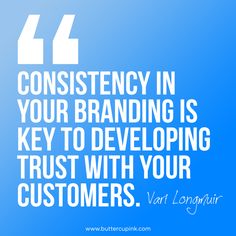
    consistency quote

    For retailers and product purveyors, this type of exercise can be especially helpful in spotting counterfeit goods. Often, the goods are closer to the real thing in quality and accuracy than the brand usage, which is often either misplaced, mounted upside down, the wrong color, reversed when none is allowed, or even misspelled, sometimes on purpose in an attempt to escape prosecution. Vigilance is key to keeping knock-offs out of the market place and diluting the power of the brand, so performing this exercise semi-annually can help keep the counterfeiters at bay.

    Some brands are fanatics about consistent presentation, and some of that fanaticism is justified, especially for those firms operating globally, with a wide range of distant or disparate locations and decentralized operations. Coke-a-Cola is one who vigilantly protects its brand executions. They have a brand usage manual that runs over 200 pages, and covers every instance of usage you can imagine, from signage, to cups, to promotions on billboards, to television ads and internet posts on social media. This manual is translated into over 35 languages around the world, so there are no excuses by bottlers or licensees from Buford, AL to Bangladesh for misusing the Coke emblem. Coke has it’s own trademarked PMS color, described in the manual using three color selection systems used worldwide, and translated into other color systems like automobile paint and video reference color codes. Talk about thorough!

    That kind of control definitely has advantages, especially when trying to spot fakes in the market place. Even if your usage is not that extensive or far flung, you should still exercise strong controls when the work goes out of house for other purposes, like sponsorship programs, charity visibility, translation into other languages, or implementations in unusual media, like apparel or textiles, or low-res print representations. Coarse screen values, RGB conversion, poor registration or low quality paper all conspire to make a mess of logos and brands in less than professional settings, and some care must be taken to guard against these aberrations. One may not do much damage at all, but over time, they can collectively do damage to the credibility of the brand, and the mistakes tend to end up in some unusual places, and as such, come back to haunt you at inopportune times.

    You’ve worked hard to build a highly believable, credible, expressive and purposeful brand – don’t let poor execution consistency undo all your hard work!