With the addition of cable television, streaming video services, internet radio, podcasts, social media streaming platforms, Periscope, and a whole host of other choices, the media landscape for marketers has become crowded, fragmented and multi-fold – which is the good news! You now have a plethora of choices when making media selections that allow you to not only narrowly target your exact audience, but also get near instant feedback in terms of engagement and viewership in real time, and enrich your data stream for further refinement of your selections based on actual purchase or engagement levels. Miraculous!
So where does that leave Network television and terrestrial radio? Right there in the fight, according to special guest media expert Karl Minacapelli of CK Westbury Media in Towson, MD.
Learn about how:
TV can narrow cast to your audience
Radio can do real time feedback on day part and web engagement
Cable can be a bargain if you want to laser focus your buy
Radio can be a bargain if you want to own the category
The best 30-minute education on media buying available, right here from the doctor and his colleagues!
The Value of Primary Marketing Research in the Planning of Marketing Outreach Campaigns.
Ever wonder how product or service companies figure out what to offer, what products should look like, be called, feel like, or how much they should cost? Ever wonder how they know what you want in a product or service, or how they knew you’d appreciate a particular product or feature?
Primary research is the best way to get inside the head of the customer and find out their preferences, needs, wants, likes and dislikes. By gathering information and data directly from customers, potential customers, ex-customers, and other direct stakeholders, marketers can determine buying behavior, product features, and more, and turn them into best-selling products and services.
You’ll learn:
What methods of primary research work best?
How to analyze and present data that doesn’t yield numbers or graphs
How big a sample do I need to gather significant data I can use
How to use the insights uncovered to convert them into something I can use to improve my marketing
The fastest thirty minutes of insight available, The Marketing Doctor will answer your questions about primary research and how to use it to set your marketing program on fire!
The Marketing Doctor Podcast, Season 1, Episode 1 – Pilot
The Value of Primary Marketing Research in the Planning of Marketing Outreach Campaigns.
Ever wonder how product or service companies figure out what to offer, what products should look like, be called, feel like, or how much they should cost? Ever wonder how they know what you want in a product or service, or how they knew you’d appreciate a particular product or feature?
Primary research is the best way to get inside the head of the customer and find out their preferences, needs, wants, likes and dislikes. By gathering information and data directly from customers, potential customers, ex-customers, and other direct stakeholders, marketers can determine buying behavior, product features, and more, and turn them into best-selling products and services.
You’ll learn:
What methods of primary research work best?
How to analyze and present data that doesn’t yield numbers or graphs
How big a sample do I need to gather significant data I can use
How to use the insights uncovered to convert them into something I can use to improve my marketing
The fastest thirty minutes of insight available, The Marketing Doctor will answer your questions about primary research and how to use it to set your marketing program on fire!
We’ve been using In-Depth or Personal Interview techniques to uncover customer insights and consumer behavior triggers for years with great success, using the outcomes to inform creative executions and boost effectiveness of marketing efforts – the big agencies have some catching up to do . . .
Trump’s win spurs concerns that ad agencies are out of touch with consumers
By
Alexandra Bruell and
Suzanne Vranica
Advertisers are grappling with a stark realization: After spending years courting U.S. consumers with aspirational images of upscale urban living, they may have misjudged the yearnings of much of their audience.
In the wake of Donald Trump’s election as U.S. president with a wave of support from middle American voters, advertisers are reflecting on whether they are out of touch with the same people—rural, economically frustrated, elite-distrusting, anti-globalization voters—who propelled the businessman into the White House. Mr. Trump’s rise has them rethinking the way they collect data about consumers, recruit staff and pitch products.
A few days after the Nov. 8 election, the chief executive of the ad agency giant McCann Worldgroup summoned top executives to discuss what the company could learn from the surprising outcome. One takeaway for him and his staff was that too much advertising falsely assumes that all U.S. consumers desire to be like coastal elites.
“Every so often you have to reset what is the aspirational goal the public has with regard to the products we sell,” said Harris Diamond, McCann’s CEO. “So many marketing programs are oriented toward metro elite imagery.” Marketing needs to reflect less of New York and Los Angeles culture, he said, and more of “Des Moines and Scranton.”
Some marketers, concerned that data isn’t telling them everything they need to know, are considering increasing their use of personal interviews in research. Meanwhile, some ad agencies are looking to hire more people from rural areas as they rethink the popular use of aspirational messaging showcasing a ritzy life on the two metropolitan coasts. One company is also weighing whether to open more local offices around the world, where the people who create ads are closer to the people who see them.
“This election is a seminal moment for marketers to step back and understand what is in people’s heads and what actually drives consumer choice,” said Joe Tripodi, chief marketing officer of the Subway sandwich chain.
Even as many ad agencies try to improve their gender and racial diversity, industry executives say they also need to ensure their U.S. employees come from varied socioeconomic and geographic backgrounds.
A diversity hire “can be a farm girl from Indiana as much as a Cuban immigrant who lives in Pensacola,” said John Boiler, chief executive of the agency 72andSunny, whose clients include General Mills Inc. and Coors Light. The agency plans to expand its university recruitment programs to include rural areas.
‘[A diversity hire] can be a farm girl from Indiana as much as a Cuban immigrant who lives in Pensacola.’
—John Boiler, chief executive of the agency 72andSunny
Given how polling underestimated Mr. Trump’s support, the election underscores the limitations of “research methodologies that even in the era of big data are subject to human bias,” said Antonio Lucio, the chief marketing officer of HP Inc.
As a result HP, the personal computer and printer arm of the former Hewlett-Packard Co., is re-evaluating its reliance on research techniques like online polls and seeing if it needs to increase its use of personal interviews and ethnography, which is when researchers try to understand how people live by visiting them in their homes or work environments.
David Sable, global chief executive of Y&R, a creative agency owned by WPP PLC, said the election is a lesson for marketers and agencies that have become too infatuated with big data. Mr. Sable said that Y&R will “double down” on its eXploring program, which involves spending time with consumers in their own habitats. For example, the agency has in the past done laundry with families in London as part of its research for a packaged-goods company.
“If you want to understand how a lion hunts you don’t go to the zoo, you go to the jungle,” he said.
David Droga, creative chairman and founder of Droga5, whose clients include Yum Brands Inc.’s Pizza Hut and J.P. Morgan Chase, said the election validated its immersive approach. The shop this year sent employees to Johnsonville headquarters in Wisconsin to interview many of the sausage company’s employees for an ad campaign. “We really want to make sure we not just understand our demo, but the mind-set of our demo right now,” Mr. Droga said. (Droga5 also did work for Hillary Clinton, including a TV spot that depicts her fighting for children throughout her public life.)
A scene from Droga5’s Johnsonville ad campaign. Droga5 sent employees to Johnsonville headquarters in Wisconsin to interview many of the sausage company’s employees for the campaign. Photo: Droga5
Advertising executives also said the surprising outcome to the election would likely hamper advertising spending next year, as marketers try to figure out what implications the new administration’s decisions will have on businesses.
“I believe there will be a slowdown” in the first quarter as marketers take a “wait and see” approach to Mr. Trump’s policies, said Maurice Lévy, chief executive officer of Publicis Groupe SA.
WPP’s GroupM, the largest ad buying firm in the world, had been anticipating U.S. ad spending would grow 3% to $183.9 billion next year. Kelly Clark, global CEO of GroupM, now said he anticipates ad spending growth in the U.S. will likely decline a few percentage points over the next six months. “We do believe that investment decisions will be delayed,” said Mr. Clark.
If agencies internalize the societal changes the election reflected, the content or tone of advertising could change, some ad executives predicted.
“The election will have spooked the liberal elite away from high concept, ‘make the world a better place’” advertising to “a more down-to-earth ‘tell me what you will do for me’ approach” said Robert Senior, worldwide chief executive of Saatchi & Saatchi, a creative firm owned by Publicis Groupe.
Mr. Senior said the change will likely manifest itself in less use of fantastical imagery and escapism and more real world and real people in ads.
Mr. Tripodi of Subway says marketers are too focused on aggregating people into broader groups and painting them with the same brush. He said global marketers such as Subway should try to do more local marketing and advertising that can better reflect the concerns of specific communities.
Mr. Diamond of McCann says the ad industry’s move to have regional hubs servicing large patches of the world is now out of sync with movements in many countries—the U.S., U.K., and China, for example—where citizens seem frustrated with aspirational globalism. He said McCann, which has offices in about 90 countries, had been moving toward more regional hubs. It now wants to beef up its local creative teams.
In a world “demanding local distinctiveness, you have to have creative that reflects that,” Mr. Diamond said.
Some advertisers weren’t caught off guard. Susan Credle, global creative chief of ad agency FCB, relayed a conversation she had before the election with a marketer who felt that an aspirational message would hurt its business.
“If we were having that conversation today, it would be an even stronger point,” she said.
Brand gets defined in many different ways depending on the source, the context and the scope and depth of the investigation and the purpose of the definition. We’ve found a great way to help simplify this definition process and allow marketers to cut to the heart of the brand and incorporate that insight into all of their marketing efforts more seamlessly and easily.
Brands function as an identity for companies, just like a name does for people. Brands have a reputation, just like people. Brands have a personality, just like people (brandinality?). So why not examine your brand as if it were a person? Brand personalization is a great way to help your company’s employees and associates think of your firm in a consistent, easily-relatable fashion, one they can tell others about quickly and easily.
It’s also a way to get to know your brand better, because people are hard wired to humanize inanimate objects in order to better understand and relate to them, a fact that is a founding principle of the Disney company, and the basis for their movies and animated features. Think talking tea kettles with a British accent, and you get the picture.
[pullquote align=”left or right”]Brand personification is “a Projective Technique that asks people to think about brands as if they were people and to describe how the brands would think and feel,” according to mktresearch.org.[/pullquote]
The process is fairly straightforward, and we use it to help define customer’s perceptions of brands for client companies. Start off by asking a few basic questions:
Is the brand male or female?
Is the brand smart like school, or smart like a poker player?
Is your brand a slob or a neat freak?
Is your brand a jock or a nerd? Cheerleader or Goth?
Is your brand trustworthy?
Now that you have some basics, flesh them out by asking yourself or your subjects “Why do you think that?” Those “why” responses are critical to keying on central core attributes or characteristics about the brand, be they experiential, visual or verbal. From those why responses, you can tease out various aspects of the brand that reappear across responses as more central to the identity. Those are the pillars of the brand and should be adhered to in all brand-relevant activities.
Now that you know it’s personality, it’s time to think about appearance. What does your brand look like – not the logo or visual identity, although that will come along a bit later. This relates to if this brand was a person, how would those key personality traits be revealed at a cocktail party or in their dating website profile photos. Visualize how they might represent themselves, as a person. Start with a name, (is it a Gary or a Lawrence, a Wendy or a Sahara) then flesh out the appearance of the person – are the clothes clean and do they fit well, are they age appropriate? Is this person kinetic and high-energy, or more laid back and laconic? Are they credible in speech, manner and appearance, or are they overblown or timid? Are they solidly in a category, like a surfer dude, or a Wall St. guy, or a coal miner, or a tire store manager? This can go on for quite a while, until a fully-realized person presents themselves to your vision. Now ask yourself “is this person a good representative to relate to our target audience?” If you’re selling amps and road cases, the laid-back rocker might be perfect. If you’re selling securities and annuities and other financial services and products, maybe not so much.
Now the big question: Now that you have created the brand personality, fully formed in front of you, would you spend time with this person? Would your target audience find him attractive and credible? Would they take him/her home to meet Mom?
Creating a brand personality does more than provide a short hand way for you as a marketer to think about your brand – it’s also a great way for you to explain your brand to colleagues and to get to know it more intimately, and allows you to improve the effectiveness of your brand marketing across all channels and media, company-wide.
Would you date your brand? If not, it might be time to make some adjustments . . .
This is What We Do – Thought this was interesting . . .
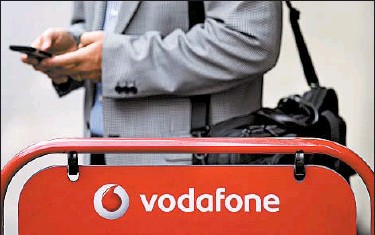
IBM hires hundreds of these workers to shake up clients — including Vodafone — and figure out what customers want
JUSTIN TALLIS/GETTY-AFP
What do your customers want? That’s not a skill that comes naturally to the engineers who build software for big corporations. But in a world filled with user-friendly smartphone apps, clunky enterprise software is no longer tenable.
So to shake up the status quo, IBM, Cognizant, Infosys and others have been racing to hire thousands of designers who once would have taken more specialized jobs-at an ad agency, say, or an industrial-design shop.
At IBM, they team up with engineers and consultants and embed with a multiplicity of clients. Besides providing customer i nsights, t he t eams encourage constant feedback and tweak products as they’re built — a process aimed at getting them out faster. It’s how successful Silicon Valley startups operate but radical for the IT services industry.
IBM Chief Executive Officer Ginni Rometty has bet the future of the services division on design thinking. She badly needs the strategy to work if her company is to reverse 17 consecutive quarters of falling revenue and adapt to a cloud-based world. In the past few years, the company has recruited about 1,250 designers, built a global network of design studios and is training employees to incorporate design thinking into almost everything they do.
By the end of this year, the company says, about a third of the 377,000-strong workforce will have been retrained. The goal is to build a customer-centric, startup-esque culture — and then persuade clients to do the same.
Brian Corish never planned on joining a big corporation like Vodafone; the serial entrepreneur was used to working at startups where knowing what the customer wanted was baked into the DNA. But when the head of Vodafone’s Irish operations came calling for help enhancing the company’s online pres- ence, Corish saw an opportunity to teach the startup ethos to a company with lots of unused information about its customers.
His new bosses didn’t say precisely what they meant by the digital transformation, but Corish soon concluded he needed to reorganize the entire culture around its customers.
As a big, established company, he says, Vodafone hadn’t bothered providing the best consumer experience because it already had a massive customer base and was making money building and selling products the way it always had.
Corish decided to bring in outside help but was underwhelmed when all the consulting firms talked up previous projects rather than focusing on the challenge at hand. IBM sent its team back for a second try. This time they ran design thinking exercises with 30 or so attendees.
A lot of the discussions centered on actual customers, what they didn’t want and what they wanted more of. Darren Gerry, an IBM designer, says Vodafone attendees were shocked at the revelations, having never thought about customer needs and desires in those ways.
To start, IBM was asked to build a self-service portal that would let employees working for Vodafone’s enterprise clients order phones and other workrelated gadgets themselves.
Gerry says his team developed a close relationship with the client, keeping the project transparent and demonstrating to Vodafone how design thinking works. Corish, keen to teach as many people as possible about design thinking, helped facilitate the indoctrination, starting at the top; that’s when senior management met the Snapchatobsessed teenager.
Traditional enterprise software projects can drag on for years before bearing fruit. IBM delivered the first version of Vodafone’s self-service portal in six weeks. Corish says his colleagues were astounded how quickly the job got done. “The rest of the organization went, ‘ Oh, you really can do this,’ ” he says. “It doesn’t have to take five years.”
Before the self-service portal was built, enterprise clients had to call Vodafone to order a new device, often spending days getting it configured. Now they can use their own logins to order a phone or tablet, which arrives in a couple of days and works right out of the box. “If we don’t focus on the customer,” Corish says, “we’ll be irrelevant.” Much the same could be said about IBM.
Marketers use words for many different purposes, to persuade, to cajole, to express urgency, to instill fear, to provide an identity, to convey calm or safety or trustworthiness. We’re like superheroes, in that we can use those powers connected to words for good or for evil, to help customers find the perfect item or service, or to drive them to register for a worthless but exciting-sounding product that they may regret later if indeed they ever receive it. Despite a documented decrease in the average person’s vocabulary inventory, the power of words has never been stronger. How far can that trend be extended?
Our fervent hope is that it be reversed, that the general populace realize the power of words, the need for a full-scale, broad-spectrum education, which can open doors far beyond computers and technology. As little as 50 years ago, the average American high school graduate had a strong grasp of their own language, could read and write at a reasonably consistent level, and was equipped with the tools to take them as far in life as they could achieve using public, published information sources. The library was a place of knowledge, of reverence, and for those equipped to use it to its fullest potential, a place of wonder and excitement.
Today, that same American graduate has a smaller functional vocabulary, lower level spelling skills, is slower to comprehend what they read, and can often not fully absorb the daily newspaper, which is typically written on an 8th grade reading level. They can also carry a small library in their hand, on a digital reader with a collection of public domain books, and with an internet-connected tablet, can learn things about the world around them every minute of every day. However, the words may be there and be readable by nearly all, but the wisdom and the editorial judgement and curation that vets those words are no longer present, so the onus is on the reader to choose their sources wisely, to choose who to believe very carefully. Inaccurate words have the same power as the accurate ones, and travel just as quickly.
Marketers of questionable ethics and flexible morals have been known to take advantage of the power that words possess, to portray a situation or product in a certain light that might take advantage of those whose comprehension of words and their discernment of nuance of phrases might be diminished. Good marketers know they needn’t stoop to that level to be fantastically successful at what they do, to engage and persuade and enlighten audiences and provide a gentle nudge toward purchase. But the internet has become a playground for the more nefarious among us, causing the average person to act with additional caution when reading anything online, regardless of its source.
Marketers need to remind themselves that this tactic of deceit and misdirection is a game of diminishing returns, that the more tricks, click bait, misleading tags and headlines that appear, the fewer people who will investigate anything in that channel overall, reducing response rates and cutting profits to the point where the credibility of digital outreach will reach a low ebb, and a new approach will have to be put in place. Those who are agile and can adapt to the new paradigm with flourish, those who are more Tyrannosaur-like will perish in the aftermath of the volcano. Be mindful of the power of words that you hold in your hands – misuse of that power affects us all . . .
With as many digital marketing programs, apps, platforms and dashboards as are currently available to the modern marketer, clearly marketing automation is an idea whose time has come. But at what point does all that automation start to mask, hide, obfuscate and cloak the real goal of the marketer – to persuade, influence, elicit emotion and garner a specific reaction by connecting in some emotional way with the individuals who make up the target market. If the machines are deciding the timing, tone, quality, frequency, subject matter and even copy point priority, is there really a relationship being created there?
While I’m still emotionally a bit of a luddite when it comes to technology, I understand it’s uses and marvel at its potential to make our lives easier, and more productive, alleviating the drudgery of some of the more mundane daily tasks and delegating the type of “step, repeat” activities that make up our daily existence to simple machines. However, there are limits to the level and type of task I’m willing to relinquish to the machines. The little voice in the back of my head that warns “If it can do this, what else could it do if I don’t keep control over it” is running that script more frequently when I take a few moments to fill the que of my social media automation platform. It speeds up knowing that the machine will be totally in charge of what people see, when they see it, how often they see it. Relin quishing that level of control is a little scary.
Now, take that a step further. The next generation of software is likely to have wider permissions within your physical and online universe. It’s possible, given the necessary set up structure, for a similar platform to deliver a message to a given recipient, with the ability to search their hard drive and cloud account, dredge up bits of information gauge their reactions to online posts by others, collect viewing habits for photos and videos, and be able to piece these disparate pieces of data together into a coherent letter rife with personal references that only make sense to them. Its invasive, it’s creepy, it gives the recipient a sense of exposure, but if crafted correctly and reigned in appropriately, it would be so personal and so relevant, it would out-pull almost any generic control letter by a factor of 10. Are you scared of the machines yet?
Currently, the overuse of personalization typically takes the form of using the person’s name or address or other key piece of publicly available information too many times. The only damage there is to the sender, as it pulls back the curtain and exposes the use of data in the letter, destroying the illusion of personal relations and destroying trust. This depresses response, but doesn’t hurt anything. But taken a notch further, say that same letter is riddled with personal information, including images of your home and kids, banking and financial “hints”, information about your mortgage or car loan, the kids’ school names or addresses, extracurricular activities. Looks and sounds personal, right? Now imagine that letter is stolen out of the mailbox, or picked up out of the delivery bin before it even gets to you. The person with ill intent now knows more about you than they could ever discover any other way, and can use that data to do anything they want, unfettered by regulations, legislation, professional ethics or legal restriction.
Used correctly, personalization and data “injection” can make messages feel relevant, feel familiar, feel comfortable, and lead to a positive response. Used incorrectly, personalization can open the door to abuse, cause damage to both the sender and the recipient, and lead to a range of problems from minor headache to legal action. When employing automation for driving or disseminating marketing messages, best to err on the side of caution and keep your human fingers in the pie at critical points – just to be sure everyone stays on good terms – be careful out there . . .
There are many forms of sponsorship businesses can use to their advantage: from the check written to the local Little League baseball team to help offset the cost of uniforms (with your name on the back), to local sponsorship of a national charity event, to owning a major golf tournament or NASCAR race. Each has its own audience, it’s own impact, and it’s own way of engaging the audience. The trick with all of them is to create a positive, lasting and active emotional connection between your brand and the event.
Brand activation for a sponsorship is one of the toughest marketing challenges most businesses face in their effort to raise awareness and drive recognition that can boost sales over time. The magic is in the matchup of the brand and the sponsored entity. The audience has to intuitively “get it” when they see the sponsor’s name in connection with the event, which means that there needs to be at least some rudimentary logic to the pairing of the two. There are some pairings that appear to be, well, natural in how they are executed, but I’m a firm believer in the tenet that there are no coincidences, and that most simple, natural occurrences are engineered by someone or something, although not necessarily for their own purposes. Auto racing promotions by oil companies, tire companies, engine builders and the like seem like natural extensions. Beer, cigarettes, soft drinks, and other consumer consumables, seem like a bigger stretch, until you consider that the audience for the race is the tightest demographic match to their product buyer possible, based on their own internal research. A huge chunk of race fans enjoy a Coke regularly, and in earlier times, the vast majority of race fans enjoyed a Winston or Marlboro on a very regular basis.
Even those famous pairings required some time and effort to appear natural, and be linked in people’s minds permanently. Not only were there competitors in each category to wrench the spotlight from, but they had to find a way to activate the sponsorship so that all the dollars they spent paid off, by moving the product sales needle in some predictable way. Pennzoil, Valvoline, Quaker State, MobileONE, and a host of other petroleum brands vied for NASCAR sponsorships, but only one would eventually rise to the top of the recognition heap in that particular type of racing. The winning brand crafted a long-term series of ads, promotions and other outreach content that pinpointed and brought to light their involvement with high performance activities. You could put it in your Chevy, but you knew that it was developed for and was used in a race car, making your grocery-getter a little more like the race car you couldn’t have. Aspirational activation is a strong driver of success in sponsorships, and has been used to promote luxury brands and commodity consumables alike for many years with great success.
Athletic endeavor has been fertile ground for this type of approach, because athletes have long been role models of persistence, hard work, grit and perseverance against the odds. Aspirational stories abound about athletes, and since they enjoy extensive media coverage, athletes and their stories are readily available to the public. If consumers aspire to be like the great athletes they watch and read about, then emulating them is a logical step toward making that aspiration a reality. If Tiger Woods wears a Tag Heuer watch, maybe if I buy one I’ll be a little more like him, run in the same company as he does. The athletes’ brand transfers to the product, and in some cases the reverse as well, creating that “natural” pairing. You’d expect the winner of a slew of majors in half that many years, with lifetime earnings in the multi-millions, to wear a pretty high-end watch. If Tiger had a Timex endorsement, it would have created a bit of a disconnect for the audience(s), and that natural feeling would not exist, diminishing the positive effect of both brands, diluting the aspiration, and reducing the effect on sales to the point of being nonexistent.
On a smaller scale, middle market businesses can make sponsorships pay off quite well if they create or find a way to activate that sponsorship emotionally with the audience. The key is still to make it aspirational and activational. The aspiration can often come from the sponsor’s own position in the market. The largest commercial bank in the state sponsoring a business organization designed to build wealth and commercial connections makes perfect sense. Offering unique access or benefits to the members of that group makes it activated and effective. Market awareness, brand recognition don’t do all that much unless the target audience frequently finds itself in a quandary between two entities – the one with the higher recognition has been shown to win more frequently and more consistently, however irrational that choice may be for the consumer.
Being in front of the right target audience for extended periods of time offers the recognition, but with no activation or aspiration, the sponsorship will be less than ideally effective. A male country music artist’s tour sponsored by Prius doesn’t have the same level of activation and almost no aspiration, when compared to Ford trucks. It’s a matter of cultural understanding, and matching the market leader to the aspirations of the audience. Country music fans clearly care about their environment as much as the next fan, but their concern takes a different form than saving gas or reducing pollution.
Big brands should select their sponsorship opportunities carefully, to be sure that the target audience’s aspirations and activations align with their values and cultural norms. Done correctly, your sponsorship can be one of those “natural” pairings that lives in consumer’s minds for a lifetime.
The rise of the machines, and the fear associated with it among humankind has increasingly crept into popular culture, in some subtle and not-so-subtle ways. Whether smart machinery or artificial intelligence (AI) is a good thing or a bad thing, especially as portrayed in film and fiction, often depends more upon the intent of the creator and the law of unforeseen consequences than the nature of the intelligence itself.
On a daily basis, the average retailer gathers enough transactional and personal data to feed a growing intelligence network that could be smart enough to function on its own in less than a year of constant-cycle learning. That’s a tremendous amount of data! It takes humans 15 years to amass that level of cognition and ability, on average. Sometimes this “knowledge” is used for good, and because there are limits placed on its use, either by the technology itself or by the circumstances of its use, all is well. The nightmare starts when those strictures and parameters are eliminated, and the machine can “learn” from all sources continually and can act and react accordingly.
The most widely used and easily recognized execution of this is the modern shopping algorithm. An algorithm is simply a comparative database that allows information to have tags attached to it, and when there are several tags in common between two items, one is deemed “related” to the other. This is a simple but very powerful idea. Humans are designed and hardwired to seek out patterns, both visually and in context, but computers are much better suited for this task as they have perfect recall, and aren’t influenced by loss of memory or emotion.
Smart machines that use an algorithm can appear very “smart” to their human users. Amazon.com was one of the first, and most famous, users of a comparative algorithm, when applied to book titles on their bookseller website. Customers would make purchases, the computer would keep track of these purchases, and build a data profile from the tags attached to each item purchased. The tags would then be used to compare these purchases to other books also available on the site, and “recommendations” would be made by the algorithm, based on the number of tags in common. Pretty slick, and with the right verbiage attached to the recommendations, it looks almost like there is a human making the picks and the recommendations.
TIVO television DVRs use this technology to make decisions about what TV programs you like and make recommendations and create recording timers accordingly. Not an infallible system, but it can be remarkably accurate, and it gets better the more decisions it makes and the more data it amasses. Now, extend that capability to association or non-profit membership groups, and as a marketer, think about your annual conference, seminar, or continuing education program. Where does that extension take you?
Why not use an algorithm to help attendees pick conference sessions? Will it improve member engagement? Will it increase overall enrollment? Will it help balance out room set up and class sizes? Can it be used to build tracks or new program offerings in the future that are successful? My research tells me that this type of personalized approach would be well-received by the vast majority of individual association members in a wide variety of industries. The commercial marketplace has gotten them comfortable with the technology, and they understand that the ”Machine” isn’t making life-or-death decisions, merely suggestions based on history, commonality and goals already stated. Generally if it saves attendees time, allows them to navigate a wide spread of data quickly, make some choices effectively and the results are reasonable, I think most event attendees would welcome such a system with open arms.
This type of innovation offers benefits for the organizer as well. Instantaneous feedback of popularity of each session based on purchases, the ability to add additional sessions in the same vein, or to cancel sessions that don’t attract an audience, means your conference department appears to have a solid handle on the needs of the members and can react to them quickly and effectively, with less waste. In short, the data embedded in the algorithm, and the resulting choices it returns, allows for smarter, faster, more efficient product and program development, with less risk, and greater reward.
One or two membership groups have put the power of the algorithm to use with good result. I hope the industry as a whole embraces this use of technology to improve their educational offerings, and for those organizations with more of an a la carte benefit offering, that this same technology can be applied to member benefits as well, providing a highly personalized experience for each member, quickly easily and intelligently. I say, “Let The Machines Rise!”