Blog

  • Building Your Team – Looking for Folks Who Aren’t You

    Building Your Team – Looking for Folks Who Aren’t You

    There comes a time in most working professionals life when they are tasked with something significant and asked to create or build a team to tackle it. For some of us, this can resemble the team-picking exercise we all got through on the school yard for kickball – with predictable results: poor cohesiveness, bad management skills applied inexpertly, a lack of motivation and poor morale. In short, the project sometimes gets done, usually by the strongest or most domineering two or three, leaving the rest feeling disenfranchised or segregated, negated or worse, and a less than optimal project outcome as well. This is not a recipe for greatness.

    Those who take a more strategic approach sometimes fare better, but not always. Those who look good on paper, and have incredible skill sets and diligence to spare, may not work well with others, may not mesh with the overall “gears” of the group, may not parse out their skills in a way that the team appreciates. The results are similar to the above, but with bigger egos.

                  Really good teams at their root have a level of respect for the challenge . . .

    A recent view of the movie “Moneyball” reveals that business is not the only discipline where emotionally selecting co-workers can have negative consequences, but that even things that look good on paper may not work well in real life. It also illuminates the fact that there is a hidden “something” that all winning teams have that all the statistical analysis, investigative scouting, referral burnishing or other team-selection method will not reveal. There’s a certain “chemistry” among winning teams that is difficult to duplicate, harder to engineer or manufacture.

    One way to set the stage for this “Chemistry” is to find individuals with complimentary skills, and personalities, and just enough commonality to let each be comfortable. Six big ego type A personalities banging around in there is likely to be a disaster, just as five or six introspective, analytical introverts. But two or three of each, with a couple of “neutrals” to referee and act as the voice of reason, and things start to look more productive. Sometimes pushing everyone outside their comfort zone has positive results, because the “adversity” acts like a bonding catalyst, sets up an “Us vs Them” mentality that motivates, coalesces, and helps the normally divergent skills and personalities converge to solve the challenge at hand, just to prove they can.

    Really good teams at their root have a level of respect for the challenge and for each of the members that keeps things moving forward and fosters trust. The more difficult the challenge, and the more exclusive the team, the better this works. Setting the stage for this starts with the team’s nominal leader, showing an even-handed, rational and realistic approach to how they handle the others.

    Team-building has to be looked at from many different angles and good ones are effective on several levels. A group of professionals who respect each other and each others’ talents and skills, and who also spend off time as friends, is a rare combination but can be a very effective one. There’s a certain element of vulnerability that helps cement things a bit more closely when you’ve seen the other team members let their hair down a bit and you do the same, put yourself out there a bit and show another side of yourself – let them in, and have them let each other in, and that’s where the “magic” seems to start.

                 . . . the “adversity” acts like a bonding catalyst, sets up an “Us vs Them” mentality that motivates, coalesces, and helps the normally divergent skills and personalities converge . . .

    If you found this interesting and valuable, and would like to read more, subscribe to this blog above and more like this will be delivered to your inbox weekly – and don’t forget to pick up your copy of “The Marketing Doctor’s Survival Notes” 


  • Just Like Rodney, Marketers Get No Respect . . .

    Just Like Rodney, Marketers Get No Respect . . .

    I’ve been reading and absorbing a lot of chatter about the level of respect marketing professionals get (or don’t get) in companies across the nation. There is some debate as to how to justify and validate the need for such positions as CMO, Marketing Director and Marketing Manager – debates that tend to ignore the elephant in the room. The bottom line in most of these discussions is that if nothing is bought or sold, then there really is no “business”, and that without the skill of folks internally in a marketing capacity, regardless of title, no one would be aware that the potential for commerce with your business exists, and therefore no transactions could occur. So based on that logic, without marketing, there is no business. Yet, there is an ongoing debate as to why such people are needed, and what their value to the organization might be.

    Why is this?

    Is it because the rank and file are jealous that the marketing people seem to have all the fun – planning and attending big events, creating collateral, going on photo shoots, speaking with media editors and television stations, creating commercials, and the like?

    Is it because other employees think they could do the marketers job, it doesn’t look too hard and they have fun, so why can’t I contribute to that?

    Is it because with so many marketers out there, there must be a reason everybody picks that, it must be easy?

    Is it because they have a larger budget to work with, and sometimes a larger staff over which to divide the work?

    I’ve heard all of these postulated in one form or another, and many others as well. I’ve sat in meetings where senior executives questioned the efficacy of the entire marketing department’s efforts in the face of 10-20% business growth directly tied to specific campaigns! When the economy slows, such complaints often rise in volume and stridency. Apparently a rising tide floats all boats, but when the waters recede, the marketers that made the boat and kept it afloat are no longer effective . . .

    As marketers, it is our job to facilitate contact and commerce from without the company by working from within the company. There needs to be a belief that an investment in marketing activity drives commerce far in excess of it’s cost, and that beyond that, criticism of the mechanisms employed and the means brought to bear are so much sturm and drang from naysayers. If a culture of marketing is formed and supported at the top of the organization, and communication of those efforts within the organization is fast, accurate and appropriate, that culture will flourish and all members of the company will prosper.

    So, how do we spread the word of such simplicity, and earn the respect we deserve as facilitators of transactional commerce?

    1) Do the job well, and get results that can be measured and proven.

    2) Stop worrying about who gets credit, or blame, and focus on results.

    3) Closely tie effort to results, and promote those results in reasonable, detached fashion – leave the ego out, and just state the facts without the superlatives.

    4) Drive the volume of effort upward – not all ideas are good ones, and not all executions are perfect. But the more you attempt, the more likely one will be a success.

    5) Innovate new ways of thinking and doing that drive success. Open your mind to input from unusual quarters, and give it it’s due diligence. You never know where the next great idea will come from.

    6) Show that the work you perform every day has value to the entire company, that everybody wins when marketing is effective.

    When sales slow down and the economy contracts, many companies go into “emergency” mode, cutting costs, laying off workers, creating an environment of fear and uncertainty, and delaying or outright removing opportunities for innovation – exactly the wrong reaction in a crisis. Many companies have been operating this way since mid-2008, and after six years the fear has turned to something else, killing creativity, halting innovation, and limiting possibilities for success.

    This presents an excellent opportunity for the marketing department to shine! Teach the others how to do more with less – we do it every day! Show others how to think and work your way out of a problem – we do it hourly! Tell others how to prime your thinking to view situations rationally with an eye toward exploitable opportunity – we do that constantly!

    Give away the benefits of your talents as a marketer, and the respect you deserve will return to you ten-fold – that’s a heck of an ROI in anyone’s book.

  • Web redesign to meet actual customer needs boosts traffic 94%! Here’s how . . .

    Web redesign to meet actual customer needs boosts traffic 94%! Here’s how . . .

    Thought You’d Enjoy This . . .

    There’s high competition in higher education. Every day, thousands of colleges and universities go head-to-head, vying for prospective students’ enrollments. For today’s digitally savvy youth, school websites must be on their “A” game.

    “For the vast majority of institutions, it’s your No. 1 communication tool,” said Molly Honan, Associate Vice President of Marketing and Communications, Emmanuel College.

    Learn how Emmanuel College’s team collaborated with students and faculty to fuel a website redesign that upped campus visits and deposits while boosting mobile traffic 94%.

    Read the Rest . . .

  • E-Mail: B-to-B Marketing’s Secret Weapon

    E-Mail: B-to-B Marketing’s Secret Weapon

    We use e-mail for a number of purposes, both for our own marketing efforts and on behalf of clients or as part of their plans for growth and retention. I’ve always thought it was a very flexible, very effective medium when used properly. Unfortunately, some among the marketing community have overused, abused and hijacked this wondrously inexpensive way of reaching out to customers, prospects and others in a personal, accountable way, and given it a bad rap, not to mention fatiguing the general public somewhat, and cutting open rates.

    A good copywriter, with a good list and reasonable data skills can make tremendous in-roads using e-mail in several ways.

    Outreach

    Creating a small community of purchasers or converting good warm leads into sales is what makes e-mail shine. It’s personal, it’s flexible, it can carry text, graphics, imagery, color palette, brand, everything you need to reach out to your audience, qualify the top responders, and keep providing them reasons to buy. It’s also fast, and fairly innocuous – if you receive one and it’s not for you, simply delete it – no waste, no environmental impact, no anger necessary. It’s also fast! You can get an e-mail campaign planned out, written, tested, set up, and sent out in a matter of a few hours at fastest, maybe a day or two if you have more elements to put together.

    Customer Relationship Building

    Now that you’ve created your own little “community” of customers, extending, building and broadening that relationship is a task that e-mail does very well, and most of it can be automated. Small shops, service-sellers and sole proprietors can keep in touch, spread the good word and keep customers up to date on changes, new offerings, schedule changes and availability changes, discounts, and a host of other semi-transactional communications with customers, keeping your brand top-of-mind, upselling, cross-selling, incentivising referrals and keeping your relationship alive and active, which directly contributes to the top-line, and moves the bottom line in a positive direction. What’s not to like? These types of activities used to take hundreds of hours a year, and the scope and frequency was limited. Now, not only can these messages be automated to be triggered in response to a contact, a purchase, a query, whatever, but they can also be tracked, quantified, monitored, measured, and the data can be sliced and diced any number of ways, letting you constantly test, tighten and improve your outreach and customer contact far above and beyond what used to be possible.


    Prospecting

    For those folks who’ve never heard of you, imagine their surprise when they hear from you not once, not twice, but weekly for a couple of months, each time refining and improving the relevance of the message until curiosity gets the better of them and they open and read your mail – score! Cost? No more than a phone call with a bad script, and more effective then you can imagine. According to Marketing Sherpa, 85% of CEOs have an expectation that e-mail will increase lead conversion/sales revenue, when only 65% of them put those goals as a high priority. In nearly every category, and there were 10 in total, e-mail beat expectation of CEO’s in terms of meeting business goals for which it was used. I can’t think of any other medium that can boast that kind of success rate and still stay under the radar!

    Used thoughtfully, correctly, and politely, e-mail can carry the day for marketers, both b-to-b and consumer, at a lower cost per customer acquisition than almost anything else other than social media, and is more accountable and more directed that even the most powerful platform out there. Let’s hope the mis-users have moved on to something else and e-mail can return to business of business as we move forward in the new economy. Now, if we could just find a better launch pad than Outlook . . .

    If you found this valuable, you can have more of this type of information delivered to your inbox weekly, simply subscribe to this blog above, and don’t forget to pick up your copy of “The Marketing Doctor’s Survival Notes


  • “Relevance” The Only Buzz-word Still Relevant

    “Relevance” The Only Buzz-word Still Relevant

    Recently we were conducting some research for an association client, consisting of some preliminary phone group conversations with some of the Association’s volunteer leadership. The group had been furnished with some thought-provoking questions prior to the call, to sort of prime the pump so to speak, and they were very forthcoming and vocal on the call. Their answers and level of discussion revealed their passion not only for their industry and chosen profession, but for their association and their desire to see it grow and serve the needs of the industry.

    As the call progressed, as in most such conference calls, several of the 8 or so voices started to monopolize the conversation, but as they were providing some solid insights, I let the discussion roll on in this fashion for a few moments. All of a sudden, one of the participants, who we hadn’t heard from for more than a couple of monosyllabic agreements since the beginning of the call piped up with a long, eloquent, involved response to a piece of the discussion – the questions had gotten around to something RELEVANT to her, and she jumped in immediately to contribute.

    As I thought back on the call later in going over my notes, I noticed something in the transcripts. These leading members of this group had used the word “relevant” in their discussion of their wants and needs regarding the association no less than 20 times in a 90 minute call! Clearly, they were calling for the association to pay attention to them and to offer something they found valuable, that they could use to improve their work, status or professionalism. In reviewing our earlier work with other organizations, it became clear that many of them have a sector of their constituency that gets short shrift in the overall scheme of things. In our experience, the cry for relevancy becomes louder the more homogeneous your group becomes, and the minority becomes smaller as a part of the whole.

    For organizations serving a diverse population, the need to take into account multiple points of view, diverse needs, forces them to think more broadly, to offer benefits that fit a wide range of sub-sector’s needs. When the group becomes more homogeneous and a small group stands off to the side, it becomes less and less cost-efficient to serve them with their own set of benefits and offers, to serve them in a way they are used to being served. This type of behavior is often a precursor to an association splitting into smaller, splinter groups, each with diverging needs and desires and expectations.

    In short, the benefits offered the majority have failed to continue to be relevant to the minority group. Chances are, the main group’s marketing efforts reflect this, and if not corrected they will start to see participation, purchase response, renewal rates, and all the other touchpoints they measure decline for this one small group. This lack of relevance can drive the entire organization into a negative spiral if not caught early and rectified.

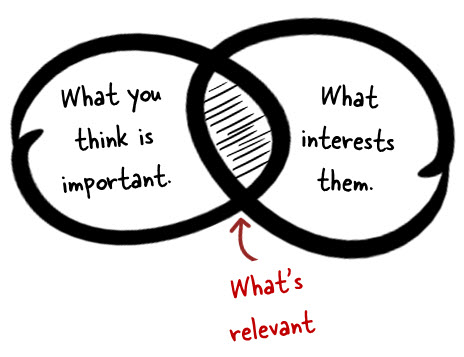
    So how do you fix the lack of relevance? In a word, research. Most organizations will tell you that “they know their members very well”. It has been our experience that the more they say they know their members, the more they live by that assumption, and the less they really know the membership’s needs, wants and preferences. This particular blindness seems to afflict trade groups more so than membership societies, but it applies to both.

    If you want to know what your members really think of you, and your products and services, ASK THEM! You’d be surprised how readily they will offer their opinions, how honest they will be under the right circumstances, and often how simple their needs are to meet. Once their inputs are incorporated into the organizations behavior, the association will start to experience much higher total lifetime values across the overall membership, much better renewal rates, much less cost to keep members, much less spent on recruitment marketing, and that effect trickles down through almost all aspects of your organization, creating much better fiscal health and well-being throughout.

    Organizations that regularly and routinely poll their memberships, that ask intelligent, probing questions, in order to spot shifts in perceptions, identify under-served areas, failing programs, and budding successes, will predictably do much better then those who feel that surveys and other research are “invasive” or “irritating” to the members, and only survey them once every couple of years with the same routine and detached questions. Get to know your membership segments for real, reliably and recently, and use the knowledge to shape your education programs, to craft your conference offerings, to guide your tradeshow approaches and themes, to guide your publications’ editorial calendars, to adjust your website, to shift your media selection for outreach, and you’ll be amazed how much more “relevant” you are to the membership – even the smallest segment you have!

    If you found this post insightful or helpful, and you’d like to read more, subscribe to this blog above – and don’t forget to pick up your copy of “The Marketing Doctor’s Survival Notes”


  • Digital Marketing is Direct Marketing in Electronic Clothing . . .

    Digital Marketing is Direct Marketing in Electronic Clothing . . .

    With some prodding from Eric Mohr (http://www.linkedin.com/in/ebmdirectmarketingservicesllc )I gave some thought to the reputation of Direct Marketing in the digital age. I read and absorb hundreds of electronic messages every day in the marketing sphere, everything from blog posts to group discussion posts, to e-mails promoting upcoming webinars on marketing topics touting digital marketing techniques, ad nauseum . . .

    What that gives me, besides a huge headache from message overload, is a good scan overview of what’s up in the marketing space, who’s promoting what and what techniques marketers and consultants are using to help their clients succeed (usually). After all that reading, there was something in the back of my mind that bothered and irritated me about most of the promotions and webinar topics – and it finally dawned on me that they looked eerily similar to the promotions and conference topics I was seeing two decades ago pertaining to direct marketing techniques!

    Now, don’t get me wrong, I understand that the new digital marketing sphere isn’t a straight rehash of direct marketing – there are many differences in delivery, technology and targeting operations. What bothered me is the approach that new marketers took, the tone if you will, of the communications, which tends toward the downward focused and toward a certain smug word choice that hit me as an experienced marketer from a bad direction. The underlying meta-text in many of these messages tends toward something like “Gee, you haven’t figured out how to use e-mail effectively? We’ve known about it for a long time, here’s what we ‘experienced’ digital marketers have learned in the last two years”.

    Guess what, digital marketers, direct marketers who are experienced and have applied their experiences to the use of e-mail, video marketing, targeting and social media, have had it figured out for nearly half a century! There still needs to be a good headline(read: Subject line), the offer has to be compelling to drive response (read:traffic), you can still break up the copy sentence length to help improve readability (read: chunking), you still need to send the message to the ‘right’ people on the ‘right’ list (read: geo-tracking for local promotion, keywords and webtracking for global campaigns), and most importantly, you still have to have good data, and use it appropriately, to reach out to the audience, engage their attention, and prompt a response (read: drive click-thru).

    Clearly, good DM skills, like copy writing, offer formulation, list selection and data mining still have a place in the success of digital marketing, regardless of what the new label for them is. So, why have the large consumer companies tended to gravitate toward the “new digital marketing” agencies to set up e-mail campaigns, social media programs and the like, if those skills reside in abundance at their usual DM agency? Because, like everyone else, hanging the “modern” or “digital” moniker on something makes it the new, shiny, spiffy cutting-edge ‘thing’, that everybody feels is the magic bullet that will solve their marketing problems. What the digital folks have going for them is the carefully crafted perception that digital marketing is “cheaper” or even “free” compared to all that paper, printing, postage, nixies, BRE accounts, etc., and in some respects that’s true. But I don’t know anyone who selects a major agency or marketing firm based on whether they use the cheapest methods. They select them based on creativity, skills, and innovation of approach, passion and inspired thinking. So how did the less experienced (by their own admission and by historical fact) agencies end up capturing this business that the old, experienced guys are perfectly well suited to capture?

    Two reasons, I think.

    1) The old guys failed to adapt, like saber-toothed cats. When digital was developing, these more experienced marketers often doubled down on their traditional skills, beefed up their relationships with traditional clients and grew them, rather than branch out and create digital divisions or think tanks to investigate and develop talent and expertise in those areas.

    2) The younger guys were deeply steeped in computer skills and culture, and saw the opportunities computers represented based on a comfort with the new paradigm in a very hands-on way. It’s a short step from sending e-mail instead of printing and mailing business letters to bulk e-mail and social media promotion, when you already spend a majority of time behind a terminal out of knowledge and curiosity. If a computer is your greatest tool in life, everything starts to look like a good digital adaptation.

    The downside is, much like the shift in the publishing world from printed books and magazines (done by professionals) to desktop publishing in the late 80s early 90s – having the tools doesn’t impart the underlying skills and abilities to make the final product effective. Many a butt-ugly company newsletter was produced by unskilled administrative help, involving many unusual fonts, bad design, poor use of things like bold and italics, bad rules and underlining, and a host of ills that the pros learned to avoid in their formal training. But they could do it cheaper, get it out in ‘good enough’ form and move on to something else.

    Same is true here – the digital guys understand the delivery mechanisms and constraints being used today much better, avoiding spam filters, enhanced delivery, subject lines that conform and pass through firewalls, embedded imagery and the like – but that doesn’t make them copywriters, or graphic designers, or impart understanding of consumer purchasing behavior or emotional engagement – ever talked to a computer geek at a party – not the height of emotional involvement in the conversation, was it?

    We’ve got the tools on the digital side that traditional direct marketing could only dream of even ten years ago – the ability to track audiences down to the individual level based on behavior, not just transactional history – a huge boon to experienced marketers! Now if we can just get the two camps together, to use those tools effectively based on years of tried and true techniques of engagement, not just delivery, marketing can rise to the level of a pure science and really drive revenue and loyalty like never before – something to put on your Christmas list for this year, gang . . .

    If you liked this or found it helpful or insightful and want to read more, subscribe to the blog above – and don’t forget to pick up your copy of “The Marketing Doctor’s Survival Notes”


  • Get Top Results When You Crank Up the “Direct” in Your Direct Mail

    Get Top Results When You Crank Up the “Direct” in Your Direct Mail

    By its very nature, direct mail promotions are designed to be one-to-one communication vehicles. As marketers, we are all aware of this in the back of our minds, but in practice, sometimes the “direct” portion drops off the map, and we end up producing unplaced promotional brand ads in an envelope. If you want o see the best returns possible from your direct mail program, make sure the “Direct” angle gets full attention.

    There are several ways to rev up the “you” in your programs. The most effective one starts with the concept of the mailing itself. As you envision the final mailing, conceptualize your offer, the list, the copy platform, the thematic graphics and other elements, get a good fix on your target audience for this particular mailing.

    The “It” Person

    Now take this to the next level, and picture in your mind a specific individual who fits the descriptors and parameters of your typical customer in your target market. Ask some key questions about your mailing with regard to this person: 1) Would this mailing appeal to this person? 2) Is the offer suitable for them and their needs? 3) Would this copy and these graphics attract their attention and resonate with them in an emotional way? 4) Is there enough reason for them to respond, to pay, to write a check and send it in?

    If the answer to any of those questions is no for that mythical person in your head, then adjust, correct, edit and revamp until the answer is yes to all of them.

    Copy is King

    Many of these personal elements start with the copy. Often, the offer is what it is, and either can only be changed minimally to match the audience or is inviolate based on the time and resources available. If you’re in that box, then the solution is to start with the copy.

    The word “You” is extremely powerful – indeed, you can’t write a true direct mail piece without it. If your copy speaks directly to that person in your mind, you are by fiat having that one-to-one conversation, and must use “You” to address that person directly, in first person voice. In today’s highly digital climate, the use of a person’s name in the copy is almost passé, but you would be surprised how little it actually gets used, aside from personalized laser letters. For postcards, fixed multi-page packages, and other formats, digital technology allows for the use of the recipient’s name and other information in repeated appropriate fashion, to juice up your message and really push the audience’s emotional buttons. This will drive your point home almost as powerfully as the word FREE in the offer, and will draw in the reader and involve them in your description and your message.

    Good copy for direct mail should tell a story. Listing benefits, describing features has its place, but the meat of the piece is a message directly specifically at the reader like there is no one else around, and it’s just the two of you having a short conversation. The story should be illustrative, persuasive, cohesive, and have a point. No matter how long it is, (and there are endless debates about copy length – see Hershel Gordon Lewis for details on both sides) you should make a point, explain why your point is the best, make your point again, and get out after asking for the order.

    Let the Data Be Your Guide

    To be able to write persuasive, effective copy, to concoct an effective working offer, you have to really know the audience. You can get to know the audience, but to do that, some research is in order. Carefully select your list to be as homogeneous as possible, to select as many similarities as you can to define the audience as finely as you can. That list if selects is the basis for your research. In order to get to know those people (and a market never bought anything, people buy products), you have to have an actual conversation with a few of them, to pick up the subtleties, the similarities and the things that really push their buttons emotionally that get them going, that get them excited.

    To help visualize the audience better, pretend to have a conversation with someone representative of the target group, and ask yourself these questions:

    1) How does this person speak, what word choices do they make?

    2) How do they synthesize the information you are presenting? Do they parrot it back to you verbatim, or do they absorb, summarize and paraphrase your concepts?

    3) Do they pick up and use any jargon you use related to the product?

    4) Does the product seem to be something they need, or just want?

    5) Do they seem to understand the product you are offering or are they just being polite?

    These ideas should give you plenty of ammunition with which to shoot down your current work and start from scratch, to really personalize your direct mail and make them truly “Direct” to the audience. Apply these techniques to your last project, recreate it with the new approach, and A/B test it against your control – you will be surprised at the results.

    If you thought this makes sense, and you’d like more information like this sent right to your inbox, subscribe to my blog above right, and don’t forget to pick up your copy of “The Marketing Doctor’s Survival Notes”


  • More Isn’t Always Better . . .

    More Isn’t Always Better . . .

    How many of you receive more than 200 e-mail messages per day? How many of you receive more than 50 text messages per day? How many of you read more than 200 entries on social media platforms per day? Add to that radio and TV messages, Internet pop-ups, banner ads, product packages, direct mail promotions and other “input” and you have a perfect recipe for sensory overload. Studies have shown that while most people think they can multi-task well, nearly all of them showed reduced focus and performance standards on tests that required them to concentrate on as many as three tasks at once. The tasks got completed eventually, but not always with the level of quality required, and in approximately the same amount of elapsed time as would have passed if they had done each task individually in serial fashion. So where’s the gain?

    With that many messages coming into our consciousness, none of them receive the attention they deserve, to the point where we actually spend as much energy prioritizing them as we do comprehending them and acting upon them.

    Too many choices, too much information, not enough filtering or discrimination between input sources leads to inaction, dilutes the impact of each message, and slows progress and productivity. As marketers, we need to constantly be aware of the environment in which our customers and prospects function. Bombarding them with messages doesn’t necessarily lead to action, but does lead to saturation, and that saturation point is far more quickly reached today than it was even two years ago.

    That’s actually good news for intelligent marketers. It means that spending more money on higher insertion frequency, broader media buys, longer ad schedules, and higher print and circulation runs won’t get the desired results, and that knowledge allows us to focus on greater message positioning, greater relevance, tighter targeting, higher impact, and better value in our communications. Less is more, and better is less.

    Make it perfect, make it relevant, make it resonate, make it accessible on many platforms and through many channels to allow for preference, but don’t bombard or carpet-bomb in order to achieve penetration – the shields are up and it won’t work!

    Spend the savings in increased production value, higher creativity, better thought processes, higher levels of innovation, originality and transparency – it will pay off ten-fold in the long run.

    If you think this makes sense, or would like more information on this topic or others, Pick up a copy of “The Marketing Doctor’s Survival Notes” – a great addition to your professional library.


  • Engaging Customers – Modern Thought on Reaching the Current Consumer

    Engaging Customers – Modern Thought on Reaching the Current Consumer

    Recent economic indicators describe a consumer climate that is different than virtually any in recent history, and consumer product and service businesses are having a tough time closing sales and encouraging sales traffic, both brick-and-mortar and online. This enforced stinginess on the part of consumers is wide-spread but not universal. Some products fly off the shelves and some companies are wildly profitable, while the majority seem to be pushing a rock uphill.

    Consumers are caught in a vicious cycle economically, have been since 2008. Profit is down on a per unit basis, write-downs and charge offs notwithstanding. Employment is down from knee-jerk reactive cost-cutting measures trying to stem the tide of red ink, the unemployed numbering in the many hundreds of thousands, and the underemployed doubling that. Equities in general have been stumbling along the bottom of the trough for the last two years, with a 3% growth number putting them back at break-even since before the crash. Spending is down, savings are flat, foreclosures are restarting their relentless march, debt is way too high, both consumer and governmental, and consumers are cautiously nervous.

    For retailers, this is the perfect storm of nightmares. Consumers are too scared to make those bigger purchases due to income uncertainty. Retailers won’t or can’t hire due to low margin, and can’t add jobs, reducing the unemployment numbers. Investors get lousy returns, and therefore can’t invest in riskier companies, so they can’t expand and add jobs. Consumers who have jobs are unsure they will keep them, but are doing the work of three and trying to keep their own head above water, cutting back on discretionary purchases. So, as a marketer, how do you break through the fear and engage consumers? In a word, “Trust”.

    If you scan the list of most profitable or growing consumer product corporations*1, you’ll notice that they don’t have a common theme in terms of product offering, or price point or position in the marketplace, although they all tend to be number 1-4 in their category. The common thread among them won’t likely jump out at you from the list itself, but if you dig a little deeper, the theme becomes clear. These growing, smart, stable companies have been conservative in their growth plans, aggressive in defense and development of their brand, and firm believers in keeping their brand promise, leading to outstanding customer loyalty. They make products that people want and need no matter what their economic circumstances, and maintain loyalty through consistent quality assurance, product development speed and flexibility. In short, they give their customers what they want, and have done so long enough and consistently enough to have garnered long-term customer loyalty, and more importantly, trust.

    1 List compiled by Seeking Alpha, copyright 2010

    As marketers, we can’t often affect many of the attributes listed above that these firms have in common, but the few that we can, need to be the very best expression of the brand promise to establish that trust. We can’t affect QA directly, for instance, but we can certainly pitch the promotions to the correct consumer level and keep public perception on the right aspects of the product if QA is spotty or suspect. Product development is sometimes seen as Indian territory for the marketing department, but in these high-profit companies, our studies show that marketers are deeply involved in not only accumulating consumer data to feed product development, but provide assistance and expertise on consumer preferences, brand extension and alignment, and even assessing product features and elements, to be sure they meet consumer preference and demand. Perhaps this characteristic above all others may be the critical element in the continuing romance between these companies and their customers. In almost every case, companies that get the marketing staff involved early in the development process and have a defined process for creating, developing and launching new products are more nimble, responsive and profitable than those who simply launch and market products after the fact.

    That’s great for companies that create a range of new products regularly or update their flagship product routinely. But what about some of those firms who have been riding the same product year after year? How do they engage their customers and engender such loyalty to the brand?

    Many established and older brands that have let research and development languish, either through lack of resources or short-sighted thinking, find that they need to create or establish a new angle, a new application, a new extension of the existing product to create interest from new customers and renew interest from existing customers. Clorox might be an example of this, especially 10-15 years ago. Household bleach is a staple, has few innovations or moving parts, and aside from updating the package, and not much of that, it is basically unchanged since the 50s. Recently, they have innovated within the category, created new applications for the product and formed partnerships with other products to bundle or reinforce their products. Adding their product to other cleaning products gets the brand into households that might not welcome them otherwise, and sets or reinforces the expectation that bleach is an enhancer of cleanliness. Making the product “portable” in the form of a stain removing stick was a recent innovation that was launched in response to consumers’ increased mobility and need for instant gratification. Yet despite it’s age, Clorox continues to move off the shelves in predictable and growing fashion and avoid becoming a commodity, despite strong shots from competitors, generic versions manufactured overseas, and reduced profitability from price increases on raw materials and distribution challenges. A marketing team that can come up with a new angle for a 50+ year old product is a strong, flexible one indeed. What has kept them going is strong customer loyalty, and trust in the quality and integrity of the product to perform as advertised day in and day out over many years.

    But engaging customers doesn’t always mean product innovation, or even marketing innovation. Sometimes it has more to do with taking the appropriate approach based on customer’s expectations.

    HD

    One of the companies on this list, Harley Davidson, is a champion at delivering it’s message in the most appropriate medium for it’s audience’s digestion. But that hasn’t kept them from being innovative in order to engage the customer. Over a century old, Harley’s target customer is also getting older, and that demographic is populated by notoriously slow adopters of new technology. Harley does much of it’s marketing through the dealer channel and through event and sponsorship presence.

    They host rallies, rides, and other gatherings of product users through an extensive network of dealers and repair facilities coast-to-coast, and know their customer well. They have a huge array of licensed products and aggressively protect their brand in each of these arrangements, selecting only the highest quality materials, workmanship and designs to put their name on. This is one of the most traditional marketing models out there, and it still works very well. You would not expect them to have a huge online presence or use internet resources extensively to reach a 50+ age audience. Yet they have taken advantage of the social media phenomenon to help spread their message via word of mouth among their vast network of customers, creating Twitter accounts, a strong presence on Facebook with nearly 2 million friends. Other efforts include each dealer’s own FB page and own website, all of which have access to the manufacturer’s site, news, product info, dealer locator and more, plus license holder sites. All of this is used to promote new products, showcase product innovation, and get customer feedback, monitoring the electronic conversation and reacting quickly to customer input, engendering even greater loyalty and trust. It’s the message, not the medium that counts.

    Engaging customers also has to do with relevance. Being relevant to your customers may seem like everyone’s goal, and indeed it might be, but these profitable companies seem to have it innately present in their corporate DNA. These companies constantly seek ways to enrich their customers’ lives, and find new ways to be part of them. Coach, Inc., might be a good example of this. The luxury brand has innovated a number of approaches to meeting the needs of its niche market’s need for upscale handbags and accessories, leveraging their brand strength over a series of related products. If you purchase a Coach bag, with its famous lifetime warrantee, and it’s likely you’ll be informed about other Coach accessories, and often buy them, with the assurance that each product, either direct manufacture or licensed, will be made with the same level of care and quality, and at the same price point in the market. If you are a Coach-level consumer, you make it your business to show it, by buying the branded products that prove it. This elite, exclusive approach works very well for them, as it ramps up the relevance in their customer’s lives.

    As marketers, we have a huge volume of information and research data available to us regarding consumer trends, preferences, and behavior. It is up to us to responsibly use this data on OUR customers, to craft innovative, trustworthy, relevant outreach messaging to engage our customers to create brand trust, and drive sales and profits to where they need to be. Most of that trust and relevancy comes from the correct and appropriate use of that data to craft messaging that resonates with the target consumer. Transparency, honesty, relevance and trustworthiness are key to achieving these goals, and you can see the results of such activity reflected in the marketplace and the bottom line.

    This article can be downloaded in PDF form as a white paper.

    If you found this valuable and would like to read more like this, subscribe to this blog above, and don’t forget to pick up your copy of “The Marketing Doctor’s Survival Notes


  • Brand Effectiveness Key to Membership Growth, Part II

    Brand Effectiveness Key to Membership Growth, Part II

    Here’s part II of yesterday’s post . . .

    Brand Effectiveness Key to Membership Growth – Part 2

    In Part One, we discussed using in-depth member survey work to boost the visibility, awareness and effectiveness of your organization’s brand, and how it can directly impact your ability to recruit and retain members. If your organization isn’t the first thing member prospects think of when they turn to industry issues, there’s work to be done.

    Your survey may provide mixed results that don’t show a clear direction. Often this is an indication that there is a disconnect between the brand you put out to the external world, and the one you use to craft the questions! That alone tells you something, and a series of follow-up interviews with the same basic set of queries to the external and internal groups should help clear up the discrepancy.

    Other sources of data can help you check your brand effectiveness as well. Interviews with those alternate stake holders should be couched slightly differently, and can use more “insider jargon” in the questions, as their awareness starts off at a higher level. They can give you a median read, between the internal and the external, and this can often help you reconcile the disparate results mentioned above.

    Take Stock

    An inventory can be helpful in analyzing your brand’s effectiveness. Simply create a list of all the places where your brand appears, in what context, what medium, attached to what product, message or outreach vehicle, and see if they seem to have an obvious pattern, if they are aligned. Often pulling samples from the archives and lining them all up together can be very enlightening. You may be unaware of a brand shift that may have occurred over time, small miscues that send a less the consolidated message to the recipient. One example of this is when an outsource vendor or contractor uses your brand in their program, and it doesn’t match your normal set of brand characteristics. If you are seen as a very sophisticated, august and professionally ethical branded organization, and an outsider puts your logo as a sponsor on a ticket giveaway coupon for a concert, that would be a brand slip or miscue. If several of these items have crept into your inventory, it may be time to put some tighter controls on the use of your brand, and provide some increased education within the organization about the importance of protecting the brand and how to use it properly.

    Top of Mind

    Keeping memorability high is another positive effect of a well –aligned and effective brand. If your brand is consistent with individual experience, that experience will be more memorable. L.L. Bean shows a great example of this. Their “Return any time, no questions asked” return policy has been with them since virtually the beginning of the company. They were so confident in the quality of their products, they couldn’t dream of anyone sending them back, and thus the perceived risk of such a policy was low. That policy became part of their brand, and is now a deeply embedded positive characteristic, so much so that there was near revolt when a senior staffer proposed eliminating it to help save money. As it turns out, their return rate is notably lower than their competitors, and the savings realized would have been more than offset by the damage to their brand as a trusted, honorable retailer of fine outdoor merchandise. As a result, when you get an L. L. Bean catalog in the mail, you instantly put in the back of your mind that the purchase from there is of lower risk, and therefore a greater possibility, as a result of that policy. That gives them a competitive advantage, and keeps their customer retention high and their loyalty even higher, due to the memorability of that policy.

    Brands Aren’t Built In A Day

    If you’ve launched a new product, are a new organization or subgroup within a larger organization, you know the difficulty of setting the stage for a lasting brand. It takes many, many customer touches to build a brand effectively, and with non-profit, member driven organizations, the rate of touch is often affected by budgetary constraints. That puts the building process on the slow track, as the mailings, e-mails, directories, guides, meetings and other activities slowly mount up in the member’s mind. Each piece of the building process must be consistent, and have relevance and meaning for the recipient, or you undo much of the positive work up until then. Be patient. It can take years for an organization to reach a highly memorable, effective state with its brand, and many a good program has been discontinued by impatient senior staffers with a more cautious eye on the bottom line than knowledge of the branding process and its benefits.

    If your brand message aligns with expectations, your touch rate is predictable and rising, and your organization has shown relevance for the audience it wishes to serve, you’re on your way to a highly effective brand.

    If you’re concerned about your brand’s health, effectiveness or strength, and would like to take advantage of our expertise on these topics, be sure and subscribe to this blog, and pick up a copy of “The Marketing Doctor’s Survival Notes”